
A failed cargo hold inspection is more than a simple setback; it is a direct threat to your bottom line. The risk of cargo rejection, expensive vessel delays, and crippling off-hire time can turn a profitable voyage into a significant financial loss. For ship owners and charterers, successfully preparing a vessel for its next load is a high-stakes operation where there is no room for error. This is why mastering the requirements for professional cargo hold inspection services is not just a best practice-it is an essential skill for protecting your assets and reputation.
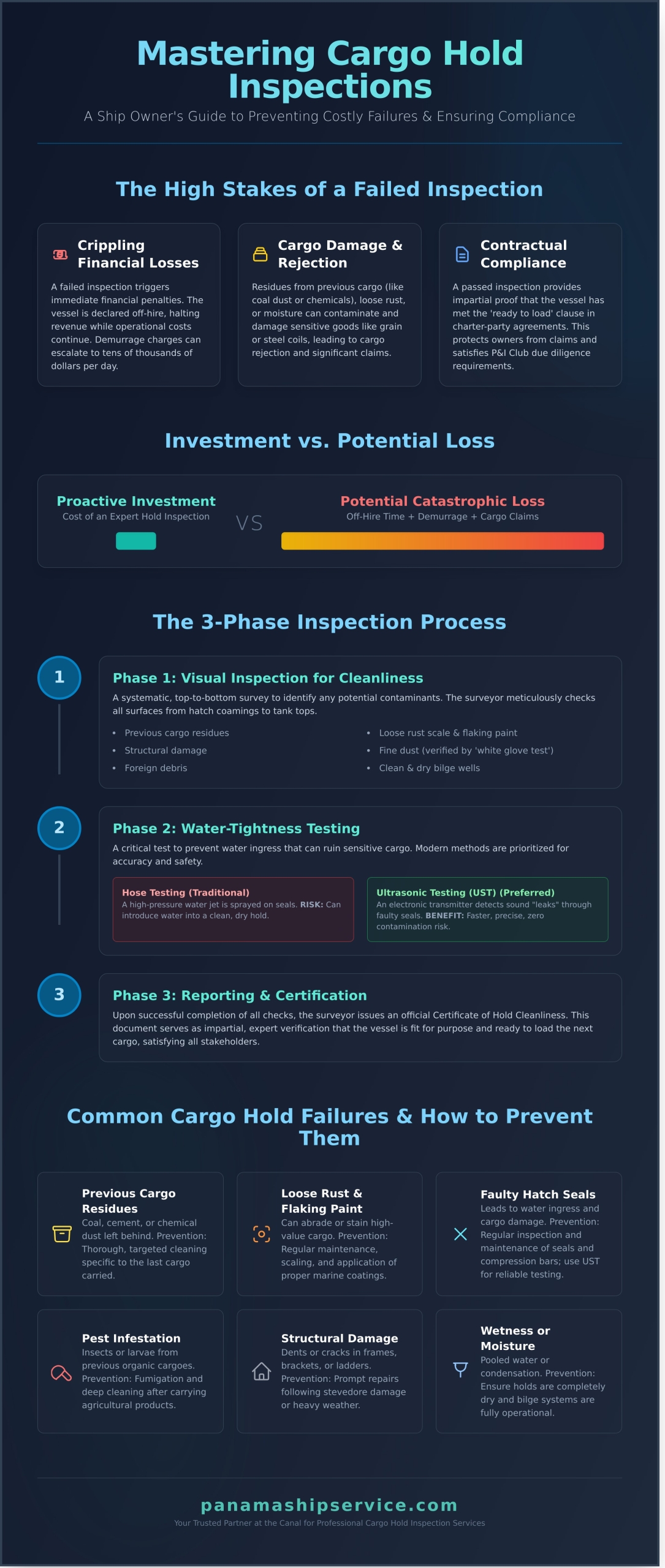
This comprehensive guide delivers the operational clarity you need to navigate the entire inspection process with confidence. We will break down every critical stage, from initial cleaning standards and common failure points to the final certification that satisfies all stakeholders. By understanding these procedures, you can prevent costly cargo contamination, ensure charter-party compliance, and pass inspections on the first attempt. Our goal is to equip you with the knowledge to keep your vessel on schedule, protect cargo integrity, and maintain profitability.
Key Takeaways
- Learn the most common reasons for inspection failure and the proactive steps your crew can take to ensure a first-pass result, saving time and money.
- Understand why a ‘one-size-fits-all’ cleaning approach fails and how specific cargo types, from grain to minerals, dictate unique hold preparation requirements.
- Demystify the complete process behind professional cargo hold inspection services, from required documentation to the surveyor’s on-site criteria, to ensure charter-party compliance.
- Discover why engaging an expert partner at a critical chokepoint like the Panama Canal is essential for minimizing costly delays and protecting your assets during transit.
What is a Cargo Hold Inspection and Why is it Critical?
A cargo hold inspection is an independent, expert survey of a vessel’s cargo spaces. Its purpose is direct and essential: to verify and certify that the holds are clean, dry, and free from any contaminants that could damage the next intended cargo. Before loading valuable goods, understanding What is a Cargo Hold? and confirming its condition is not just good practice-it’s a critical step in mitigating enormous commercial risk. Failing to secure this verification can lead to rejected cargo, contractual disputes, and significant financial penalties.
The core value of professional cargo hold inspection services lies in preventing problems before they start. It is a definitive assessment that ensures a vessel is fit for purpose, protecting cargo, contracts, and capital.
Preventing Cargo Contamination and Damage
Previous cargo residues, such as coal dust or chemicals, can easily spoil sensitive goods like grain or other foodstuffs. Loose rust scale can abrade or stain high-value steel coils, rendering them unacceptable to the receiver. Our qualified surveyors meticulously check for these hazards, along with hidden moisture or pest infestations, preventing costly cross-contamination and ensuring your cargo’s integrity from port to port.
Ensuring Contractual Compliance and Avoiding Disputes
In the world of shipping, charter-party agreements are binding. A hold inspection directly satisfies the common ‘ready to load’ clause, providing impartial proof that the vessel has met its obligations. This independent certificate is a powerful tool, protecting ship owners from charterer claims related to cargo damage. It also fulfills the stringent due diligence requirements set by P&I Clubs and cargo insurers, ensuring your coverage remains valid when it’s needed most.
Minimizing Delays and Financial Losses at Port
A failed inspection at the load port has immediate and severe financial consequences. The vessel can be declared off-hire, halting all revenue while daily operational costs continue to mount. Demurrage charges can accumulate rapidly, often costing tens of thousands of dollars per day. The cost of an expert hold inspection is a minor, proactive investment that prevents these catastrophic delays and protects your bottom line from avoidable losses.
The Cargo Hold Inspection Process: A Step-by-Step Breakdown
To ensure complete transparency and operational efficiency, our process is systematic and meticulous. A qualified surveyor begins by reviewing essential documentation, including vessel plans and previous cargo manifests, to understand the hold’s history. Before entry, safety is our paramount concern; we conduct rigorous checks, including air quality tests and verification of safe entry permits. We also confirm that adequate lighting and secure access are in place, as a thorough survey is impossible without them. This foundational diligence is a non-negotiable part of our expert cargo hold inspection services.
Phase 1: Visual Inspection for Cleanliness
A systematic, top-to-bottom visual examination is performed to identify any potential contaminants that could compromise your next cargo. Our surveyors methodically check for:
- Previous cargo residues, loose rust scale, flaking paint, and any foreign debris on all surfaces, from the hatch coamings down to the tank tops.
- Damage to hold structures like frames, brackets, and ladders. Structural integrity is critical for safe transit and compliance with cargo securing regulations, as detailed by sources like this official U.S. government source.
- Fine dust or chemical traces, often confirmed with a ‘white glove test’ on bulkheads and underdecks to ensure a truly pristine condition.
- Clean, dry bilge wells with unobstructed drainage systems to prevent water accumulation.
Phase 2: Water-Tightness Testing of Hatch Covers
This critical test prevents water ingress that can ruin sensitive cargo. While multiple methods exist, we prioritize the most effective and non-invasive solutions:
- Hose Testing: A traditional method where a high-pressure jet of water is sprayed along hatch cover seals. While it can identify leaks, it risks introducing water into an otherwise clean and dry hold.
- Ultrasonic Testing (UST): The preferred modern standard. An electronic transmitter inside the sealed hold emits ultrasonic waves, and a sensor on the outside detects any “leaks” of sound through faulty seals. UST is faster, more precise, and carries zero risk of water contamination.
Phase 3: Reporting and Certification
Following the physical survey, we provide a detailed report including photographic evidence, objective findings, and a clear pass/fail determination. If the hold meets all charter party or shipper requirements, a ‘Certificate of Hold Cleanliness’ is issued, confirming its readiness for loading. Should a hold fail, our report provides actionable recommendations for cleaning or repairs. We then conduct a re-inspection to ensure compliance, minimizing delays and protecting your assets. Don’t leave your cargo’s safety to chance. Schedule a certified inspection with our expert surveyors.
Common Cargo Hold Failures and How to Prevent Them
A failed inspection means delays and unexpected costs. Proactive preparation is the most effective strategy to ensure your vessel’s holds are approved on the first pass. This practical guide outlines the most common failure points our teams identify during cargo hold inspection services, providing your crew with a clear, actionable checklist for success. By addressing these issues beforehand, you position your vessel for a smooth and efficient clearance.
Previous Cargo Residue
Certain cargoes-particularly fine powders like cement or dusty materials like coal and grains-are notoriously difficult to remove completely. Standard sweeping is insufficient. To ensure a pass, your crew must implement a thorough cleaning protocol:
- High-Pressure Washing: Utilize fresh water to systematically wash down all surfaces, including bulkheads, frames, and tank tops, to dislodge and remove embedded residue.
- Chemical Cleaning: For stubborn or greasy residues, apply approved chemical cleaners designed to break down specific contaminants without damaging coatings.
- Focus on Hard-to-Reach Areas: Pay close attention to upper sections, behind frames, and inside pipes or ladder structures where residue commonly accumulates.
Rust, Scale, and Paint Flakes
Loose rust, heavy scale, and flaking paint are immediate red flags for inspectors, as they pose a direct contamination risk to sensitive cargoes. Meeting the stringent criteria that organizations like the Oil Companies International Marine Forum (OCIMF) sets standards for vessel inspections requires meticulous attention to surface integrity. Effective removal involves manual scraping, power tool chipping, or wire brushing to remove all non-adherent material. Where coatings have failed, spot-painting with a suitable marine-grade paint is essential to stabilize the surface and prevent further deterioration.
Moisture and Odors
Lingering moisture creates an ideal environment for mold and mildew, which can spoil an entire shipment and result in significant claims. Similarly, strong odors from previous cargoes can taint the next. Before presenting for inspection, holds must be confirmed to be bone-dry and odor-free. Ensure your crew performs rigorous ventilation, uses industrial dehumidifiers if necessary, and applies appropriate deodorizing agents after carrying pungent materials. A simple “smell test” by the Chief Officer is a final, crucial step.
Specialized Inspections for Different Cargo Types
A fundamental principle of vessel preparation is that “clean” is a relative term. A cargo hold that is perfectly acceptable for a shipment of coal would lead to an immediate rejection for food-grade agricultural products. Understanding these nuances is critical for avoiding costly delays, cargo claims, and charter party disputes. Our expert cargo hold inspection services are tailored to the specific requirements of your next shipment, ensuring compliance and protecting cargo integrity.
As your trusted partner at the Panama Canal, we provide meticulous inspections for the key cargo types transiting this vital waterway.
Grain and Agricultural Products
For cargoes like grain, soybeans, or sugar, the standard is nothing less than “hospital clean.” Port authorities and agricultural agencies enforce stringent regulations to prevent contamination. Our inspections verify that holds are:
- Completely free from any previous cargo residue, rust scale, or paint flakes.
- Devoid of any insect or larvae infestation, living or dead.
- 100% dry and free from any source of moisture ingress.
- Absent of any foreign odors that could taint the product.
Minerals and Ores (Coal, Bauxite)
While the cleanliness standard may be less stringent than for foodstuffs, the primary goal is to prevent cross-contamination. Remnants of a previous cargo can alter the chemical properties or quality of the mineral being loaded. Furthermore, our inspections for these heavy cargoes place a strong emphasis on the structural integrity of the hold, checking for any damage, fractures, or deformations that could compromise safety during the voyage.
Sensitive and High-Value Cargoes (Fertilizers, Steel)
High-value products demand specialized attention. For fertilizers, our cargo hold inspection services focus on ensuring holds are free from any chemical residues that could react with the new cargo. For steel coils, the greatest threat is corrosion. We confirm the hold is meticulously dry and free of salt residue, often performing specific tests like a silver nitrate wash to detect the presence of chlorides that could initiate rust. Protecting these sensitive cargoes requires a higher level of technical scrutiny, a standard our qualified surveyors consistently deliver.
Ensure your vessel is prepared for its specific cargo. Contact Panama Ship Service for expert inspections that safeguard your assets.
Why Panama Ship Service is Your Trusted Partner at the Canal
The Panama Canal is one of the most critical and time-sensitive maritime chokepoints in the world. For ship owners and charterers, every hour counts, and delays caused by failed inspections or unforeseen repairs can lead to significant financial losses. In this high-stakes environment, you need a local partner with the expertise and resources to ensure a seamless transit. Panama Ship Service is that partner, providing reliable solutions designed to protect your assets and your schedule.
Unmatched Local Expertise and Rapid Response
With over 20 years of dedicated experience operating at Panamanian ports, our team possesses an unparalleled understanding of the local operational landscape. We are available 24/7, ready to deploy our qualified inspectors to meet your vessel’s tight transit schedule. This deep local knowledge is critical for efficiently navigating port authority requirements and pre-empting potential bureaucratic delays, ensuring our cargo hold inspection services are completed without a hitch.
A Comprehensive, One-Stop Solution
We offer more than just inspections; we provide a complete, integrated service solution. Our expert cargo hold inspection services are part of a full suite of maritime support offerings. This means that if an inspection reveals an issue-from structural damage to cleanliness problems-our on-call repair and maintenance teams are ready to act immediately. This eliminates the need to coordinate with multiple vendors, providing you with a single, reliable point of contact for all your needs.
Our one-stop approach delivers critical benefits:
- Reduced Downtime: Immediate access to repair teams minimizes costly delays.
- Streamlined Communication: A single partner simplifies logistics and reporting.
- Cost-Efficiency: Integrated services prevent the cascading costs of unexpected problems.
Don’t leave your Canal transit to chance. We are the experts on the ground so you can manage your operations with confidence.
Put your vessel’s transit in our expert hands. Get a quote today.
Your Trusted Partner for Cargo Hold Integrity at the Panama Canal
As this guide has detailed, a cargo hold inspection is a critical component of risk management, essential for protecting cargo value, ensuring vessel compliance, and preventing costly transit delays. Understanding the meticulous inspection process and common structural failures underscores the need for qualified, expert oversight. The integrity of your vessel and the success of your voyage depend directly on the quality of this assessment, especially at a pivotal chokepoint like the Panama Canal.
Panama Ship Service provides the expert solutions you require. With over 20+ years of dedicated maritime service experience, we deliver comprehensive cargo hold inspection services you can trust. Our surveyors are certified and recognized by major class societies, guaranteeing a thorough and authoritative assessment. Furthermore, our integrated services mean we can immediately deploy repair teams to address any issues found, providing a seamless, efficient, and cost-conscious solution to keep your operations on schedule.
Do not leave your vessel’s fitness to chance. Put your transit in our expert hands. Request a quote for your cargo hold inspection in Panama today and ensure a smooth and secure passage.
Frequently Asked Questions About Cargo Hold Inspection Services
How long does a typical cargo hold inspection take?
The duration depends on the vessel’s size and the number of holds requiring inspection. For a standard Handysize or Supramax vessel, a complete inspection typically takes between 2 to 4 hours. Our qualified surveyors work with maximum efficiency to minimize port time and ensure a rapid turnaround. We coordinate directly with the vessel’s schedule to perform the inspection without causing operational delays, understanding that timing is critical in the shipping industry.
What is an ultrasonic test (UST) for hatch covers?
An ultrasonic test (UST) is a highly reliable, non-destructive method used to confirm the weathertight integrity of a vessel’s hatch covers. An ultrasonic transmitter is placed inside the sealed cargo hold, and our surveyor uses a sensitive receiver on the exterior to detect any sound waves that “leak” through faulty seals, cracks, or compression points. This advanced diagnostic tool provides a precise and objective assessment of potential water ingress points, protecting your cargo.
What happens if a cargo hold fails the inspection?
If a cargo hold does not meet the required standards, our surveyor will immediately issue a detailed report identifying all deficiencies, such as structural damage, corrosion, or improper cleaning. This report includes photographic evidence and provides clear, actionable recommendations for the corrective measures needed. Our objective is to provide a fast and accurate solution, enabling you to take the necessary steps to meet charter party requirements and prevent costly delays or cargo damage claims.
Do I receive a formal certificate after the inspection is complete?
Yes. Upon successful completion of our cargo hold inspection services, we issue a formal Certificate of Hold Cleanliness and Condition. This official document confirms the holds are fit to load the nominated cargo and serves as essential proof for charterers, shippers, and port authorities. The certificate details the condition of the holds, is supported by photographic evidence, and is delivered promptly to ensure your vessel’s operations can proceed without interruption.
Can you perform inspections at both the Atlantic and Pacific sides of the Panama Canal?
Absolutely. Panama Ship Service is fully operational and strategically positioned to serve vessels at both ends of the Panama Canal. Our expert surveyors are available to board your vessel at the Balboa anchorage on the Pacific side or the Cristobal anchorage on the Atlantic side. This comprehensive coverage ensures we can provide timely and efficient cargo hold inspection services that align perfectly with your vessel’s transit schedule and operational needs, reinforcing our role as your trusted partner in Panama.
What is the difference between a hold inspection and a draft survey?
A hold inspection and a draft survey serve two distinct but critical functions. A hold inspection is a qualitative assessment focusing on the *condition* of the cargo holds to ensure they are clean, dry, and structurally sound to safely carry a specific cargo. In contrast, a draft survey is a quantitative calculation used to determine the *weight* of cargo loaded or discharged by measuring the vessel’s displacement. One ensures cargo quality and safety, while the other verifies cargo quantity.