
A single expired document can force a 50,000-ton vessel to anchor at the Pacific entrance for days, costing thousands in lost charter time. This isn’t a hypothetical risk. The Panama Canal Authority notes that administrative delays, including health compliance issues, frequently disrupt scheduling for unprepared operators. You already know that timing is everything when approaching the Canal. Securing a ship deratting certificate panama through the proper channels is vital to avoid these costly setbacks. Managing the coordination between the Panama Maritime Authority and the Ministry of Health is a frustrating task that leaves little room for error. We are experts so you don’t have to be.
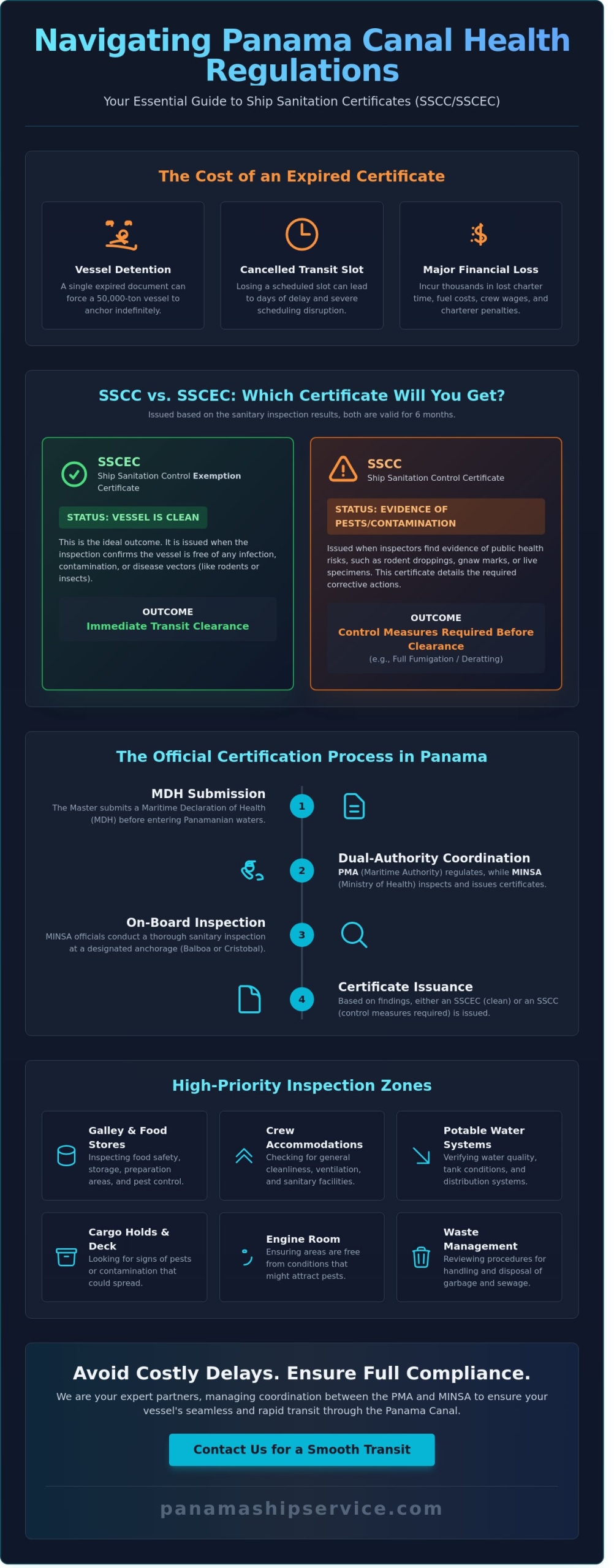
This guide simplifies the process to ensure your vessel meets International Health Regulations (IHR 2005) without the stress of last-minute inspections. You’ll gain a clear roadmap for obtaining a valid six-month certificate and learn the critical differences between SSCC and SSCEC documentation. We provide the technical clarity you need to ensure zero delays during your transit and maintain full compliance with local maritime laws.
Key Takeaways
- Master the modern standards of the Ship Sanitation Control Certificate (SSCC) to ensure full compliance with International Health Regulations during your Panama Canal transit.
- Learn the critical differences between the SSCC and SSCEC to determine exactly which certificate your vessel needs based on its current sanitary condition.
- Streamline your arrival by coordinating a ship deratting certificate panama at strategic anchorages in Balboa or Cristobal to avoid unnecessary maritime health delays.
- Identify the most effective fumigation techniques and high-priority inspection zones, from the bridge to the galley, to maintain a pest-free environment.
- Discover how integrating sanitary compliance with mechanical ship repairs can minimize vessel expenses and maximize your operational time at the Canal.
What is a Ship Deratting Certificate and Why is it Mandatory in Panama?
Securing a ship deratting certificate panama is a critical requirement for any vessel intending to transit the Panama Canal or dock at national ports. While the industry still uses the traditional “deratting” terminology, the International Health Regulations (IHR 2005) officially replaced this with the Ship Sanitation Certificate (SSC). This modern standard expanded the scope of inspections from simple rodent control to a comprehensive evaluation of all onboard sanitary conditions, including food safety, water quality, and waste management. The Panama Canal Authority (ACP) maintains zero tolerance for expired health documentation. If your vessel arrives without valid papers, it won’t transit. It’s that simple. We are experts so you don’t have to be, ensuring your paperwork is ready before you reach the breakwater.
The legal consequences of non-compliance are severe and immediate. Port State Control (PSC) officers in Panama have the authority to detain vessels that fail to present a valid SSCC or SSCEC. A detention doesn’t just mean a fine; it often results in the immediate cancellation of your transit slot. In the shipping world, timing is everything. Losing a slot at the Panama Canal can lead to delays of several days and significant financial losses in fuel, crew wages, and charterer penalties. Maintaining a valid ship deratting certificate panama is the only way to avoid these “difficult and frustrating” operational bottlenecks.
The Legal Framework: PMA and Ministry of Health (MINSA)
Health oversight in Panamanian territorial waters involves dual-authority coordination. The Panama Maritime Authority (PMA) serves as the primary regulator for all maritime activities, but they delegate technical health inspections to the Ministry of Health (MINSA). This means that while your ship’s registry and safety equipment fall under the PMA, the actual sanitary inspection and the issuance of the certificate are handled by MINSA officials. This dual-layered system requires precise coordination. Our team acts as your trusted partner at the Panama Canal, managing the communication between these two government bodies to streamline the inspection process.
International Health Regulations (IHR 2005) in Panama
Panama enforces global maritime health standards with high efficiency. Before any vessel enters Panamanian waters, the Master must submit a Maritime Declaration of Health (MDH) to report the current sanitary status on board. The Ship Sanitation Control Certificate (SSCC) is a six-month mandatory document for international shipping. If your certificate is within a few days of its 180-day expiration, Panamanian authorities will likely require a new inspection before granting transit. We provide the rapid response needed to organize these inspections at the Colon or Balboa anchorages, preventing costly downtime for your fleet.
- Validity: Certificates are valid for exactly six months.
- Extensions: A single one-month extension is possible under specific criteria.
- Compliance: Mandatory for all vessels regardless of size or cargo type.
SSCC vs. SSCEC: Understanding the Difference and Validity
Under the International Health Regulations (2005), every vessel must carry a valid sanitation certificate to enter international ports. Understanding the nuances of the ship deratting certificate panama process helps avoid unexpected delays at the Canal. Panama authorities issue two distinct documents based on the inspection results. The Ship Sanitation Control Exemption Certificate (SSCEC) is the standard for clean vessels. It confirms the ship is free of infection and vectors. If inspectors find evidence of pests, they issue a Ship Sanitation Control Certificate (SSCC). This document requires the ship to undergo specific control measures, like fumigation, before clearance. Both certificates remain valid for 6 months. You can request a single 30-day extension if the inspection can’t occur at the current port, but this is a one-time allowance that requires a valid reason.
When is a Full Fumigation Required?
Inspectors look for active signs of rodents or insects during their walkthrough. If they find droppings, gnaw marks, or live specimens, they’ll mandate a full deratting procedure. Cargo type heavily influences this risk. Bulk carriers transporting grain or organic materials often face 20% higher scrutiny levels than tankers. When evidence is discovered, the ship must undergo professional fumigation to secure the ship deratting certificate panama mandates for transit. This process is technical and time-sensitive. We manage these high-stakes requirements so you don’t have to worry about missing your window. Our team coordinates the necessary treatments to ensure the vessel meets all sanitary standards without inflating your port stay.
The Exemption Process (SSCEC)
To secure an exemption, your vessel must pass a rigorous physical check. Port health officers in Panama focus on specific high-risk zones that are prone to infestation:
- Galleys and food preparation areas.
- Dry provision stores and refrigeration units.
- Crew accommodation and waste management sites.
You’ll need to present the last 12 months of pest control logs and current medicine chest certificates. Proactive management is the best way to maintain a “clean” status. Vessels with documented monthly pest inspections are 40% more likely to receive an SSCEC without additional requirements or follow-up visits. If your current document is nearing its 180-day limit, consult our team for a rapid response and expert coordination of your next inspection. We provide the professional oversight needed to keep your transit on track and your costs controlled.
Practical Fumigation and Sanitary Inspection Methods
Vessel operators must treat sanitary inspections as high-stakes technical operations. To maintain a valid ship deratting certificate panama, you need more than a cursory walkthrough. Expert teams utilize three primary methods to eliminate infestations. Fogging reaches high-volume spaces like cargo holds quickly. Pump spraying targets specific harborages in cracks and crevices. Baiting systems provide constant monitoring for rodent activity. Each method serves a distinct purpose in a professional pest management plan.
Inspectors focus on four critical zones where pests thrive. The galley and messrooms remain high-risk due to food availability and moisture. Staircases act as transit corridors for rodents moving between decks. Even the bridge requires careful inspection to protect sensitive electronics from gnawing damage. We identify these vulnerabilities before they lead to a failed inspection or a delayed transit. Efficiency in these areas keeps your vessel moving without unnecessary stops.
Targeting Common Maritime Pests
Rodent control on bulk carriers and container ships requires strategic bait placement near mooring lines and storage lockers. These areas represent the primary entry points for rats and mice. In crew accommodation areas, we focus on cockroach and bedbug eradication using residual sprays that remain effective for up to 90 days. Vessels arriving from high-risk ports between March and September must show evidence of Asian Gypsy Moth (AGM) monitoring. We provide specialized treatments to ensure your vessel meets these specific seasonal requirements. Mosquito prevention is also vital, especially for ships transiting tropical zones where vector-borne diseases impact crew health and port entry status.
Safety and Environmental Compliance
Safety is our priority during every chemical treatment. Crew members must evacuate treated areas until gas levels return to 0.0 ppm. We use calibrated gas detectors to verify air quality before re-entry. Proper ventilation periods, typically lasting between 2 to 6 hours, are strictly enforced based on the specific chemical concentration used. All chemicals used must be MARPOL-compliant and safe for food-handling areas.
We ensure that every product meets international maritime environmental standards to prevent fines and environmental damage. Our teams follow a rigid protocol to protect your crew while maintaining the highest sanitary standards. We are experts so you don’t have to be. Put your ship deratting certificate panama requirements in our hands to ensure a smooth, compliant transit every time. Our goal is to minimize your vessel expenses while providing a rapid response to any sanitary challenge.
Logistical Guide: Getting Your Certificate at the Panama Canal
Efficiency at the Panama Canal isn’t just a goal; it’s a requirement for profitable operations. Securing a ship deratting certificate panama requires precise coordination between the vessel, the agent, and the health authorities. You should notify your marine surveys Panama provider at least 48 to 72 hours before arrival. This window allows for the scheduling of inspectors and the preparation of required documentation. Most inspections conclude within 2 to 4 hours, but the physical delivery of the original certificate to the Master typically occurs within 24 hours of the survey’s completion. We manage this timeline so your vessel doesn’t sit idle.
- Pre-arrival: Submit the Maritime Health Declaration and the previous certificate copy via your agent 3 days out.
- Inspection Window: Surveys usually happen at the designated anchorages before the vessel enters the locks.
- Document Delivery: The original certificate must be onboard. We use dedicated launch services to ensure the Master receives the papers before the vessel clears the second set of locks.
Coordination with Canal Transit
Don’t waste time. We schedule inspections to coincide with bunker operations or crew changes at the Pacific or Atlantic entrances. If your vessel requires cleaning or maintenance, you can combine health surveys with underwater hull services to maximize your stay at the anchorage. For vessels arriving with expired papers, we facilitate emergency issuance. This prevents the Panama Canal Authority from denying transit, which can cost operators thousands in lost slot fees. We are experts so you don’t have to be.
Pacific vs. Atlantic Side Logistics
The choice between Balboa (Pacific) and Cristobal (Atlantic) depends on your transit direction and schedule. Balboa is often busier, requiring more lead time for launch service availability. Cristobal offers different boarding conditions. During the rainy season from May to December, Atlantic side swells can impact boarding safety. Our team monitors local weather patterns and maintains direct contact points with the Panama Maritime Authority in both ports. We ensure the inspector reaches your vessel regardless of which side you’re anchored. This proactive approach eliminates “dead time” and keeps your ship deratting certificate panama process moving forward.
Stop worrying about canal delays and expired health papers. Contact Panama Ship Service today to coordinate your next inspection and certification.
Panama Ship Service: Your Expert for Maritime Health Compliance
Panama Ship Service has provided technical ship services at the Panama Canal for over 20 years. We understand that in this high-stakes environment, timing is everything. Our team operates as a comprehensive one-stop-shop, allowing owners to combine essential fumigation and health inspections with mechanical ship repairs. This integrated approach ensures your vessel remains compliant without requiring multiple separate appointments that disrupt your schedule.
Our authorized personnel are fluent in English, ensuring seamless communication with your crew and officers. This clarity prevents the misunderstandings that often lead to delays during health inspections. Since the Canal operates on a 24/7 rhythm, our teams are available around the clock to match your transit window. We prioritize efficiency because we know that every hour spent at anchor adds to your operational costs. Securing a ship deratting certificate panama through an experienced partner is the most reliable way to maintain your itinerary.
Why We Are the Trusted Partner in Panama
Our business philosophy is simple: we’re experts so you don’t have to be. We take the burden of maritime health regulations off your shoulders so you can focus on navigation and cargo operations. When an urgent request for a ship deratting certificate panama arises, we provide rapid response times that many smaller agencies can’t match. We don’t just perform the service; we maintain constant communication with owners and charterers throughout the entire process. You’ll receive real-time updates from the moment our technicians board until the final documents are signed and delivered.
Consolidated Service Benefits
Bundling services is the most effective strategy to minimize vessel expenses at the Canal. We help you maximize your time by pairing health surveys with MARPOL disposal panama. This consolidation reduces the number of launches and personnel movements required, which directly lowers your port costs. Our team ensures all sanitation papers are in perfect order, which is vital for preventing port denial at your next destination.
- Expert Oversight: 20 years of local experience navigating Panama Canal Authority requirements.
- Language Precision: English-speaking staff to coordinate directly with the Master and Chief Officer.
- Risk Mitigation: Proper certification prevents the heavy fines associated with expired health documents.
- Operational Speed: 24/7 service availability to accommodate tight transit schedules.
Don’t leave your compliance to chance in one of the world’s busiest waterways. Contact us today for a comprehensive quote on fumigation and certificates to ensure your vessel stays on schedule and fully compliant with international health regulations.
Secure Your Transit with Expert Maritime Health Compliance
Navigating the technical differences between a Ship Sanitation Control Certificate (SSCC) and an Exemption Certificate (SSCEC) is critical for avoiding costly delays at the Panama Canal. Compliance requires rigorous inspections and, when necessary, professional fumigation performed by PMA Authorized Pest Controllers. Missing a regulatory deadline or failing a sanitary inspection can disrupt your entire operational schedule; however, these risks are manageable with the right local support. We are experts so you don’t have to be. With over 20 years of experience at the Panama Canal, our team ensures your vessel meets every international health standard efficiently. We provide a 24/7 rapid response team to handle inspections and documentation immediately. Obtaining your ship deratting certificate panama doesn’t have to be a source of anxiety when you have a trusted partner managing the logistics. We focus on minimizing your expenses and saving time so your crew can stay focused on the journey ahead. Put your transit in our hands and sail with confidence.
Get an Expert Quote for Your Deratting Certificate in Panama
Frequently Asked Questions
How long is a Ship Sanitation Control Exemption Certificate (SSCEC) valid for?
A Ship Sanitation Control Exemption Certificate is valid for exactly six months from its date of issuance. Under Article 39 of the International Health Regulations (2005), authorities can grant a single 30 day extension if the inspection cannot be performed at the current port. We track these expiration dates for our clients 30 days in advance. Don’t let an expired certificate stall your operations; timely renewals keep your vessel moving.
Can I get a deratting certificate in Panama while the ship is at anchor?
Yes, you can obtain a ship deratting certificate panama while your vessel is at anchor in designated areas like Balboa or Cristobal. Panama Health Authority inspectors board the vessel via launch boat to conduct the 3 hour inspection. This allows you to complete necessary paperwork without docking, which saves significant port fees and fuel. Our team coordinates the logistics to ensure the inspector arrives at your specific coordinates promptly.
What happens if my ship sanitation certificate expires during the Panama Canal transit?
If your certificate expires during transit, the Panama Canal Authority may deny entry or impose administrative fines. You must renew the document or obtain an extension at the first port of call before entering canal waters. We recommend starting the renewal process 10 days before your scheduled arrival at the canal. This proactive approach prevents costly delays and ensures your transit remains on schedule.
Is a deratting certificate the same as a fumigation certificate?
A deratting certificate isn’t the same as a fumigation certificate, though they’re closely related. The Ship Sanitation Control Certificate (SSCC) is the official document proving the ship was inspected and treated for rodents. A fumigation certificate is a technical report provided by the pest control company detailing the specific chemicals used during the process. We manage the coordination between these private contractors and health authorities to simplify your compliance.
Do I need to fumigate my ship if I only need an exemption certificate?
You don’t need to fumigate your ship if the inspector finds no evidence of rodents or pests during the survey. In these cases, the authority issues an exemption certificate (SSCEC) instead of a control certificate. According to IHR 2005 standards, 90 percent of modern cargo vessels qualify for this exemption. Our experts help you prepare the vessel’s galley and stores to ensure you meet these exemption criteria on the first attempt.
What documents must the Master provide for a sanitary inspection in Panama?
The Master must provide the Maritime Declaration of Health, the previous SSCEC, and the current Crew List. You also need the list of the last 10 ports of call and the vessel’s Medical Logbook for review. Having these five documents organized before the inspector boards reduces the total inspection time by 25 percent. We provide a digital checklist so your crew has every required page ready for immediate inspection.
Are Panama-issued deratting certificates recognized globally?
Every ship deratting certificate panama issued is recognized globally by all 196 countries that follow the World Health Organization’s International Health Regulations. Panama is a premier maritime hub, so its health documents carry significant weight in every international port. This means a certificate issued in Balboa is just as valid in Rotterdam, Shanghai, or Singapore. We’re experts so you don’t have to be when navigating these global standards.
How much time should I allow for a sanitary inspection in Balboa?
You should allow between 2 and 4 hours for a standard sanitary inspection in Balboa. This timeframe includes the inspector’s transit to the anchorage and the physical walk through of the galley, engine room, and crew quarters. We suggest scheduling the inspection at least 24 hours before your planned departure to account for any logistical variables. Efficiency is our priority, and we push for the fastest possible turnaround for your vessel.