
Could a hidden buildup of biofouling in your vessel’s niche areas turn a routine Panama Canal transit into a costly mechanical emergency? With a heavily fouled hull potentially increasing fuel consumption by as much as 40%, the operational stakes are exceptionally high. Professional sea chest cleaning services are no longer just routine maintenance; they’re a strategic safeguard against engine overheating during critical low-speed maneuvers in the locks.
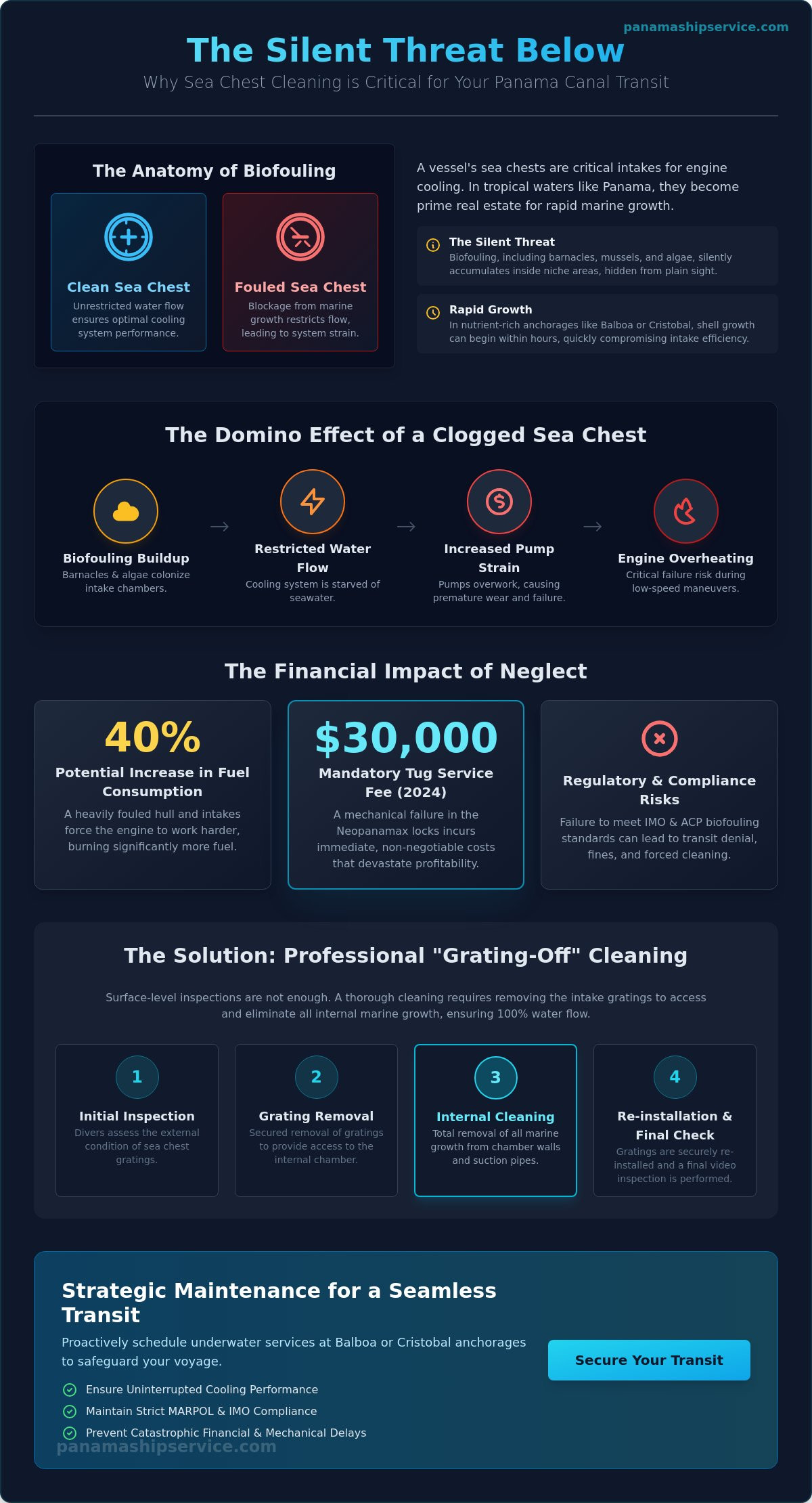
You understand that any delay in the Neopanamax locks, where mandatory tug services alone cost $30,000.00 as of 2024, can devastate your voyage’s profitability. We promise to show you how to ensure uninterrupted cooling system performance, maintain MARPOL compliance, and avoid the risks associated with mechanical failure. This article previews the technical requirements for underwater work permits in Panama and explains how proactive cleaning protects your vessel from the latest IMO biofouling guidelines and increased regulatory scrutiny.
Key Takeaways
- Identify why sea chests are critical intake points and how biofouling restricts water flow to your main engine and generators.
- Recognize the operational risks of pump backpressure and component failure that arise when cooling systems are neglected before high-stakes maneuvers.
- Learn the importance of the “grating-off” technical procedure during sea chest cleaning services to ensure total removal of marine growth from internal niche areas.
- Discover how to strategically schedule underwater hull services at Balboa or Cristobal anchorages to synchronize with your Panama Canal transit window.
- Maintain strict compliance with environmental regulations while preventing the catastrophic financial impact of mechanical delays within the Canal locks.
What are Sea Chest Cleaning Services and Why are They Critical?
A sea chest is a critical recess in the hull of a vessel that provides an intake for seawater used in internal cooling systems. These chambers act as the primary reservoir for cooling the main engine, generators, and auxiliary machinery. Without a steady supply of seawater, heat exchangers cannot regulate internal temperatures, leading to rapid thermal stress. Professional sea chest cleaning services ensure these intakes remain unobstructed by marine growth that naturally accumulates in tropical environments.
While many operators focus on hull smoothness, the internal hygiene of these intake points is arguably more important for mechanical reliability. Biofouling, consisting of barnacles, mussels, and algae, creates a physical barrier that restricts the volume of water entering the vessel. This restriction forces pumps to work harder, increasing backpressure and accelerating component wear. Relying on visual inspections from the surface or basic ROV fly-bys isn’t enough. Internal blockages often hide behind gratings or within the corners of the chamber, requiring manual intervention to verify and clear.
The Anatomy of a Sea Chest Intake
Vessel intakes are complex systems featuring intake gratings designed to filter large debris and internal chambers that house the suction pipes. Many modern vessels utilize a Marine Growth Prevention System (MGPS), which uses copper or aluminum anodes to deter larvae from settling. However, these systems aren’t foolproof, especially when a ship stays stationary in nutrient-rich waters. It’s also vital to distinguish between specialized AC cooling intakes and the massive main engine cooling chests. Each has different flow requirements and vulnerability levels to fouling, making specialized sea chest cleaning services a technical necessity rather than a luxury.
Biofouling: The Silent Threat to Maritime Efficiency
The tropical waters surrounding Panama are a catalyst for rapid biological growth. When a vessel anchors in Balboa or Cristobal, shell growth can begin within hours, quickly colonizing the dark, high-flow environment of an intake. This buildup doesn’t just threaten the engine; it impacts the bottom line. Restricted water flow increases fuel consumption as the engine’s efficiency drops due to sub-optimal cooling temperatures. Sea chest biofouling is a primary cause of non-mechanical engine overheating that can lead to catastrophic failure during a Canal transit. Regular maintenance prevents these issues by removing the root cause of thermal inefficiency before it results in a transit delay or costly mechanical repair.
The Hidden Costs of Clogged Sea Chests: Biofouling and Overheating
Operating a vessel with obstructed cooling intakes is a calculated risk that often leads to expensive operational failures. While the direct cost of maintenance is easy to quantify, the hidden expenses of neglect are far more damaging. Clogged sea chests create excessive backpressure on cooling pumps, which forces them to operate outside their design parameters. This strain leads to premature component failure, seal leaks, and eventually, the complete breakdown of the cooling circuit. In the high-stakes environment of a scheduled voyage, these mechanical issues often result in emergency sea chest cleaning services being performed under duress, usually at a much higher price point than planned maintenance.
Beyond mechanical wear, Vessel biofouling represents a significant compliance hurdle. International maritime authorities and the Panama Canal Authority (ACP) have increased their scrutiny of niche areas to prevent the transfer of invasive aquatic species. If an inspection reveals significant growth, your vessel may be denied entry or forced to undergo immediate remediation. Failing to address these biological accumulations doesn’t just threaten the local ecosystem; it puts your “ready-for-transit” status at risk. To avoid these complications, many operators integrate underwater hull services into their pre-arrival checklist to ensure seamless passage through the locks.
Engine Failure Risks During Canal Transit
The Panama Canal demands peak cooling performance during low-speed maneuvers and lock transitions. When a vessel is under pilotage, engines and generators often run at variable loads that generate significant heat. If the sea chests are restricted by barnacles or mussels, the system cannot dissipate this thermal energy. This creates a high risk of a “blackout” scenario within the locks, a situation that triggers immediate ACP intervention. The financial fallout of such an event is severe, as it involves mandatory tug assistance, which costs $30,000.00 for Neopanamax locks, and potential fines for obstructing the waterway.
Fuel Inefficiency and Environmental Impact
Thermal efficiency is directly linked to fuel economy. When cooling water flow is restricted, the main engine operates at sub-optimal temperatures, leading to incomplete combustion and higher fuel consumption. Industry data suggests that a 10% increase in fuel consumption for a vessel burning 50 tons of VLSFO per day results in an extra $3,000 in daily costs. Maintaining clean intakes is a prerequisite for meeting the updated 2023 IMO biofouling guidelines (MEPC.378(80)). By ensuring your cooling system is clear, you reduce your carbon footprint and ensure your vessel remains compliant with the latest global environmental standards for niche area management.
Professional Underwater Cleaning: The Technical Procedure
Effective maintenance of a vessel’s cooling system requires a systematic, multi-stage technical approach. It’s not enough to simply clear the surface of the hull; true restoration of hydraulic efficiency happens within the intake chamber itself. Professional sea chest cleaning services begin with a comprehensive CCTV dive inspection. This initial phase provides video documentation of the biofouling levels, allowing the technical team and the vessel’s superintendent to assess the extent of the blockage before any tools touch the hull. This baseline data is essential for verifying the success of the operation upon completion.
The most critical phase of the procedure is the “grating-off” step. Many low-cost providers attempt to clean the intake by simply brushing the exterior bars, but this is a superficial fix that ignores the root of the problem. A seasoned diving team will remove the intake gratings entirely to gain full access to the internal sea chest walls. Once the hardware is removed, technicians use a combination of hand-scraping and specialized mechanical tools to strip away calcified growth from every corner of the chamber. This ensures that the niche areas, where barnacles and mussels thrive undisturbed, are completely remediated.
Internal vs. External Cleaning Techniques
Simple external brushing of gratings is often a “false fix” that leads to a false sense of security. While the exterior might look clean, the internal volume of the sea chest remains restricted by thick layers of marine growth. This internal fouling continues to cause turbulence and flow resistance. During the cleaning process, divers must carefully manage the removal of debris. If scraped material is allowed to float freely near the suction points, it risks being pulled further into the heat exchangers or clogging the internal strainers. Professional teams use controlled scraping patterns to ensure all biological waste is cleared away from the intake openings safely.
Safety and Quality Control Standards
Safety is the primary priority during any underwater intervention. Strict Lock-out/Tag-out (LOTO) protocols are mandatory to ensure that sea water pumps are deactivated while divers are working near the intakes. This prevents the risk of suction-related accidents. Beyond personnel safety, the technical team must protect the integrity of the vessel’s assets. This includes ensuring that mechanical cleaning does not damage anti-corrosive coatings or interfere with the Marine Growth Prevention System (MGPS) anodes.
Upon finishing the cleaning, the gratings are re-secured using class-approved protocols and torque specifications. The service concludes with a final CCTV inspection to confirm that the internal chambers are 100% clear. This documentation is compiled into detailed underwater hull services reports. These reports serve as formal evidence of maintenance for class surveyors and environmental regulators, proving the vessel is fit for its upcoming transit.
Strategic Maintenance: Timing Cleaning with Canal Operations
Strategic maintenance requires more than just technical skill; it demands a deep understanding of the Panama Canal’s operational rhythm. Scheduling sea chest cleaning services during the mandatory waiting period at anchorages is the most effective way to eliminate downtime. By utilizing the time spent waiting for a transit slot, operators transform idle hours into a productive maintenance window. This proactive approach ensures the cooling system is at peak performance before the vessel enters the high-stress environment of the locks. It’s a logistical win that safeguards the engine without adding days to the voyage.
The Panama Canal Authority (ACP) maintains strict regulations regarding in-water maintenance. Any underwater work within Canal jurisdiction requires a specific permit and must be performed at designated anchorages. Coordinating these services requires a partner who understands the local regulatory landscape and can manage the permitting process without disrupting the vessel’s schedule. This ensures the technical team is ready to deploy as soon as the vessel arrives. Proper coordination prevents any conflict with the assigned transit time, especially since the current fee schedule remains predictable through September 2026.
Cleaning at the Entrance: Balboa and Cristobal
Serving as the Pacific and Atlantic gateways, Balboa and Cristobal anchorages offer the ideal logistical setup for quick-response diving teams. Performing sea chest cleaning services at these locations eliminates the need for costly deviations to secondary ports. It allows for a final verification of the vessel’s cooling capacity just hours before the transit begins. This localized positioning is a strategic advantage for ship managers who need to balance tight schedules with the necessity of maintaining niche area hygiene. It ensures that the vessel is 100% ready for the pilot’s arrival.
Consolidated Services: A One-Stop Approach
Efficiency is maximized when multiple technical needs are handled simultaneously. Ship managers can reduce their administrative burden by combining sea chest hygiene with mechanical ship repairs in Panama. Delegating both underwater and topside tasks to a single, authoritative provider simplifies communication and ensures a unified technical report. This consolidated strategy doesn’t just optimize the vessel’s schedule; it provides a comprehensive overview of the ship’s mechanical status. It allows the crew to focus on transit preparations while the technical experts handle the complexity of the repairs.
Managing the complexities of a Canal transit shouldn’t be an additional burden for your crew. By integrating underwater maintenance into your arrival protocol, you ensure your vessel remains compliant and mechanically sound. To secure your maintenance slot and ensure a smooth transit, contact Panama Ship Service to coordinate your underwater technical needs.
Reliable Underwater Solutions with Panama Ship Service
Panama Ship Service positions itself as the definitive technical partner for vessel operators navigating the high-stakes environment of the Panama Canal. Our specialized diving and technical teams are trained to execute complex underwater tasks with precision and speed. We deliver sea chest cleaning services that prioritize the restoration of hydraulic efficiency, ensuring your vessel meets all internal cooling requirements before the pilot boards. By maintaining a constant, proactive presence at both the Pacific and Atlantic entrances, we offer a level of responsiveness that is essential for maintaining tight transit schedules. We prioritize your schedule.
Our operational model is built on the principles of reliability and fiscal responsibility. We recognize that any delay at the Canal anchorages can have a cascading effect on your entire voyage. Our teams use a systematic approach to identify and remediate biofouling in niche areas, providing clear video evidence and comprehensive reports for every intervention. This commitment to transparency and efficiency has created a proven track record of minimizing transit delays for some of the world’s largest shipping fleets. We handle the technical complexity so your crew can focus on the safe navigation of the vessel. It’s about results.
Expertise at the Heart of Global Shipping
Localized knowledge is a critical asset when navigating the specific requirements of the Panama Canal Authority. Our deep understanding of local permitting and environmental standards ensures that all work is performed in full compliance with current maritime law. This proficiency isn’t limited to diving; it encompasses a broad range of mechanical ship repairs designed to keep your vessel in peak condition. We focus on providing solutions that reduce operational overhead and protect your vessel’s long-term asset value. Our seasoned veterans handle the pressure so you don’t have to.
Secure Your Transit Success
Securing your transit success begins with a proactive maintenance strategy. Requesting a rapid response quote for sea chest cleaning services allows you to lock in a service window that aligns with your arrival at Balboa or Cristobal. Our “one-stop-shop” philosophy simplifies your logistics by consolidating multiple requirements into a single, managed service package. Whether you need underwater hull services, MARPOL disposal, or ship supplies, we provide a unified point of contact for all technical needs. This consolidation reduces administrative friction and ensures consistent service quality across the board. Contact Panama Ship Service today to schedule your sea chest inspection and ensure your cooling system is ready for the Canal.
Secure Your Cooling Performance for a Seamless Transit
Maintaining sea chest hygiene is a critical operational safeguard that directly impacts your vessel’s reliability within the Panama Canal locks. You can’t afford to let biofouling compromise engine cooling or trigger costly regulatory fines. Addressing these niche areas before transit protects both your schedule and your bottom line. Professional sea chest cleaning services provide the technical assurance needed to navigate the waterway without the risk of mechanical failure or transit denial.
Panama Ship Service provides class-approved diving teams and specialists in Panama Canal transit compliance to manage these high-stakes technical requirements. Our 24/7 emergency response at both Balboa and Cristobal anchorages means we’re always positioned to support your vessel’s needs. Don’t leave your cooling system’s performance to chance during a critical passage. It’s about ensuring operational continuity and meeting international standards without unnecessary complication.
Request an Underwater Service Quote from Panama Ship Service today to delegate your technical maintenance to a trusted regional partner. We’re ready to ensure your next transit is efficient and entirely uninterrupted.
Frequently Asked Questions
How often should sea chest cleaning be performed?
Sea chest cleaning should ideally be performed every 6 to 12 months or immediately prior to a Panama Canal transit if the vessel has spent time in tropical waters. Biofouling accumulates rapidly in nutrient-rich environments, leading to cooling inefficiencies. Regular inspections allow for the removal of microfouling before it develops into more problematic macrofouling, which is more expensive and difficult to remediate during a busy operational schedule.
Can sea chest cleaning be done while the vessel is at anchor in Panama?
Yes, sea chest cleaning can be performed at designated anchorages in Balboa or Cristobal while the vessel waits for its transit slot. This requires a specific underwater work permit from the Panama Canal Authority (ACP). Utilizing this waiting period maximizes vessel uptime and ensures that the cooling system is clear before the ship enters the locks, where engine performance is critical for safe maneuvering.
Does cleaning the sea chest require the vessel to be in dry dock?
No, sea chest cleaning is a standard underwater service that doesn’t require the vessel to be in dry dock. Specialized diving teams perform these sea chest cleaning services in-water using mechanical scraping and hand-cleaning techniques. This allows ship owners to maintain their cooling systems without the massive expense and scheduling complexity associated with dry-docking, keeping the vessel operational and on schedule.
Will underwater cleaning damage my vessel’s anti-fouling coating?
Professional underwater cleaning techniques are designed to remove marine growth without damaging the underlying anti-fouling or anti-corrosive coatings. Experienced divers use calibrated tools and soft-cleaning methods to preserve the hull’s integrity. It’s also vital to ensure that the Marine Growth Prevention System (MGPS) anodes remain undisturbed during the process. Using a class-approved team ensures that the cleaning remains within the manufacturer’s specified safety tolerances.
How long does a typical sea chest cleaning service take?
A typical sea chest cleaning service usually takes between 4 to 8 hours, though this depends on the number of intakes and the severity of the biofouling. If the “grating-off” procedure is required for a deep internal clean, the timeline may extend slightly. Technical teams work efficiently to complete the task within the vessel’s port stay or anchorage window to prevent any impact on the scheduled transit time.
What are the signs that my vessel’s sea chests are clogged?
The primary signs of clogged sea chests include frequent high-temperature alarms on the main engine or generators and increased backpressure on the seawater cooling pumps. You might also notice a reduction in the volume of water flow through the heat exchangers. If the engine’s thermal efficiency drops or the cooling system struggles to maintain stable temperatures during load changes, it’s a clear indication that a professional inspection is required.
Is a video report provided after the sea chest cleaning?
Yes, a comprehensive video report and CCTV documentation are standard components of professional sea chest cleaning services. This documentation includes pre-cleaning inspections to identify the level of fouling and post-cleaning verification to confirm that the internal chambers are clear. These reports provide essential evidence for class surveyors and serve as a formal record of maintenance for environmental compliance and internal ship management audits.
Can sea chest cleaning be combined with propeller polishing?
Yes, sea chest cleaning is frequently combined with propeller polishing and other underwater hull services to optimize overall vessel performance. Consolidating these tasks into a single diving session is a cost-effective way to improve fuel efficiency and reduce carbon emissions. Handling multiple technical requirements simultaneously at the Panama Canal anchorages simplifies logistics and ensures the vessel is in peak condition for its upcoming voyage across the Pacific or Atlantic.