
A single oversight in cargo securing isn’t just a logistical error; it’s a direct threat to vessel stability and your commercial bottom line. You’re likely well aware that the pressure to maintain tight schedules often clashes with the rigid demands of Port State Control and IMO regulations. Managing the constant risk of cargo damage claims or the threat of a PSC detention requires more than just basic deck oversight. Implementing rigorous safe cargo handling procedures for ships is the only way to mitigate these risks while maintaining your operational momentum.
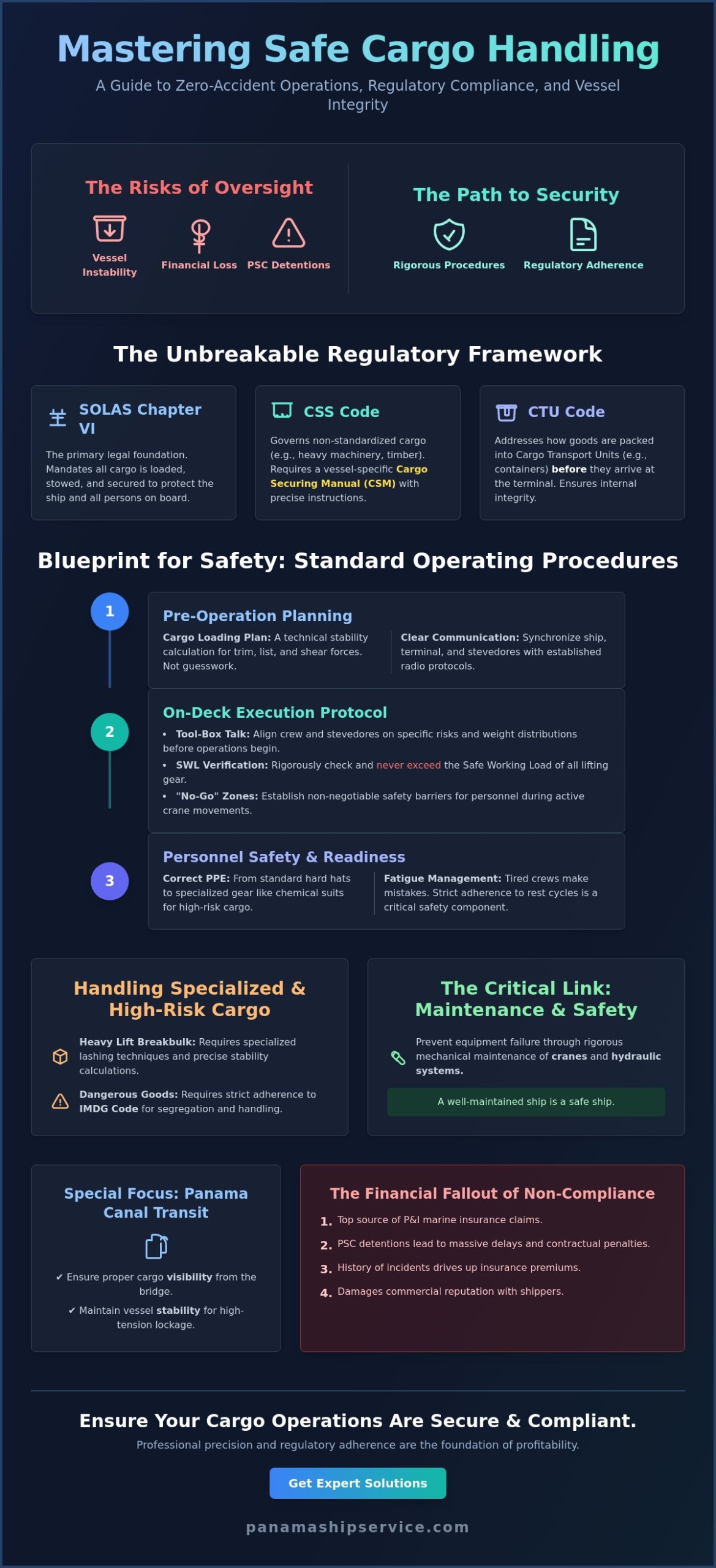
Mastering these essential safety protocols ensures vessel integrity and keeps your crew safe during high-pressure operations. This guide provides the technical expertise you need to achieve full compliance with CSS and CTU codes while optimizing your loading and unloading efficiency. We’ll break down the critical synergy between mechanical equipment maintenance, international regulatory requirements, and standardized operational workflows. By the end of this article, you’ll have a clear strategy for achieving zero-accident cargo operations and reducing costly overhead through professional precision and regulatory adherence.
Key Takeaways
- Identify the mandatory international standards, including SOLAS Chapter VI and the CSS Code, required to maintain vessel integrity and avoid PSC detentions.
- Implement standardized pre-operational planning and communication protocols to synchronize ship and shore activities for zero-accident operations.
- Apply specialized safe cargo handling procedures for ships carrying high-risk loads like heavy lift breakbulk and dangerous goods requiring strict IMDG segregation.
- Recognize the critical link between mechanical maintenance and cargo safety, focusing on the prevention of equipment failure in cranes and hydraulic systems.
- Meet specific Panama Canal requirements for cargo visibility and stability to ensure a safe and efficient transit through high-tension lockage systems.
The Regulatory Framework for Safe Cargo Handling
Safe cargo handling involves the systematic management of loading, stowing, and securing goods to prevent shifts or damage. It’s a critical operational pillar. Without strict adherence to established protocols, the risk of vessel instability or structural failure increases exponentially. The primary legal foundation for these activities is found within The Regulatory Framework for Safe Cargo Handling, specifically SOLAS Chapter VI. This regulation mandates that all cargo is loaded, stowed, and secured in a manner that protects the ship and the persons on board.
Central to this framework is the Code of Safe Practice for Cargo Stowage and Securing, known as the CSS Code. This isn’t a general guideline; it’s a technical standard. Every vessel must carry a Cargo Securing Manual (CSM) that’s specific to its design and equipment. This manual provides the crew with precise instructions on how to implement safe cargo handling procedures for ships to maintain stability throughout the voyage. Failure to follow the CSM can lead to catastrophic cargo loss or even the total loss of the vessel. Non-compliance doesn’t just risk the cargo; it compromises the entire ship’s integrity.
Understanding the CSS and CTU Codes
The CSS Code specifically governs non-standardized cargo, such as heavy machinery, timber, and steel coils. These items don’t fit into standard containers and require specialized lashing techniques. While the CSS Code focuses on the ship, the CTU Code (Code of Practice for Packing of Cargo Transport Units) addresses how goods are packed before they arrive at the terminal. If a container is poorly packed, the ship’s crew can’t fix it once it’s on deck. The CSS Code provides a standard for the stowage and securing of cargoes that cannot be handled by traditional containerization.
The Legal and Financial Impact of Cargo Incidents
Data from major P&I clubs shows that cargo damage remains one of the largest sources of marine insurance claims. Most of these incidents stem from improper securing or inadequate pre-voyage planning. When safe cargo handling procedures for ships are ignored, the financial fallout is immediate. Port State Control (PSC) inspectors frequently target cargo securing as a primary area for audits. A single deficiency can lead to a detention, causing massive delays and contractual penalties. Beyond the immediate costs, a history of cargo incidents will inevitably drive up your insurance premiums and damage your reputation with shippers. Efficiency and compliance aren’t just safety requirements; they’re the foundation of your profitability.
Standard Operating Procedures for Cargo Operations
Operational success depends on a disciplined sequence of events. Standardized safe cargo handling procedures for ships transform regulatory requirements into deck-level reality. It starts with the Cargo Loading Plan. This document isn’t just a map; it’s a technical stability calculation that accounts for the vessel’s trim, list, and shear force limits. You can’t rely on guesswork when the structural integrity of the hull is at stake.
Effective communication between the Chief Officer, terminal representative, and stevedores prevents the information silos that lead to accidents. Clear signals and radio protocols must be established before the first hook is lowered. This synchronization ensures that every lift is accounted for and that the ship’s stress levels remain within safe parameters throughout the process.
Step-by-Step Loading Protocol
Before operations begin, the officer in charge must conduct a tool-box talk. This meeting aligns the crew and stevedores on specific load risks and weight distributions. Rigorous verification of the Safe Working Load (SWL) for all lifting gear and deck points is mandatory. Never exceed these limits. Establishing “No-Go” zones for personnel during active crane movements is a non-negotiable safety barrier that protects lives on deck.
Personnel Safety and PPE Requirements
Standard hard hats and boots are the minimum. High-risk operations require specialized gear. This is especially true for Procedures for Specialized and High-Risk Cargo, where chemical suits or high-temperature protection may be necessary. Safety also depends on the mental state of the crew. Fatigue management is a critical safety component; tired crews make mistakes that lead to structural damage. Ensure rest cycles are strictly followed to maintain peak operational awareness. Additionally, establish emergency shelter positions for deck crew to provide immediate protection during gear failure or sudden weather shifts.
During loading, the ballast system must be managed to counter-act cargo weight and maintain stability. Stress monitoring equipment provides real-time data to prevent exceeding hull strength limits. Once the operation concludes, a final verification of all lashings and securing points is required before the vessel can be cleared for departure. Consistently applying these safe cargo handling procedures for ships reduces the risk of costly delays. If your vessel requires expert oversight during these critical phases, professional cargo handling support can ensure all protocols are met without delaying your schedule.
Procedures for Specialized and High-Risk Cargo
Standardized protocols often fail when you’re faced with non-standard loads. Specialized cargo demands a departure from routine deck work because you must account for unique physical properties, such as the shifting center of gravity in heavy lifts or the moisture content in bulk minerals. Implementing safe cargo handling procedures for ships for these high-risk categories is the only way to prevent catastrophic stability loss or structural deformation. Each cargo type brings its own set of variables that can compromise vessel integrity if not managed with technical precision.
Timber deck cargoes, for example, introduce the specific risk of water absorption. In heavy seas, timber absorbs spray, which significantly increases the weight of the deck load. This raises the vessel’s center of gravity and reduces the righting lever, potentially leading to a sudden capsize. Similarly, bulk cargoes like iron ore fines or nickel ore carry the risk of liquefaction. If the moisture content exceeds the Transportable Moisture Limit (TML), the cargo can behave like a liquid, shifting violently with the ship’s motion and causing a dangerous list.
Heavy Lift and Project Cargo Safety
Heavy lift and project cargo present immediate structural risks to the hull. If the deck isn’t properly reinforced for high-point loads, you risk permanent deformation or failure of the deck plating. Before loading oversized units, a pre-loading structural analysis is mandatory. You should consult with marine surveys to verify deck strength and ensure the vessel’s load-bearing capacity meets the requirements of the specific piece. Securing these units requires specialized lashing equipment, including heavy-duty turnbuckles, bridge fittings, and calculated dunnage to distribute weight effectively. You must also calculate the “Tipping Point” for oversized units to ensure they remain stable during the dynamic forces experienced at sea.
IMDG Cargo and Chemical Safety
Handling dangerous goods requires a valid Document of Compliance for the carriage of hazardous materials. Segregation is the most critical factor in this category. Incompatible chemicals must be separated by specific distances or structural barriers to prevent reactive disasters in the event of a leak. Your crew needs to be proficient in leakage and spill containment procedures specifically during the loading phase, when the risk of container damage is highest. All hazardous material management must align with MARPOL guidelines, ensuring that crew training and emergency response plans are updated and vessel-specific. These safe cargo handling procedures for ships protect your crew from toxic exposure and protect the ship from fire or explosion risks.
The Link Between Vessel Maintenance and Cargo Safety
Mechanical integrity is the silent partner in every successful cargo operation. While many guides focus on the lashing itself, they often overlook the fact that safe cargo handling procedures for ships are entirely dependent on the reliability of the vessel’s gear. A crane failure or a snapped winch line during a heavy lift can lead to immediate hull damage or loss of life. These risks are frequently hidden within invisible wear, such as internal corrosion in hydraulic lines or metal fatigue in gear teeth that standard visual inspections might miss.
Integrating cargo gear into your planned maintenance system (PMS) isn’t optional. It’s a regulatory and safety necessity. When equipment is neglected, the probability of a catastrophic drop increases. Regular load testing and certification ensure that your shipboard cranes can handle their rated capacity without compromise. By maintaining high mechanical standards, you ensure that your safe cargo handling procedures for ships are supported by reliable hardware, reducing the chance of operational downtime.
Crane and Winch Maintenance
Hydraulic systems are the lifeblood of modern cargo gear, but they’re also common failure points. A single seal leak or a contaminated fluid line can cause a sudden loss of pressure, leading to uncontrolled cargo movement. Addressing these issues before they manifest as failures requires proactive mechanical ship repairs to replace worn components and recalibrate control systems. Regular lubrication of wire ropes and inspection of winch drums are equally vital to prevent snagging or uneven spooling during high-tension operations.
Structural Integrity and Deck Maintenance
The ship’s deck must withstand immense localized pressure, especially during heavy-lift operations. Corrosion and metal fatigue in lashing eyes and deck plates can weaken the points where cargo is secured, rendering even the best lashing useless. Specialized underwater hull services and structural surveys play a critical role here. These inspections identify structural weaknesses and hull thinning that directly impact the vessel’s load-bearing capacity. Maintaining steel integrity through professional welding repairs ensures that your vessel remains in full load-line compliance and is capable of handling the stresses of heavy weather while fully loaded.
Maintain your competitive edge by ensuring your gear is always operational. Reach out to Panama Ship Service for comprehensive ship maintenance and repair services today.
Safe Handling During Panama Canal Transits
Transiting the Panama Canal introduces a unique set of operational pressures that demand a specialized subset of safe cargo handling procedures for ships. The Panama Canal Authority (ACP) enforces rigid standards that go beyond standard international regulations. Bridge visibility is the most critical hurdle. If deck cargo obstructs the pilot’s sightlines, the vessel will face immediate transit denial or be forced to hire additional assistance, resulting in significant financial penalties and schedule disruptions.
Precise weight distribution is equally vital because of the transition from saltwater to the freshwater of Gatun Lake. This change in water density affects the vessel’s buoyancy and trim, requiring accurate draft surveys to ensure the ship remains within safe depth limits. During the high-tension lockage process, the ship is subjected to dynamic forces that can test even the most robust lashing systems. Managing these shifts requires constant vigilance and pre-arrival verification of all securing gear to prevent cargo movement within the locks.
ACP Visibility and Stability Regulations
The ACP has specific rules for deck cargo heights and bridge sightlines that must be calculated during the loading phase. You can’t wait until you reach the Balboa or Cristobal anchorages to realize your stowage plan is non-compliant. Preparing for “Panama Canal Mooring” requirements is another essential step. This involves keeping specific deck areas clear for canal wire handlers and equipment. If your cargo encroaches on these zones, it’s not just a safety risk; it’s a regulatory violation that will stall your transit and lead to heavy fines.
Mitigating Risks in a High-Traffic Hub
Mechanical reliability is the difference between a smooth transit and a costly delay. Proactive mechanical ship repairs in Panama ensure that your fairleads, winches, and chocks are ready for the extreme tensions of the canal’s locomotives. While waiting for a transit slot, you should also manage logistical requirements like MARPOL disposal and ship supplies to avoid wasting time once the transit begins. Maintaining your vessel’s readiness while at anchor is a key part of overall operational efficiency.
If you experience a cargo lashing failure or a mechanical breakdown while at anchor, coordinating with a local agency for rapid response is essential. Local experts understand the ACP’s expectations and can provide the necessary technical support to bring the vessel into compliance quickly. By delegating these complexities to a reliable partner, you ensure that your safe cargo handling procedures for ships are fully aligned with the unique demands of the Panama Canal, protecting both your schedule and your vessel’s integrity.
Optimizing Cargo Safety and Operational Efficiency
Maintaining rigorous safe cargo handling procedures for ships is a continuous commitment to vessel integrity and crew safety. You’ve seen how regulatory compliance with the CSS Code and SOLAS provides the legal foundation, while proactive maintenance of cranes and hydraulic systems prevents catastrophic gear failure. For vessels operating in high-traffic hubs like the Panama Canal, these protocols become even more critical to avoid transit denials and costly detentions. Success in modern maritime logistics requires a partner who understands the intersection of technical precision and regulatory demands.
Panama Ship Service provides the comprehensive support you need to maintain peak operational standards. We specialize in mechanical repairs and class-approved marine surveys, offering 24/7 emergency response for vessels in Balboa and Cristobal. We handle the technical complexities so you can focus on your schedule. Ensure your vessel is transit-ready with Panama Ship Service and maintain your competitive advantage in the global market. Your operational excellence starts with reliable technical support.
Frequently Asked Questions
What is the most important document for safe cargo handling on a ship?
The Cargo Securing Manual (CSM) is the most critical document for all cargo operations. It’s a vessel-specific requirement mandated by SOLAS that provides detailed instructions on how to implement safe cargo handling procedures for ships. The manual includes technical data on lashing points, securing patterns, and the maximum load capacities for specific deck areas to ensure vessel stability.
How often should shipboard cargo handling gear be inspected?
Cargo handling gear must undergo a thorough examination by a competent person at least once every 12 months. Additionally, a proof load test is required every five years to maintain valid certification. On a daily basis, the crew should conduct visual inspections of wires, blocks, and hydraulic systems before any lifting operation begins to identify immediate wear or potential failure points.
What are the main causes of cargo-related accidents at sea?
Improper stowage and inadequate lashing are the primary causes of cargo-related incidents at sea. These errors often stem from human factors like crew fatigue or poor communication between ship and shore personnel. Mechanical failures in cranes or winches also contribute to a significant number of accidents, emphasizing the need for rigorous maintenance and adherence to safe cargo handling procedures for ships.
Can a ship be detained for improper cargo securing?
Yes, Port State Control (PSC) authorities have the power to detain vessels for improper cargo securing. If an inspector finds that the cargo isn’t lashed according to the Cargo Securing Manual or that securing equipment is defective, the ship will be held in port. This prevents the vessel from sailing until all deficiencies are corrected, often leading to massive financial losses and contractual penalties.
How does the CSS Code differ from the IMDG Code?
The CSS Code focuses on the physical stowage and securing of non-standardized cargo like heavy machinery or timber to prevent shifting. In contrast, the IMDG Code governs the classification, packing, and segregation of dangerous goods to prevent chemical reactions. While CSS ensures the cargo stays in place, the IMDG Code provides the emergency response protocols needed for handling hazardous materials safely.
What should the crew do if they notice a lashing has failed during heavy weather?
The safety of the crew is the absolute priority if a lashing fails during heavy weather conditions. The bridge team should immediately adjust the vessel’s course and speed to minimize rolling and pitching motions. Crew members shouldn’t attempt to re-secure cargo on an open deck during dangerous conditions; they must wait for the weather to subside or use remote monitoring to assess the risk.
Is the Panama Canal Authority (ACP) involved in cargo safety inspections?
The Panama Canal Authority (ACP) conducts inspections primarily focused on bridge visibility and the readiness of mooring equipment. While they don’t perform a full cargo survey, they’ll deny transit if deck cargo obstructs pilot sightlines or interferes with canal equipment. Vessels must meet these specific local requirements to avoid being turned away from the locks and facing significant transit delays.
How does ship maintenance impact cargo insurance claims?
Marine insurers and P&I clubs often deny cargo damage claims if they find the vessel’s equipment was poorly maintained. If a cargo drop is caused by a rusted crane wire or a faulty hydraulic valve, it’s considered a state of unseaworthiness. Maintaining a detailed record of mechanical repairs and gear inspections is the only way to protect your right to a claim payout after an incident.