
A fouled ship hull can increase fuel consumption by as much as 40 percent, turning a routine transit into a massive environmental and financial liability. You’re likely feeling the pressure of the Panama Canal Authority’s push for carbon neutrality and the strict enforcement of the 2026 MARPOL Annex VI amendments. It’s difficult to manage complex supply chains while ensuring every lubricant, provision, and spare part meets rigorous eco-standards locally.
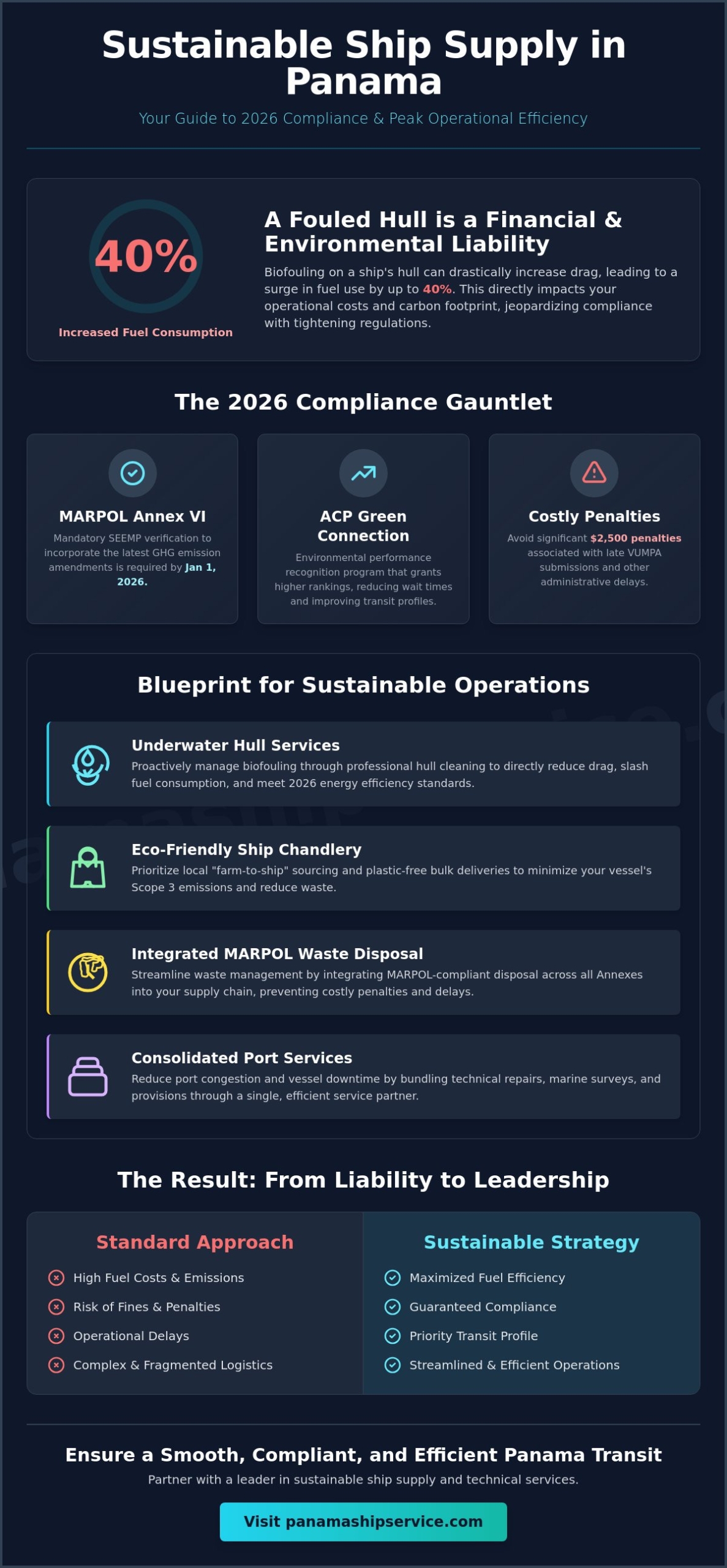
This guide shows you how to optimize your operations through sustainable ship supply panama strategies that align with the latest ACP Green Route requirements. You’ll discover how consolidating eco-friendly procurement with technical services like underwater hull cleaning and MARPOL-compliant waste disposal can slash your footprint and prevent costly operational delays. We’ll also cover the critical digital compliance steps needed to avoid the 2,500 dollar penalties associated with late VUMPA submissions, ensuring your vessel remains both efficient and compliant throughout 2026.
Key Takeaways
- Align your procurement strategy with the ACP Green Connection program to qualify for environmental recognition and optimize your transit profile.
- Implement a sustainable ship supply panama approach by prioritizing local sourcing and plastic-free bulk deliveries to minimize your vessel’s carbon footprint.
- Ensure full MARPOL compliance across all Annexes by integrating waste disposal into your supply chain to prevent costly administrative delays and penalties.
- Utilize professional underwater hull services to manage biofouling, a critical step for reducing fuel consumption and meeting 2026 efficiency standards.
- Reduce vessel downtime and port congestion by consolidating technical repairs, marine surveys, and provisions through a single, efficient service partner.
The Green Connection: Understanding Sustainable Ship Supply in Panama
Sustainable ship supply is a balance of eco-procurement and operational efficiency. In 2026, the maritime industry has reached a turning point where environmental accountability is as critical as technical performance. The Panama Canal Authority (ACP) is leading this shift by accelerating its 2030 carbon neutrality roadmap, which places new pressures on how vessels manage their logistics and technical needs. Integrating sustainable ship supply panama into your transit plan ensures your vessel meets these evolving expectations while maintaining a fast-paced operational schedule. The year 2026 is critical because the Panama Maritime Authority now requires SEEMP verification to incorporate the latest amendments to MARPOL Annex VI. Vessels failing to meet these verified standards risk administrative delays and significant fines.
The ACP Green Connection Environmental Recognition Program provides a structured way for vessels to demonstrate their commitment. It isn’t just about PR; it’s about operational priority. Vessels that excel in environmental performance receive higher rankings, which is vital during periods of high traffic or draft restrictions. Local ship chandlers are now central to this ecosystem. They help fleets reduce Scope 3 emissions by providing locally sourced goods and consolidated delivery models. By minimizing the distance supplies travel before reaching your deck, you directly lower the indirect carbon footprint of your entire voyage.
Panama Canal Green Route Strategy
The ACP uses the Environmental Premium Ranking to reward vessels that exceed standard requirements. This system specifically looks at how ships manage their environmental footprint through technology and procurement. With 2026 GHG emission targets now impacting transit scheduling, the ability to document green procurement is essential. Operators must ensure their SEEMP is verified to incorporate new requirements before the January 1, 2026, deadline. Aligning your vessel’s procurement strategy with the Green Connection Award criteria ensures you remain a preferred operator in the waterway, potentially reducing wait times and improving your efficiency score.
IMO 2030 and 2050 Goals in Local Waters
Translating global IMO regulations into local actions requires a deep understanding of the Panamanian maritime sector. While MARPOL international standards provide the legal foundation, local “last-mile” logistics efficiency at Balboa and Cristobal determines the actual footprint of a port call. Every delivery boat or truck contributes to the vessel’s indirect footprint. Consolidating ship supplies with other technical needs like crew change logistics or cargo handling reduces these redundant movements. This integrated approach is the only way to meet the aggressive decarbonization targets set for 2030. Working with a partner that understands the nuances of the Panama Canal’s specific environmental mandates allows you to delegate complexity and focus on a safe, compliant transit.
Essential Components of Eco-Friendly Ship Chandlery
Modern ship chandlery in the Panama Canal region is no longer just about fulfilling a manifest. It’s about reducing the environmental load of every item brought on board. Achieving sustainable ship supply panama standards requires a strategic shift from global sourcing to localized procurement. This shift reduces the carbon intensity of your supply chain before goods even reach the pier. In 2026, efficiency is measured not just in delivery speed but in the total carbon footprint of the logistics cycle. Transitioning to plastic-free packaging and bulk delivery systems is now an operational necessity to comply with strict local waste regulations.
Panama’s ports have invested heavily in infrastructure to support these green initiatives. Many cold storage facilities at Balboa and Cristobal now utilize renewable energy to maintain the cold chain. This ensures that the energy used to preserve your provisions doesn’t offset the gains made by your vessel’s efficiency programs. By choosing a partner that utilizes these green facilities, you’re effectively lowering your vessel’s indirect emissions profile. This level of detail is what separates a standard supplier from a strategic partner in the Panama Canal Green Connection ecosystem.
Sustainable Provisions and Local Sourcing
Fresh produce from Panamanian farms offers a “farm-to-ship” advantage that significantly cuts transport-related carbon. Sourcing locally isn’t just about freshness; it’s a tactical move to minimize Scope 3 emissions. Digital inventory management tools now allow for precise ordering, which drastically reduces food waste on board. When selecting a food supplier, look for certifications that verify sustainable farming practices and fair labor standards. These data points are increasingly required for environmental reporting and help vessels maintain their status in green recognition programs.
Biodegradable Technical Stores and Spare Parts
Technical stores require the same environmental scrutiny as provisions. Using Environmentally Acceptable Lubricants (EALs) for all deck equipment is a critical step in preventing accidental marine pollution. These biodegradable alternatives are essential for any equipment with an oil-to-sea interface. Sourcing high-quality marine spare parts Panama ensures your vessel operates at peak mechanical efficiency, preventing the leaks and failures that lead to environmental incidents.
Consolidated delivery strategies are the final piece of the efficiency puzzle. Instead of multiple barge trips for different categories of goods, a single, organized delivery reduces fuel burn and port congestion. This systematic approach saves time and reduces the overall cost of your port call. If you’re aiming to streamline your procurement, coordinating your ship supplies through a single expert provider simplifies the entire logistics chain. This allows your crew to focus on a safe transit while we handle the complexities of eco-friendly procurement and delivery.
Closing the Loop: MARPOL Compliance as a Sustainability Pillar
Sustainable ship supply is a two-way street. While procurement focuses on what enters the vessel, MARPOL compliance dictates how waste exits. In the Panama Canal, where environmental scrutiny is at an all-time high, these two functions are inseparable. A vessel that arrives with eco-friendly provisions but fails to manage its engine room sludge or garbage records isn’t truly sustainable. It’s also at high risk for significant financial penalties. For instance, administrative errors in Garbage Record Books can lead to fines exceeding 10,000 dollars, while violations of the Panama Canal Shipboard Oil Pollution Emergency Plan (PCSOPEP) carry a minimum fine of 50,000 dollars and forfeiture of your transit slot.
Closing the loop means ensuring every item brought on board through sustainable ship supply panama channels has a documented, compliant disposal path. This integrated approach supports circular economy goals by treating waste as a resource rather than a liability. Professional disposal services in Panama use advanced treatment technologies to process oily water and recycle solid waste, reducing the environmental impact on local waters and landfill sites. Delegating these complex waste streams to a single, experienced partner ensures your vessel remains compliant without disrupting your operational schedule.
Compliant Sludge and Slop Disposal
Managing engine room waste requires precision and strict adherence to documentation. The process for MARPOL disposal Panama involves more than just offloading waste; it requires full traceability through the VUMPA digital portal. All pre-arrival documentation must be submitted at least 96 hours before entering Canal waters to avoid machine-validated penalties. Panama utilizes specialized treatment facilities that separate oily water and slops, ensuring persistent oils are handled according to ACP and international standards. This certification is vital for your vessel’s environmental record and future transit rankings.
Garbage Management and Recycling at Canal Ports
The discharge of all plastics and most solid waste is strictly prohibited in Panamanian waters. Best practices require rigorous shipboard garbage segregation well before your arrival at the ports of Balboa or Cristobal. Effective segregation allows local facilities to maximize recycling rates for paper, metal, and glass. By reducing the landfill footprint of your merchant vessel, you contribute to the overall sustainability of the waterway. Verify that your Garbage Management Plan and Record Books are updated and accurate to avoid spot-check penalties. Our team handles the logistics of offloading and certified disposal so your crew can focus on the technical requirements of the transit.
Technical Efficiency: Underwater Services for Fuel Savings
Technical efficiency is the foundation of any sustainable ship supply panama strategy. It’s not just about the eco-friendly goods you bring on board; it’s about how the vessel itself moves through the water. A fouled hull creates significant hydrodynamic drag, which directly translates into higher fuel consumption and increased CO2 emissions. Verified data shows that a fouled ship hull can increase fuel consumption by as much as 40 percent. Maintaining a smooth hull is therefore a prerequisite for achieving “green” vessel status and qualifying for the Panama Canal Authority’s environmental incentives. In the high-stakes environment of 2026, where every ton of carbon is scrutinized, technical maintenance is your most effective tool for operational sustainability.
The Panama Canal Authority (ACP) has set a clear goal to achieve carbon neutrality by 2030. This commitment is reflected in the promotion of green initiatives and the strict enforcement of environmental regulations. For ship operators, this means that technical readiness is a critical component of transit scheduling. By integrating underwater maintenance into your port call, you address the root cause of efficiency loss. This proactive approach ensures your vessel remains compliant with the latest MARPOL Annex VI requirements while simultaneously reducing your total overhead and voyage costs.
Propeller Polishing and Hull Cleaning
High-performance underwater hull services are essential for Neopanamax vessels transiting the tropical waters of the Canal. Regular propeller polishing and hull cleaning can reduce fuel consumption by 5 to 15 percent, providing a measurable return on investment. Professional hull cleaning can reduce fuel consumption by up to 10 percent even in cases of moderate biofouling. These services are permitted in designated Panama Canal anchorages but are strictly regulated. Only ACP-approved companies using certified equipment are authorized to perform this work. We ensure that all biofouling management meets 2026 international standards, preventing the transfer of invasive species and maintaining the integrity of local marine ecosystems.
Class-Approved Underwater Inspections (UWILD)
Proactive maintenance through Class-approved underwater inspections (UWILD) prevents structural issues from escalating into environmental hazards. Using high-definition video surveys, our divers identify potential structural weaknesses or mechanical failures before they cause leaks. These surveys play a vital role in environmental damage assessment and are necessary for maintaining full compliance with ACP safety standards. Identifying a need for mechanical ship repairs early ensures that work can be scheduled without disrupting your transit slot. If you want to maximize your vessel’s efficiency, contact us to coordinate your underwater maintenance alongside your supply delivery to save both time and fuel costs.
Partnering with Panama Ship Service for Sustainable Operations
Navigating the 2026 maritime landscape in Panama requires more than just meeting regulations; it demands a partner that can synchronize logistics and technical execution. Fragmented supply chains are a primary driver of port congestion and unnecessary carbon emissions. By centralizing your requirements, you eliminate the friction of managing multiple vendors and disparate schedules. This is the core of sustainable ship supply panama. It’s about creating a streamlined operational loop where provisions, repairs, and waste management happen concurrently to support the Panama Canal’s goal of carbon neutrality by 2030.
Consolidating your logistics is the most direct way to reduce vessel downtime. When you manage provisions, MARPOL disposal, and technical services through a single channel, you eliminate the carbon-heavy redundancy of multiple barge trips and administrative delays. This approach doesn’t just lower your footprint; it protects your bottom line by optimizing every hour your vessel spends at anchorage or in port.
Integrated Technical and Supply Solutions
When your vessel is at anchorage, every hour counts. Coordinating mechanical ship repairs alongside provision delivery and crew change logistics minimizes the number of support vessels involved in your port call. This reduces the total fuel burn and associated emissions for the entire operation. Managing a single point of contact simplifies your administrative process and ensures that technical surveys and supply drops don’t conflict with each other. Our team uses the VUMPA digital portal to handle all pre-arrival documentation, ensuring your vessel meets the strict 96-hour submission window and avoids the 2,500 dollar penalties for late filings.
Operational reliability is paramount in a hub that functions without pause. We offer customized sustainability plans for fleet managers that prioritize high-efficiency spare parts and eco-certified provisions. By streamlining vendor management, you reduce the administrative overhead that often leads to errors in garbage record books or MARPOL documentation. This systematic approach ensures that your vessel maintains its ranking in the ACP Green Connection program, securing your status as a preferred operator in the waterway.
Your Strategic Partner at the Panama Canal
Local expertise is critical for navigating the increasingly complex ACP environmental rules. As the Panama Canal contributes to a reduction of more than 13 million tons of CO2 equivalent emissions annually, your vessel’s performance is part of a much larger environmental balance sheet. We understand the nuances of sustainable ship supply panama and how to translate global standards into local results at Balboa and Cristobal. Whether you need a marine survey, underwater hull cleaning, or a complete restock of technical stores, we provide the seasoned authority needed to handle these tasks without unnecessary complication.
Our team is ready to assist you in developing a comprehensive procurement and service plan that meets 2026 standards. We focus on tangible business outcomes, such as cost reduction and schedule optimization, while ensuring full compliance with all Panamanian maritime laws. Optimize your vessel’s sustainability with Panama Ship Service by reaching out for a detailed quote on your next transit.
Securing Your Vessel’s Future in the Green Canal
Efficiency in the Panama Canal is now defined by a vessel’s ability to integrate eco-friendly procurement with technical readiness. As 2026 brings stricter enforcement of MARPOL Annex VI and the ACP’s carbon neutrality goals, fleet managers must shift toward integrated logistics. Consolidating your sustainable ship supply panama strategy with technical services like underwater hull maintenance and MARPOL-compliant disposal is the most effective way to reduce both your environmental footprint and your total voyage costs.
Panama Ship Service provides a comprehensive one-stop-shop for technical repairs and supplies with a strategic presence at both Balboa and Cristobal ports. We handle the complexities of local regulations and technical execution so you can focus on a safe, efficient transit. Don’t let fragmented logistics compromise your vessel’s environmental ranking or your operational schedule. Request a Sustainable Ship Supply Quote and ensure your fleet remains a preferred operator in the waterway. We look forward to supporting your transition to a greener, more efficient maritime future.
Frequently Asked Questions
What is sustainable ship supply in the context of the Panama Canal?
Sustainable ship supply in Panama is the balance of eco-friendly procurement and technical efficiency designed to reduce a vessel’s total environmental footprint. It involves sourcing stores and provisions that meet strict MARPOL standards while prioritizing local products. This practice extends to technical stores that improve vessel performance. By focusing on low-impact logistics, you ensure your vessel remains compliant with the Panama Canal Authority’s 2030 carbon neutrality roadmap.
How does the Panama Canal Green Route Strategy affect ship supplies?
The Green Route Strategy incentivizes vessels with superior environmental performance through the Environmental Premium Ranking. This affects ship supplies by requiring fleet managers to prioritize products that reduce environmental impact, such as biodegradable technical chemicals. Sourcing these items correctly helps vessels maintain high rankings and potentially improves transit scheduling. It’s an operational shift that turns procurement into a tool for achieving higher efficiency scores in the waterway.
Can I get MARPOL-compliant waste disposal and provisions from the same provider in Panama?
Consolidating MARPOL disposal and provision delivery through a single provider is a highly efficient strategy for vessels in Panama. This “one-stop-shop” model reduces the number of barge trips and administrative tasks during your port call. We provide ship supplies while simultaneously handling certified disposal for engine room sludge and solid waste. This integration ensures full compliance with local rules while minimizing vessel downtime and port congestion.
What are the benefits of sourcing local provisions for my vessel in Panama?
Sourcing local provisions reduces the carbon intensity of your supply chain by minimizing transport distances. This practice directly lowers Scope 3 emissions, which is a key pillar of sustainable ship supply panama. Local sourcing also provides fresher food for the crew and reduces the energy used in long-distance cold chains. It’s a practical way to demonstrate commitment to the ACP Green Connection program during your transit.
How does propeller polishing contribute to a vessel’s sustainability goals?
Propeller polishing improves propulsion efficiency by removing biofouling and restoring the surface finish of the blades. This reduces hydrodynamic drag, which leads to lower fuel consumption and reduced CO2 output. It’s a technical service that provides a high return on investment by delivering immediate fuel savings. Regular maintenance ensures your vessel operates at peak performance while meeting the efficiency standards required for green transits.
Are there specific environmental certifications required for ship chandlers in Panama?
The Panama Canal Authority doesn’t issue a single green certificate for chandlers, but it strictly regulates all maritime services within its waters. Providers must have specific ACP authorizations to perform technical tasks like underwater hull services or MARPOL disposal. For ship supplies, compliance involves adhering to strict waste management and documentation rules. We ensure all operations meet these local mandates to protect your vessel from administrative fines.
How can I reduce the plastic waste generated by my ship supplies?
Reducing plastic waste starts with choosing suppliers that offer bulk delivery and plastic-free packaging. You can request provisions in reusable crates or biodegradable materials to eliminate single-use plastics from your inventory. This approach is essential because the discharge of all plastics is strictly prohibited in Panamanian waters. It simplifies your shipboard garbage management and ensures your vessel remains compliant with current MARPOL Annex V regulations.
What role does underwater hull cleaning play in reducing GHG emissions?
Underwater hull cleaning is a critical technical service for reducing GHG emissions because it addresses the root cause of fuel inefficiency. A fouled hull can increase fuel consumption by as much as 40 percent. By removing biofouling, you restore hydrodynamic efficiency and slash carbon emissions. This is a vital part of sustainable ship supply panama because it ensures your vessel meets the latest 2026 international efficiency standards.