
A single mechanical failure in the Panama Canal doesn’t just delay your schedule; it can trigger a $250,000 High-Impact Disruption Charge for Neopanamax vessels. When your vessel faces steering issues, the pressure to maintain transit timing while avoiding the exorbitant costs of emergency dry-docking is immense. We understand that losing steerage in narrow Canal reaches is a risk no operator can afford. Securing expert ship rudder repair Panama while at anchorage is the most efficient way to resolve technical deficiencies without disrupting your voyage.
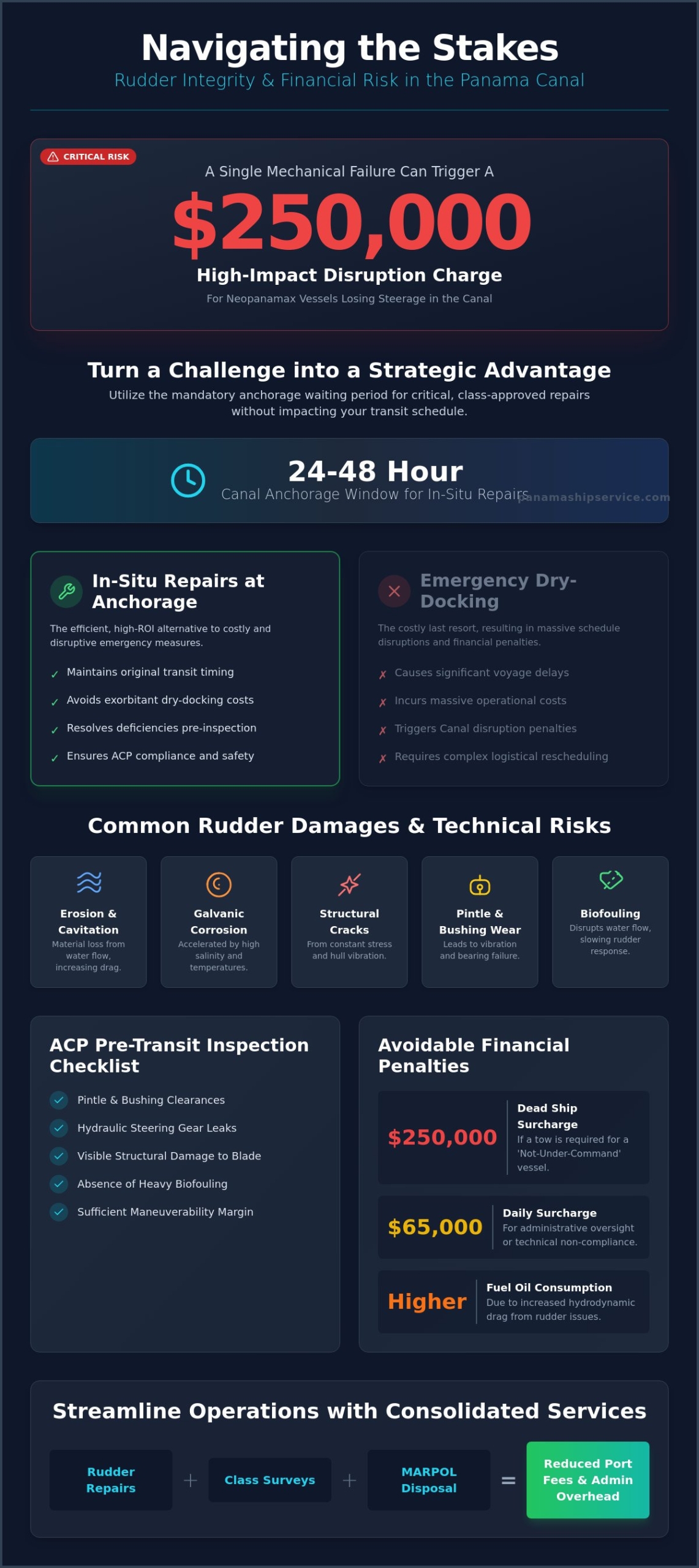
By reading this guide, you’ll learn how to coordinate class-approved repairs that ensure vessel maneuverability and meet strict 2026 Panama Canal Authority (ACP) requirements. We’ll preview the logistical advantages of performing in-situ repairs during your wait time, the specific financial penalties you’ll avoid, and how consolidated services can reduce your overall port expenses. Turning a technical challenge into a strategic maintenance window ensures your vessel remains compliant, safe, and operational.
Key Takeaways
- Learn how to utilize the 24-48 hour canal anchorage window to perform critical mechanical work without impacting your scheduled transit timing.
- Identify the specific 2026 ACP financial penalties, including the $250,000 disruption charge, and how preventative steerage tests mitigate these risks.
- Understand the technical requirements for class-approved ship rudder repair Panama and why in-situ repairs offer a high-ROI alternative to dry-docking.
- Discover the logistical advantages of coordinating repairs at Balboa versus Cristobal to optimize your vessel’s technical stop based on your transit direction.
- See how a consolidated service model reduces administrative overhead and port fees by combining rudder repairs with surveys and MARPOL disposal.
The Critical Role of Rudder Integrity in Panama Canal Transits
Rudder integrity refers to the absolute mechanical and structural readiness of all steering components, including the blade, stock, pintles, and bushings. The Critical Role of Rudder Integrity is the foundation of safe maritime navigation. Without it, a vessel is effectively a hazard to itself and the surrounding infrastructure. In the confined reaches of the Panama Canal, where tolerances are measured in mere feet, any degradation in rudder performance is a critical liability that can halt operations for days. Addressing these issues through expert ship rudder repair Panama before entering the locks is a strategic necessity for any master or operator.
The Panama Canal Authority (ACP) identifies steerage as its primary safety priority. This isn’t just about general navigation; it’s about the ability to maintain a precise heading under the influence of complex hydrodynamic forces and bank suction. If a rudder fails in the Culebra Cut, the consequences are immediate and severe. A vessel that loses control can obstruct the entire waterway, leading to massive financial penalties. As of 2026, a high-impact disruption charge for a Neopanamax vessel can reach $250,000. Beyond the fines, a rudder that isn’t performing optimally increases hydrodynamic drag. This forces the engines to work harder to maintain speed, directly increasing your fuel oil consumption (FOC) and operational overhead.
Steerage Requirements for Safe Lock Passage
Precision is mandatory for Neo-Panamax vessels navigating the newer, larger locks. These ships often have minimal clearance on either side, leaving no room for error. A slight delay in rudder response or a mechanical shudder can lead to a costly collision with the lock walls. If a vessel is declared ‘not-under-command’ (NUC) during transit, it’s immediately removed from the schedule. This results in a dead ship surcharge of $250,000 if a tow is required. The maneuverability margin is defined as the reserve steering capacity available to overcome external forces like wind and current without losing the intended track.
ACP Safety Inspections and Technical Compliance
ACP inspectors look for specific deficiencies before allowing transit. Common issues include excessive pintle clearance, hydraulic leaks in the steering gear, and visible structural damage to the blade. Proactive mechanical ship repairs in Panama are essential to clear these inspections without delay. Biofouling on the rudder blade also presents a significant risk. Heavy growth disrupts water flow across the surface, which slows response times and forces wider steering angles. If your pre-transit inspection reveals technical discrepancies, you face immediate delays. Coordinating a professional ship rudder repair Panama during your anchorage window ensures you maintain your slot and avoid the $65,000 daily surcharge for administrative oversight or technical non-compliance.
Common Rudder Damages and Technical Repair Standards
Identifying specific damage patterns is the first step toward a successful ship rudder repair Panama. Erosion and cavitation represent the most frequent technical challenges for vessels transiting the Isthmus. The leading edge of the rudder blade and the areas surrounding the pintles are particularly vulnerable. High-velocity water flow creates localized low-pressure zones where cavitation bubbles form and collapse. This causes significant material loss over time. If left unaddressed, this pitting compromises the structural integrity of the blade and increases hydrodynamic resistance, leading to higher operational costs.
Environmental factors in the region further complicate mechanical health. Panama’s tropical waters have high salinity and elevated temperatures. These conditions accelerate galvanic corrosion on unprotected steel surfaces. Constant stress and hull vibration can also lead to structural cracks in the rudder horn or the blade itself. These issues are often exacerbated by the heavy loads experienced during frequent course changes in the canal’s narrow channels. If you suspect structural damage, consulting with an expert for technical rudder assessments is the most proactive way to avoid transit disruptions.
Pintle and Bushing Wear Analysis
Superintendents must recognize the signs of imminent bearing failure, such as excessive vibration in the steering flat or increased hydraulic pressure requirements. Measuring ‘rudder drop’ and pintle clearances is a vital part of our inspection process. While traditional methods often require a dry dock, our dive teams perform these measurements in-water at the Balboa or Cristobal anchorages. We adhere to the maximum allowable tolerances set by major classification societies like ABS, DNV, and LR. Maintaining these clearances ensures the rudder stock isn’t subjected to bending stresses that could lead to catastrophic failure during lock maneuvers.
Underwater Welding and Steel Fabrication
When structural repairs are necessary, we utilize class-approved techniques to restore the vessel’s maneuverability. For complex tasks, we employ cofferdams to create a dry environment for precision work in an otherwise wet setting. Our teams are proficient in wet welding for minor blade repairs. We ensure all work meets the marine steel fabrication standards required for ocean-going vessels. Every repair is documented to satisfy Panama Canal transit requirements, giving the ACP the confidence to clear your vessel for passage. This specialized approach allows for high-quality repairs without the logistical nightmare of an unscheduled shipyard visit.
In-Situ vs. Dry Dock Rudder Repairs: A Cost-Benefit Analysis
Choosing between in-water maintenance and emergency dry-docking is a decision that defines the profitability of a voyage. For a Post-Panamax container ship in 2026, dry dock rental alone can cost between $400,000 and $800,000. When you add mechanical labor, which often ranges from $200,000 to $400,000 in a shipyard setting, the financial burden becomes immense. Opting for ship rudder repair Panama while at anchorage allows you to bypass these exorbitant facility fees. You eliminate the need for tugs to assist with docking and avoid the high costs of mobilizing a shipyard crew on short notice.
Time is your most valuable asset during a canal transit. A deviation to a regional dry dock in the Caribbean or South America can add ten days to your schedule. With 2026 transit slot auction premiums averaging $385,000, losing your scheduled window is a risk most operators won’t take. In-situ repairs offer a ‘zero-downtime’ advantage. By performing technical work during your scheduled 24 to 48-hour wait for canal entry, you maintain your transit slot and keep your cargo moving. While major steel renewal or stock replacement may eventually require a dock, most cavitation repairs and bushing adjustments are perfectly suited for underwater intervention.
The ROI of In-Water Rudder Maintenance
The return on investment for underwater repair is realized the moment you avoid an off-hire day. For large vessels, a single day of lost operation can exceed the total cost of the repair service itself. We also consider the impact of 2026 bunker prices. Avoiding a 500-mile deviation to the nearest available shipyard saves thousands of tons of fuel, directly improving your voyage’s bottom line. Calculating the payback period of a pintle clearance adjustment is simple; it’s the cost of the repair versus the $250,000 dead ship surcharge you’d face if your steering failed during transit.
Class Approval for Underwater Repairs
Maintaining your vessel’s standing with classification societies is non-negotiable. Panama Ship Service coordinates directly with surveyors from ABS, DNV, and LR to ensure all work meets international Technical Repair Standards. We utilize high-definition video inspections to provide real-time visual evidence to surveyors, often securing repair permits without the surveyor needing to be on-site for the entire duration. Our goal is always to achieve a ‘permanent repair’ status. By providing detailed documentation and class-approved procedures, we ensure your ship rudder repair Panama is recognized as a long-term solution rather than a temporary fix that requires follow-up work at the next scheduled dry dock.
Logistical Strategy: Scheduling Repairs During Canal Wait Times
The 24 to 48-hour anchorage window before canal entry is more than just a waiting period; it’s a strategic opportunity for critical maintenance. Coordinating a ship rudder repair Panama during this timeframe prevents technical discrepancies from turning into transit denials. With the Panama Canal averaging 37 daily transits in March 2026, the scheduling pressure on operators is intense. We specialize in mobilizing technicians to your vessel the moment it drops anchor, ensuring all mechanical work is finalized before the pilot boards. This proactive approach eliminates the risk of facing the $65,000 low-impact disruption charge or the $250,000 dead ship surcharge for non-operational steering gear.
Effective coordination with the Panama Canal Authority (ACP) and your ship agent is the cornerstone of our service. Approximately 12% of vessels face initial delays due to technical discrepancies found during pre-transit inspections. By performing repairs at anchorage, you address these issues before they become official deficiencies. Our 24/7 mobilization promise ensures that technicians are on board and working while your vessel is still in the queue. We manage the technical complexity so you can focus on the logistics of the voyage, ensuring your maneuverability is restored without a single minute of impact on your assigned transit slot.
Balboa and Cristobal Service Hubs
Choosing between the Pacific and Atlantic anchorages depends on your vessel’s route and specific technical needs. Cristobal is the strategic choice for Atlantic-bound vessels requiring rapid rudder checks before entering the Gatun Locks. Balboa, on the other hand, serves as a primary hub for heavy mechanical repairs and spare parts sourcing due to its proximity to established industrial infrastructure. Our teams are experienced in managing local currents and the seasonal visibility changes common in Panama. We provide high-definition technical reporting even during the rainy season, giving you a clear view of your rudder’s condition regardless of environmental factors.
The Coordination Process with Panama Ship Service
Our workflow is designed for maximum speed and technical precision. We eliminate administrative friction by working directly with your ship agent to synchronize our arrival with your vessel’s ETA. This systematic approach includes:
- Step 1: Pre-arrival technical consultation. We review your vessel’s recent steering performance and any known issues to prepare the specific tools and components required.
- Step 2: Technician and diver deployment. We mobilize to your designated anchorage point in Balboa or Cristobal immediately upon your arrival, utilizing our own transport craft to avoid port delays.
- Step 3: Execution and final steerage test. We perform the necessary repairs and conduct a comprehensive steerage test. This ensures the vessel meets the 2026 ACP requirements for maneuverability before the transit clearance is granted.
Don’t risk a transit delay due to steering gear deficiencies. Contact Panama Ship Service to coordinate your pre-transit rudder repair now.
Panama Ship Service: Your Partner for Rudder & Mechanical Excellence
Panama Ship Service operates as a strategic technical partner for vessel owners and managers navigating the complexities of the canal. We don’t just offer isolated fixes. Our technical approach integrates ship rudder repair Panama with comprehensive underwater hull services to ensure your vessel is hydrodynamically efficient and mechanically sound. This localized expertise is vital for navigating Panama’s unique regulatory landscape. Since our inception, we’ve focused on delivering class-approved solutions that meet the highest technical standards while respecting the tight operational windows of the maritime industry.
Our technical teams possess deep experience in resolving complex issues that go beyond the rudder blade. We provide a total technical solution by offering expertise in mechanical engine repairs, allowing you to address propulsion and steering issues simultaneously. By utilizing high-definition underwater video verification and class-approved reporting, we provide the transparency required by both classification societies and the Panama Canal Authority. You can delegate the technical complexity of your repairs to us, simplifying your own operations and focusing on the safe delivery of your cargo.
The One-Stop-Shop Advantage
Managing multiple vendors during a short port call creates administrative friction and increases the risk of scheduling conflicts. We solve this through a consolidated service model that prioritizes fiscal responsibility. By integrating MARPOL disposal in Panama with your mechanical repairs, you significantly reduce port fees and administrative overhead. A single technical provider means simplified billing and clear accountability for all work performed. Regular fleet partners and emergency cases receive priority scheduling, ensuring that your technical stop never compromises your transit window or increases your time at anchorage.
Quality Assurance and 24/7 Response
Reliability is built on transparency and technical precision. Every ship rudder repair Panama we perform is backed by detailed post-repair reports that serve as a permanent record of the vessel’s condition. These documents include high-definition video evidence, before and after photography, and precise clearance measurements. We maintain strict compliance with major classification societies, including ABS, Lloyd’s Register, and DNV. You’ll have direct access to our technical managers for real-time updates throughout the repair process. Our 24/7 responsiveness ensures that any unexpected findings are addressed immediately, keeping your vessel on track for a safe, efficient, and compliant canal passage.
Secure Your Transit Schedule with Expert Technical Support
Maintaining rudder integrity is essential to navigate the strict 2026 ACP disruption charges and avoid the $250,000 dead ship surcharge. We’ve explored how utilizing the anchorage window at Balboa or Cristobal allows for class-approved repairs without impacting your transit slot. Expert ship rudder repair Panama ensures your vessel remains maneuverable and compliant throughout the entire canal passage. By addressing technical deficiencies before they become official citations, you protect your voyage’s profitability. Don’t leave your transit to chance.
Panama Ship Service provides a 24/7 emergency response with class-approved diving and mechanical teams ready for immediate mobilization. Our one-stop-shop model allows you to integrate critical repairs with marine surveys and MARPOL disposal. This reduces administrative friction and port expenses. Every technical requirement is met with professional precision and efficiency. Request a technical quote for rudder repair in Panama to protect your vessel from unnecessary delays. We’re ready to ensure your next transit is safe, compliant, and on schedule.
Frequently Asked Questions
Can a ship’s rudder be repaired while the vessel is at anchor in Panama?
Yes, most mechanical and structural rudder repairs can be performed while your vessel is at the Balboa or Cristobal anchorages. We utilize specialized dive teams and mobile mechanical workshops to execute these tasks without requiring the vessel to move to a shipyard. This approach allows you to address technical issues during your scheduled wait time for canal entry.
How long does a typical in-situ rudder pintle clearance measurement take?
A standard in-water measurement typically takes between 4 and 6 hours depending on the vessel’s size and prevailing sea conditions. Our divers use calibrated tools to provide precise readings that meet international classification standards. We deliver these results quickly so you have the documentation needed for ACP clearance before your transit begins.
Is it possible to weld a rudder blade underwater at the Panama Canal?
Yes, we perform class-approved wet welding and dry-environment repairs using specialized cofferdams. These techniques allow our teams to fix cracks or cavitation damage on the rudder blade while the ship remains afloat. Every weld is documented with high-definition video to ensure it meets the structural integrity requirements of your classification society.
Will rudder repair during my wait time affect my Panama Canal transit slot?
No, we coordinate directly with your ship agent to ensure all technical work is completed within your assigned anchorage window. Our 24/7 mobilization promise means technicians are on board and working long before your pilot arrives. This proactive scheduling ensures a zero-delay solution that restores maneuverability without impacting your transit timing.
What are the most common rudder deficiencies that cause transit delays?
Excessive pintle clearance, hydraulic leaks in the steering gear, and significant structural cracks are the primary issues that trigger ACP transit denials. Approximately 12% of vessels face initial delays due to such technical discrepancies. Investing in proactive ship rudder repair Panama is the most effective way to resolve these deficiencies and avoid high-impact disruption charges.
Do I need class approval for an underwater rudder repair in Panama?
Yes, any structural or mechanical repair to the steering system must be verified by a class surveyor to maintain the vessel’s standing. We facilitate this process by providing real-time video evidence and detailed technical reports for societies like ABS, DNV, and LR. Our experience ensures that the repair is recognized as a permanent solution rather than a temporary fix.
What is the difference between rudder cleaning and rudder repair?
Rudder cleaning involves the removal of biofouling to improve hydrodynamic efficiency and response time, whereas repair addresses mechanical wear or structural damage. While cleaning is a standard part of our underwater hull services, repair involves technical intervention such as welding, bushing adjustments, or pintle work. Both are essential for maintaining the maneuverability margin required for safe lock passage.
Can Panama Ship Service source spare parts for rudder steering gear locally?
Yes, we maintain an extensive network of local suppliers and logistical hubs in Balboa to source critical components like seals, bearings, and hydraulic fittings. This local knowledge allows us to secure parts quickly, minimizing the need for expensive international air freight. Our consolidated service model ensures that spare parts sourcing and mechanical labor are handled by a single, reliable provider.