
Could a minor vibration in your steering gear really trigger a $250,000 disruption charge from the Panama Canal Authority? In 2026, the margin for mechanical error has effectively vanished. You already know that even a slight deviation from ACP Notice to Shipping N-1-2026 requirements leads to more than just a delay. It results in astronomical fines and lost charter hire exceeding $52,000 per day. Finding reliable ship rudder repair Panama experts is no longer just a maintenance task; it’s a critical financial safeguard for your transit schedule.
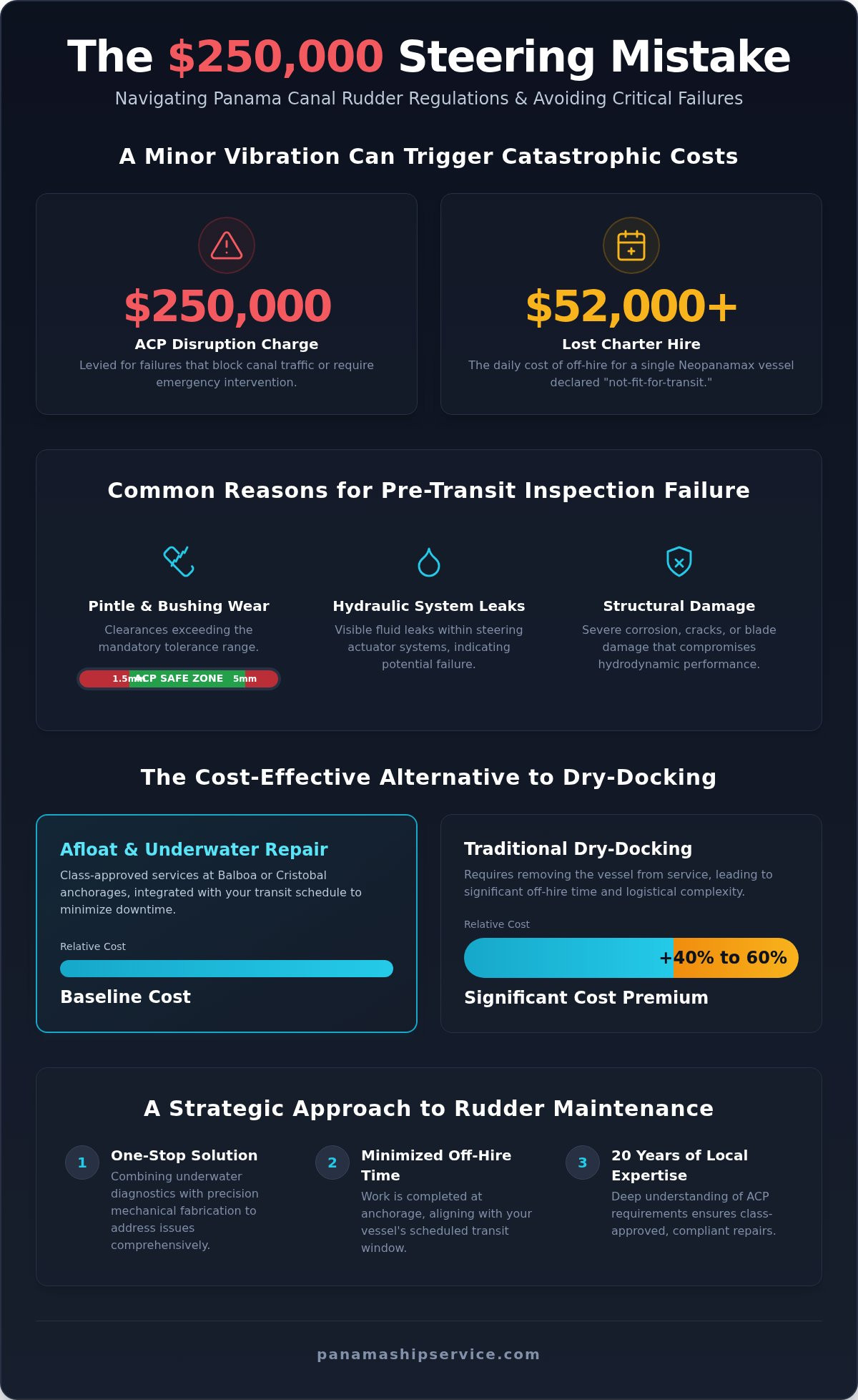
This guide details how specialized repair services resolve critical failures while your vessel remains afloat at Balboa or Cristobal anchorages. You’ll discover how to secure class-approved repairs that satisfy strict ACP safety mandates without the 40% to 60% price premium of a traditional dry-docking. We will preview the essential technical tolerances for pintle clearances and the logistical strategies needed to restore full steering functionality during your strategic anchorage window. By merging underwater diagnostics with precision mechanical engineering, you can maintain your slot and avoid the mounting costs of vessel downtime.
Key Takeaways
- Understand the critical safety requirements of the Panama Canal Authority (ACP) and how maintaining rudder integrity prevents catastrophic disruption charges and transit delays.
- Learn to identify common mechanical failures, such as pintle and bushing wear, using precise clearance measurements to ensure your vessel meets international maritime standards.
- Discover how specialized ship rudder repair Panama services utilize afloat and underwater techniques to reduce maintenance costs by up to 60% compared to traditional dry-docking.
- Optimize your schedule by coordinating technical work at the Balboa or Cristobal anchorages, allowing for seamless integration with your scheduled transit window.
- Benefit from a “one-stop-shop” approach that combines 20 years of local expertise in mechanical fabrication and underwater hull services to minimize off-hire time.
The Critical Role of Rudder Integrity for Panama Canal Transit
Professional ship rudder repair Panama involves the comprehensive restoration of steering gear components to meet both international maritime regulations and the rigorous standards of the Panama Canal Authority (ACP). A vessel’s Rudder is the primary tool for directional control, and in the confined waters of the Panama Canal, its functionality is non-negotiable. Rudder repair is the essential maintenance of blades, pintles, and stocks to ensure directional control. Without precise steering, a ship becomes a liability in the narrow lock chambers and channels where margins for error are measured in centimeters.
Steering Gear Standards and ACP Inspections
The ACP prioritizes vessel maneuverability to maintain the safety and efficiency of the waterway. Before any transit, vessels are subject to inspections that ensure all mechanical systems are fully operational. If inspectors identify excessive pintle clearance or sluggish hydraulic response, they’ll likely deny transit. Specialized ship rudder repair Panama services provide the necessary diagnostics and fabrication to keep your vessel on schedule. Common reasons for failing pre-transit inspections include:
- Pintle and bushing clearances exceeding the allowable 1.5mm to 5mm tolerance range.
- Visible hydraulic fluid leaks within the steering actuator systems.
- Structural damage or severe corrosion on the rudder blade that compromises hydrodynamic performance.
Panama Ship Service acts as a strategic partner by addressing these deficiencies immediately. With 20 years of experience in the Canal hub, we understand exactly what ACP inspectors require and how to rectify issues at the anchorage before they lead to a cancelled slot.
Consequences of Rudder Malfunction During Transit
A steering failure in the Culebra Cut or inside a lock chamber can be catastrophic. The narrow path of the Canal leaves no room for mechanical failure. If a vessel loses control, the risk of grounding or colliding with lock gates is high. Beyond the physical damage, the financial fallout is severe. The ACP can levy a disruption charge of up to $250,000 for failures that block traffic or require emergency tug intervention. One often overlooked preventative measure is maintaining the integrity of hydraulic fluids; services such as BioKem Oil Services emphasize that clean, analyzed oil is fundamental to avoiding the sudden component wear that causes these steering crises.
Ship owners also face massive off-hire costs. A single day of delay for a Neopanamax vessel can exceed $52,000 in lost revenue. When a ship is declared “not-fit-for-transit,” the owner must coordinate emergency repairs while paying for anchorage and potentially re-booking a slot at auction prices, which reached $425,000 in May 2026. We provide the technical expertise to handle these high-pressure situations, preventing transit cancellations through rapid mechanical and underwater intervention at both ends of the Canal.
Accurate diagnostics are the foundation of successful ship rudder repair Panama. We don’t just look for visible damage; we analyze the entire steering system’s health to ensure compliance with International Maritime Organization (IMO) standards. Identifying issues early prevents the catastrophic failures that lead to $250,000 disruption charges during Canal transit. Structural problems often manifest as cavitation erosion or weld fractures on the rudder blade, which can compromise hydrodynamic efficiency. Without a combined approach that evaluates both the submerged components and the bridge systems, minor wear can quickly escalate into a transit-stopping failure.
Underwater Rudder Inspections
Assessing a rudder’s condition while the vessel is afloat requires high-resolution imaging and expert divers. We use CCTV and photography to provide a clear view of the blade surface and pintle housing. Measuring clearances is critical; if pintle and bushing clearances exceed the 1.5mm to 5mm range, immediate intervention is necessary. Integrating these underwater hull services into the diagnostic phase allows us to identify wear that isn’t visible from the deck. This proactive approach ensures that mechanical steel fabrication can be planned before the ship reaches the lock approach.
Mechanical and Hydraulic Troubleshooting
The steering gear’s responsiveness depends on the integrity of the hydraulic system and the mechanical stock. We test the response time and torque to ensure the system handles the high-pressure maneuvers required in the Culebra Cut. Analyzing hydraulic fluid for contaminants or metal shavings is a standard part of our diagnostic procedure, as these often signal internal wear in the pumps or actuators. We also evaluate carrier bearings and the rudder stock for signs of misalignment or fatigue. If your vessel shows any signs of sluggish steering, it’s vital to coordinate expert mechanical ship repairs before the ACP inspection team boards. Our team provides a comprehensive report that satisfies class requirements and ACP safety mandates, keeping your transit schedule intact.
Afloat vs. Underwater Rudder Repair: Choosing the Right Solution
Selecting the correct methodology for ship rudder repair Panama is a matter of balancing class compliance with operational availability. For most operators, the goal is to avoid the high costs and scheduling conflicts associated with traditional dry-docking. Performing repairs while a vessel is afloat can reduce the total maintenance bill by 40% to 60%. It’s about speed. By utilizing specialized underwater welding or topside mechanical overhauls, we address structural issues without the logistical nightmare of offloading cargo. This approach is vital for maintaining your schedule, especially since an inoperative system can trigger a Panama Canal Authority disruption charge if identified during the approach.
In-Situ Underwater Rudder Repairs
When the damage is submerged, in-situ repairs are the most efficient option. Our dive teams apply underwater welding to treat crack repairs and erosion control on the rudder blade surface. We also replace zinc anodes during these sessions to halt galvanic corrosion before it compromises the steel. Replacing pintle bushings while submerged is a complex task, yet it’s often faster than waiting for a dry dock slot in a busy regional shipyard. Specialized steel fabrication allows for rudder blade reinforcement without removing the vessel from the water, ensuring that structural integrity meets class standards before you enter the locks.
Afloat Mechanical Interventions
Not every steering issue requires a diver. Many critical failures occur within the steering gear room or at the rudder trunk above the waterline. We specialize in repairing steering gear pumps and motors directly on deck while the vessel is at the Balboa or Cristobal anchorages. This includes overhauling hydraulic actuators and carrier bearings that support the rudder stock. Our team uses comprehensive mechanical ship repairs to handle these complex component overhauls. By coordinating topside mechanical work with underwater diagnostics, we provide a “one-stop-shop” service that eliminates the need for multiple contractors. This level of coordination ensures that your steering gear’s torque and response times are fully restored before the ACP pilot boards for transit.
Coordinating Rudder Services at Balboa and Cristobal Ports
Successful ship rudder repair Panama requires more than technical skill; it demands logistical mastery of the Canal’s unique port environment. Operating at both the Pacific entrance in Balboa and the Atlantic entrance in Cristobal allows us to intercept vessels before or after their transit. This dual-port capability is essential for minimizing deviations from your primary route. Timing is the most critical factor for rudder repairs. Because we operate 24/7, we can begin mobilization while your vessel is still at sea, ensuring that technicians and equipment are ready the moment you reach the anchorage. This proactive approach prevents the loss of valuable transit slots and keeps your vessel moving.
The Panama Ship Service Workflow
The Panama Ship Service Workflow starts with an immediate technical assessment and rapid mobilization of our specialized teams. We handle the complex task of obtaining all necessary port and ACP clearances for hot work or diving operations. This is a critical step, as unauthorized repairs can lead to severe penalties or transit delays. Throughout the process, we maintain real-time communication with ship masters and owners. You are never left wondering about the status of your repair. Our teams are experienced in managing the strict safety protocols required within the Canal’s jurisdiction, ensuring all permits are secured before the first diver enters the water or a welder begins work.
Minimizing Off-Hire Time
Minimizing off-hire time is our priority. We frequently schedule repairs to run concurrently with bunker operations or cargo handling to maximize efficiency. By using our “one-stop-shop” model, you can address rudder issues while also conducting mandatory marine surveys. This consolidation of services significantly reduces overhead. We can also manage crew changes and ship supplies alongside technical repairs, preventing the need for multiple contractor call-outs. This integrated service ensures all work meets Class Approval standards for immediate transit resumption. For reliable coordination of your next technical intervention, request a quote for specialized ship services.
Panama Ship Service: Your Expert for Rudder and Steering Solutions
With over 20 years of specialized experience in the Panama Canal hub, Panama Ship Service has established itself as the premier authority for steering gear restoration. You need a partner who understands the high-stakes environment of the Canal. Unlike large, impersonal shipyards where your vessel is just another hull in the queue, we offer a personalized service model. This ensures that your specific operational pressures are addressed with urgency. Our commitment to cost-conscious and efficient repair outcomes is reflected in our ability to perform ship rudder repair Panama at anchorages, avoiding the overhead of dry-docking. You don’t have to sacrifice quality for speed; our class-approved surveys and repairs guarantee both.
A Comprehensive Marine Solution
Our “one-stop-shop” approach simplifies your operations by consolidating multiple technical needs under a single management team. We integrate ship rudder repair Panama with specialized steel fabrication and A/C services, ensuring that every mechanical system is optimized for transit. During technical downtime at the anchorage, we also handle MARPOL compliance and disposal tasks. This proactive management reduces the administrative burden on your crew and minimizes the number of contractors boarding the vessel. Our professional reliability for complex mechanical ship repairs in Panama is backed by two decades of successful interventions. We handle the complexity so you can focus on your schedule.
Contact and Coordination
Time is your most valuable asset. Our technical experts are available 24/7 to respond to emergency steering gear failures at both ends of the Canal. Whether you’re facing a sudden hydraulic leak or a failed ACP inspection, we provide immediate consultation. For planned maintenance, requesting a Quote or a Proforma Disbursement Account (PDA) is a streamlined process. You’ll receive a clear, declarative breakdown of the service menu and value proposition. Direct access to our senior technicians ensures that you receive authoritative advice without unnecessary complication. We focus on tangible benefits: reducing overhead and optimizing your transit schedule through proficient mechanical execution.
Secure Your Transit with Expert Rudder Maintenance
Maintaining rudder integrity is the most effective way to avoid the $250,000 disruption charges and $52,000 daily off-hire costs associated with 2026 Panama Canal delays. By choosing afloat repairs at the Balboa or Cristobal anchorages, you resolve critical mechanical failures without the massive overhead of a traditional dry-docking. Our team provides the precision and speed required to satisfy strict ACP safety mandates and protect your scheduled slot. Utilizing a single provider for both underwater diagnostics and topside mechanical work eliminates coordination gaps and reduces total repair time. It’s about operational efficiency.
Panama Ship Service brings 20 years of Panama Canal expertise to every project. We offer class-approved marine surveys and comprehensive mechanical and underwater capabilities to ensure your steering gear meets international standards. Whether you’re facing an emergency actuator failure or need a planned pintle bushing replacement, our technical experts provide the reliable support your vessel requires. Contact Panama Ship Service for 24/7 Emergency Rudder Repairs to secure your schedule. We are your dependable partner for ship rudder repair Panama, standing ready to assist at both ends of the canal.
Frequently Asked Questions
Can rudder repairs be performed while the vessel is at anchor in Panama?
Yes, ship rudder repair Panama is frequently performed at the Balboa and Cristobal anchorages. Most mechanical and underwater interventions don’t require a dry dock. Our technical teams mobilize 24/7 to these strategic locations, allowing repairs to proceed while the vessel awaits its transit slot. This approach minimizes off-hire time and allows for the consolidation of other services, such as bunkering or MARPOL disposal, during the repair window.
Does the Panama Canal Authority (ACP) require specific certifications for rudder repairs?
The Panama Canal Authority mandates that all steering gear repairs meet strict maneuverability standards and class approval. While the ACP doesn’t issue its own repair certification, they strictly enforce compliance with Notice to Shipping N-1-2026. Any technical deficiency identified during pre-transit inspections must be rectified by a qualified service provider. Panama Ship Service ensures that all work is documented and approved by major classification societies to satisfy these regulatory requirements.
How long does a typical underwater rudder inspection take in Balboa?
A standard underwater rudder inspection at the Balboa anchorage typically takes between four and six hours. This timeframe includes the deployment of dive teams, CCTV video recording, and high-resolution photography of the rudder blade and pintle housing. The duration can vary based on Gatun Lake water levels and underwater visibility. We provide a comprehensive diagnostic report immediately following the dive, which is essential for planning any necessary mechanical steel fabrication.
Is it possible to replace rudder pintle bushings without dry-docking?
It’s entirely possible to replace rudder pintle bushings while the vessel is afloat using specialized in-situ techniques. Our divers use underwater hydraulic tools and custom rigging to extract worn bushings and install new components without removing the rudder from its stock. This process is a cost-effective alternative to dry-docking, reducing maintenance expenses by up to 60%. It ensures that pintle clearances return to the required 1.5mm to 5mm tolerance range before transit.
What documents are needed to clear a vessel for transit after a rudder repair?
To clear a vessel for transit after a technical intervention, you must provide a class-approved survey report and a technical certificate of readiness. These documents confirm that the steering system meets international maritime standards. Additionally, an ACP inspector may board the vessel to verify the repair’s effectiveness during a sea trial or steering gear test. Proper documentation is vital to avoid the $250,000 disruption charge for mechanical failure during canal passage.
Can Panama Ship Service handle hydraulic steering gear overhauls?
Yes, our mechanical division specializes in comprehensive hydraulic steering gear overhauls. We address failures in pumps, motors, and actuators while the ship is at anchor. Our 20 years of experience allow us to troubleshoot sluggish steering responses and identify hydraulic fluid contaminants that could lead to system failure. Combining ship rudder repair Panama with hydraulic maintenance ensures that your vessel maintains the high level of maneuverability required for the Canal’s lock chambers.
Are the welding procedures used for rudder repairs class-approved?
All welding procedures utilized for rudder and hull repairs are class-approved and performed by certified technicians. We follow strict hot-work protocols that comply with both international maritime standards and local port authority regulations. Whether we are reinforcing a rudder blade or repairing weld fractures, every procedure is documented and inspected. This level of professional reliability is a core part of our one-stop-shop model for mechanical ship repairs in Panama.
What happens if a rudder failure occurs during a Canal transit?
If a steering failure occurs during transit, the ACP will immediately deploy tugboats to maintain control of the vessel. This intervention triggers a disruption charge that can reach $250,000, depending on the severity of the traffic delay. The ship may be escorted to an anchorage for emergency repairs and a mandatory survey. To avoid these astronomical costs and potential grounding risks, it’s critical to address any steering gear vibrations before entering the Canal.