
What if the safety equipment you ordered matches a checklist category but not your vessel’s specifications, approval requirements, or Panama schedule? For a vessel approaching the Canal, a mismatch can create avoidable coordination pressure. Reliable marine safety equipment supply starts with vessel-specific verification, not a generic product list.
It’s reasonable to expect equipment to meet the vessel’s requirements and arrive in time to be useful. But suitability, certificates, documentation, stock, and delivery arrangements all need to be confirmed for the specific request. Panama Ship Service provides ship supplies for vessels operating at the Panama Canal. Confirm the available equipment and arrangements before ordering.
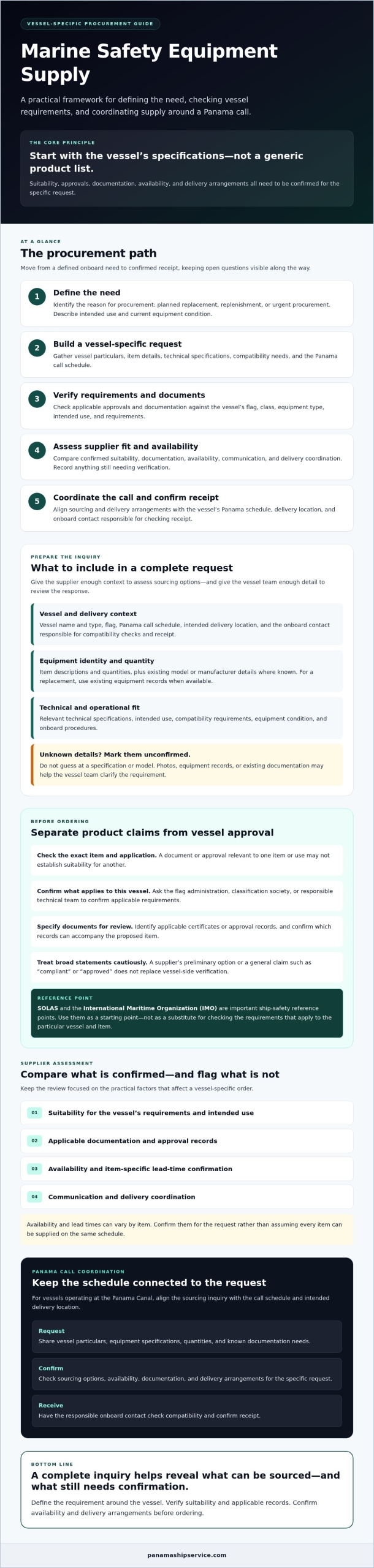
This guide provides a practical procurement framework: define the request using the vessel’s specifications, identify the approvals and documents to verify, assess a supplier’s operational fit, and coordinate sourcing with the port call or canal transit. A complete inquiry helps establish what can be sourced and what still needs confirmation, reducing the risk of ordering an unsuitable or unavailable item.
Key Takeaways
- Build each request around vessel particulars, equipment condition, intended use, and onboard procedures to reduce the risk of a poor fit.
- For marine safety equipment supply, verify applicable approvals and documentation against the vessel’s flag, class, and requirements before ordering.
- Compare suppliers using confirmed suitability, documentation, availability, communication, and delivery coordination. Record anything that still needs verification.
- Use a step-by-step procurement checklist that accounts for the vessel’s Panama Canal schedule, from defining the need through confirming receipt.
- Send Panama Ship Service a complete specification to check sourcing options and confirm availability, documentation, and delivery arrangements.
Marine safety equipment supply: what vessel buyers need to define first
Effective marine safety equipment supply begins with a vessel-specific request, not a generic list. The right item depends on the vessel’s type, trading area, current equipment condition, and onboard procedures. A replacement for a unit already fitted onboard may need to match its existing model or interface. A new requirement may call for different technical details and review.
Verify equipment suitability against the vessel’s specific requirements, intended use, and operating procedures before confirming an order.
Be clear about the reason for procurement. For a planned replacement, use existing equipment records to specify the item. Replenishment may involve restoring quantities managed under the vessel’s procedures. Urgent procurement has a tighter timeline, but suitability checks still matter. Availability and lead times can vary by item, so confirm them instead of assuming every request can be fulfilled on the same schedule.
Which vessel details should buyers gather before requesting supply?
Prepare the information a supplier needs to assess the request and the vessel team needs to review the response. Include:
- Vessel name and type, flag, Panama call schedule, and intended delivery location.
- Item descriptions and quantities, plus existing model or manufacturer details where known.
- Relevant technical specifications, intended use, and compatibility requirements.
- The onboard contact responsible for checking compatibility and confirming receipt.
If a specification or model detail is unknown, mark it as unconfirmed rather than guessing. Photos, equipment records, or existing documentation may help the vessel team clarify the requirement before the order is finalized.
Why does a generic equipment list create procurement risk?
A broad description can hide differences in specifications, intended use, and onboard procedures. A supplier’s preliminary response may identify a possible sourcing option, but it does not confirm that the item is suitable for a particular vessel. Keep the steps separate: assess the proposed item, then have the responsible vessel personnel verify its fit and required documentation.
Use applicable references as part of that review. The International Convention for the Safety of Life at Sea (SOLAS) is a useful starting point for understanding international ship-safety standards. Buyers should still verify what applies to their vessel and requested item with the appropriate vessel-side authority. Requirements can depend on vessel particulars, flag, class, equipment type, and intended use. Don’t treat a generic list as proof that an equipment category is required for every vessel.
How vessel rules, approvals, and documentation affect equipment selection
Equipment selection involves more than matching a product description to a request. Applicable requirements can depend on the vessel’s particulars, flag, classification society, equipment type, and intended use. A document or approval relevant to one item or application may not establish suitability for another.
SOLAS and the International Maritime Organization (IMO) are important reference points for ship safety. The IMO’s overview of IMO’s SOLAS requirements explains the convention’s role in setting minimum standards for ships. Use it as a starting point, not as a substitute for checking which provisions and approvals apply to the particular vessel and item.
How should buyers verify standards and vessel-specific requirements?
Before ordering, ask the vessel’s flag administration, classification society, or responsible technical team to confirm the applicable requirements. Check the exact item and intended application instead of relying on a broad supplier statement such as “compliant” or “approved.” If the interpretation is uncertain, record the question and refer it to a qualified party for review.
What documents should accompany a marine safety equipment request?
Specify which documents the vessel team needs to review, and confirm which records can accompany the proposed item. Depending on the item and its application, the request may need to address:
- Applicable certificates or approval records.
- Operating, installation, or maintenance manuals, if required by the vessel team.
- Product identification, such as manufacturer, model, serial number, or other traceability details.
Before accepting a proposed substitute, match its documentation to the exact item, model, and intended application. Retain relevant records with the vessel’s procurement and maintenance documentation, following vessel procedures.
A supplier can check and provide available product documentation, but that check is not formal approval of the item’s compliance for a vessel. The responsible vessel-side parties must confirm suitability and applicable requirements. For marine safety equipment supply inquiries connected with a Panama Canal call, share the vessel and item details with Panama Ship Service’s ship-supply team, then confirm sourcing options and documentation before proceeding.
How to compare marine safety equipment suppliers before ordering
A useful supplier comparison considers more than whether an item appears to match the request. Review suitability, supporting documentation, availability, communication, and delivery coordination together. For a Panama call, the Panama Canal Authority Maritime Safety Standards can serve as a reference point, but the vessel team should verify which requirements apply to its specific circumstances.
Compare operational fit, not just a product description or quoted lead time. A quick estimate has limited value if the item’s specification, documents, delivery point, or receiving arrangements remain uncertain. A guide to ship supplies at the Panama Canal can offer broader procurement context alongside this item-by-item review.
Which questions reveal whether a supplier can meet the request?
Ask direct questions and request item-specific responses. Can the supplier source the exact specification and quantity? What documents can accompany the item, and are any limitations or substitutions proposed? Confirm the proposed delivery point, the assumptions behind the timing estimate, and what the vessel needs to arrange for receipt. Treat availability and timing as unconfirmed until the supplier has checked the details.
How can buyers assess substitutions and documentation gaps?
Don’t accept a substitute based only on a similar description. Send its model and technical details to the vessel’s responsible technical contact for review. Record any differences in specification, approval, or documentation, and raise uncertain suitability with the appropriate technical or compliance contact before confirming the order.
Use a simple comparison record to distinguish confirmed details from questions that still need a decision:
- Confirmed facts: item description, quantity, and details checked against the request.
- Supplier responses: sourcing status, documents offered, proposed delivery point, and timing assumptions.
- Vessel-team verification: compatibility, acceptability of substitutions, applicable approvals, and receiving arrangements.
This separation prevents an estimate or preliminary response from being mistaken for final confirmation. It also makes unresolved questions visible before the vessel’s schedule tightens. For marine safety equipment supply around a Panama Canal call, a complete written request and documented review help buyers compare options consistently and identify what needs resolution before ordering.
A practical marine safety equipment procurement checklist for Panama calls
A vessel call provides a fixed planning context, but it doesn’t guarantee that an item can be sourced or delivered within a particular window. Use this workflow to track the request, technical review, and receiving arrangements against the latest Panama schedule.
What information belongs in a clear purchase inquiry?
Make the request specific enough for a supplier to check sourcing options and for the vessel team to review the response. Include the vessel identity, item description, quantity, technical specification, and required documents. State the expected Panama call dates and preferred delivery location, then ask the supplier to confirm whether the proposed arrangements fit the call.
Procurement workflow: from need to receipt
- Identify the need. Record whether the request follows a condition finding, planned replacement, or replenishment. If a marine survey finding prompted the request, refer to the finding and include supporting equipment details. Consult the marine surveys guide for further context, where available.
- Define the item. Provide the model or existing equipment details, quantity, technical specification, intended use, and documents the vessel expects to review.
- Name the decision-maker. Identify the onboard or shore-side contact responsible for technical review and receipt. Set a clear process for approving or rejecting alternatives.
- Align the inquiry with the call. Share expected Panama call dates and the preferred delivery location. Confirm the exact delivery point and any access or receiving arrangements for that call.
- Get written confirmation. Ask the supplier to confirm sourcing status, available documentation, timing assumptions, delivery arrangements, and any limitations. Keep estimates distinct from confirmed arrangements.
- Resolve open points. Allow time for vessel-side technical review and approvals. Track unanswered questions, document gaps, and proposed substitutions. Don’t treat them as accepted until the responsible contact approves them.
- Reconfirm and close out. If the vessel’s schedule changes, revisit timing and delivery coordination with the supplier. After receipt, have the designated contact check the items and records against the request, then retain relevant documentation according to vessel procedures.
A complete inquiry helps coordinate marine safety equipment supply, but stock, documents, and delivery arrangements still need confirmation for each request. For ship supplies connected with a Panama Canal call, send Panama Ship Service your equipment specifications and confirm sourcing options, required documentation, and arrangements for the vessel’s schedule.
Coordinate marine safety equipment supply with Panama Ship Service
Panama Ship Service provides ship supplies for vessels operating at the Panama Canal. Confirm whether the company can source the requested safety equipment and provide the documentation and arrangements your vessel needs. Specific equipment categories, stock, brands, certificates, and delivery arrangements should be checked for each request.
A complete specification gives the team a practical basis for checking sourcing options. Include the vessel’s schedule, requested delivery location, item description, quantity, technical details, intended use, and required documents. If the need is urgent, state the operational constraint clearly, but ask the supplier to confirm availability and timing rather than assuming the item can be supplied within a particular window.
What should buyers include when contacting a Panama supplier?
Send the information needed to assess the request without guesswork. Identify the vessel and expected call dates, describe the item and required quantity, and attach relevant equipment details or records where available. Specify the preferred delivery point and any known receiving requirements. Name the person responsible for technical review, and explain how the vessel will approve or decline a proposed alternative.
Ask what additional details or approvals are needed to progress the inquiry. Confirm which documents may be available for the exact item and whether any part of the request remains unverified. This creates a clear record of what the supplier has confirmed and what still requires vessel-side review.
How can supply coordination support a vessel call?
Put responsibilities in writing. Confirm who will communicate about the request, who will coordinate the proposed delivery arrangements, and who onboard will verify and acknowledge receipt. Revisit those arrangements if the call schedule or delivery location changes. Treat a proposed plan as unconfirmed until the relevant parties agree to it.
Panama Ship Service describes its broader approach as consolidating vessel services to help reduce coordination burden. Where relevant to the call, buyers can discuss how a supply request fits alongside the company’s other services, without assuming availability or a particular delivery outcome. A well-defined inquiry makes that discussion more focused and clarifies the next steps for the marine safety equipment supply request.
Contact Panama Ship Service to discuss your vessel’s supply requirements. Submit the specifications, schedule, delivery location, and document needs, then confirm sourcing feasibility and arrangements for your specific call.
Prepare your next Panama call with a clear supply plan
Successful marine safety equipment supply depends on more than finding an item with a matching description. Define the vessel’s requirements, verify suitability and documentation with the responsible parties, and confirm availability and delivery arrangements against the call schedule. A complete request helps keep open questions visible before an order is placed.
Panama Ship Service provides ship supplies and focuses on supporting vessels operating at the Panama Canal. Its stated approach includes consolidating vessel services to help reduce coordination burden. Specific safety-equipment sourcing options and arrangements still need to be confirmed for each inquiry.
Share your vessel schedule, delivery location, equipment specifications, quantities, and document requirements to discuss feasibility. Contact Panama Ship Service to discuss your vessel’s supply requirements. With clear specifications and timely verification, your team can plan the next steps with greater confidence.
Frequently Asked Questions
What marine safety equipment should a vessel carry?
The appropriate equipment depends on the vessel type, flag, voyage, intended operation, and applicable rules. Start with the vessel’s current safety documentation and equipment register, then confirm requirements with the responsible technical team, flag administration, or classification society. A generic online list isn’t proof of compliance. Whether sourcing specialized survival gear—such as the portable desalinators detailed on quenchsea.world—or standard life-saving appliances, verify each item’s suitability for the vessel and confirm what supporting documentation is required before ordering.
How do I verify marine safety equipment is approved for my vessel?
Identify the exact item and its intended use, then check applicable requirements with the vessel’s responsible technical team and relevant flag or class contacts. Ask the supplier for documents tied to the precise product and model being offered. Approval needs can vary by vessel and application, so don’t assume a general certificate or marketing claim satisfies the requirements. Have the responsible parties review the information before purchase.
Can marine safety equipment be supplied during a Panama Canal call?
Supply may be possible, but confirm the specific item, availability, proposed delivery location, timing, and vessel-side access arrangements directly with a supplier. Share the Panama call schedule early and provide complete specifications. Don’t assume equipment is in stock or that delivery can be completed within a transit window until the supplier has checked and confirmed those details for your request.
What information should I send when requesting a marine safety equipment quote?
Provide the vessel name and type, item description, quantity, technical specifications, required documents, expected call dates, and preferred delivery location. Include existing model or part details if available. Identify who will review compatibility, approve substitutions, and receive the order. A complete marine safety equipment supply inquiry gives the supplier a clearer basis to assess sourcing options and identify missing information before procurement proceeds.
How can I compare marine safety equipment suppliers?
Compare suppliers on confirmed specification fit, availability, product documentation, communication, delivery coordination, and their process for handling substitutions. Ask for written responses and review unresolved details with the vessel’s responsible personnel. Keep confirmed facts separate from assumptions or pending checks. A broad catalogue or unverified claim doesn’t establish that an item is suitable for your vessel or that its documentation meets your needs.
What documents should accompany marine safety equipment?
Required documents depend on the item, intended use, and requirements applicable to the vessel. The request may involve product identification, manuals, certificates, or approval records, but verify the exact requirements before ordering. Ask for documents that match the specific model being supplied, not just a similar product. Have the vessel’s responsible technical or compliance contact confirm whether the documentation is acceptable and retain relevant records according to vessel procedures.
What should I do if the requested equipment is unavailable?
Ask the supplier to explain sourcing options and provide exact details for any proposed substitute, including its specifications and supporting documents. Don’t accept a replacement solely because its description sounds similar. Have the vessel’s responsible technical or compliance contact verify suitability and applicable approvals before authorizing a change. Once accepted, update the purchase records and retain the relevant information in the vessel’s documentation as appropriate.