
A windlass stalls during a Panama port call, and the repair decision quickly becomes an operational one: identify the fault, determine the work required, and fit it into the vessel’s schedule. Effective anchor windlass repair panama starts with diagnosis, not guesswork. The cause may lie in mechanical, hydraulic, electrical, or control components, depending on the installed system.
A windlass problem can affect anchoring readiness and vessel operations, while an unclear repair scope can complicate port-call planning. Coordinating the work as part of broader mechanical ship repairs helps keep vessel needs organized during a time-sensitive Panama call.
This guide explains the main windlass fault areas, how to compare repair options against equipment condition and operational needs, and what information helps shape a practical repair plan. It also covers how to coordinate the work around a Panama Canal call, so you can communicate the issue clearly and manage the next steps with fewer surprises.
Key Takeaways
- Record the windlass symptoms and identify its system type to help focus the initial fault assessment.
- Mechanical, hydraulic, electrical, or control components may be involved; inspection findings help define the repair scope.
- Compare targeted repair, overhaul, and replacement according to equipment condition and vessel operating needs.
- For anchor windlass repair panama, share vessel, equipment, access, and schedule details early to support port-call planning.
- See how windlass work can be coordinated within Panama Ship Service’s broader mechanical ship-repair capabilities.
Anchor Windlass Repair in Panama: Why Early Fault Assessment Matters
An anchor windlass is deck machinery that controls the anchor and chain as they are lowered and recovered. Its arrangement and components vary by vessel; the Anchor windlass overview provides background on common configurations and parts. Reliable operation supports anchoring readiness and helps the crew manage vessel movements safely and predictably.
A windlass fault is an observed abnormality in operation, not a confirmed root cause. A symptom can point toward an area for investigation, but inspection and testing are needed to establish what has failed and define the work. Early assessment turns a general report, such as “the windlass is slow,” into useful information for repair planning.
Which windlass symptoms should trigger an inspection?
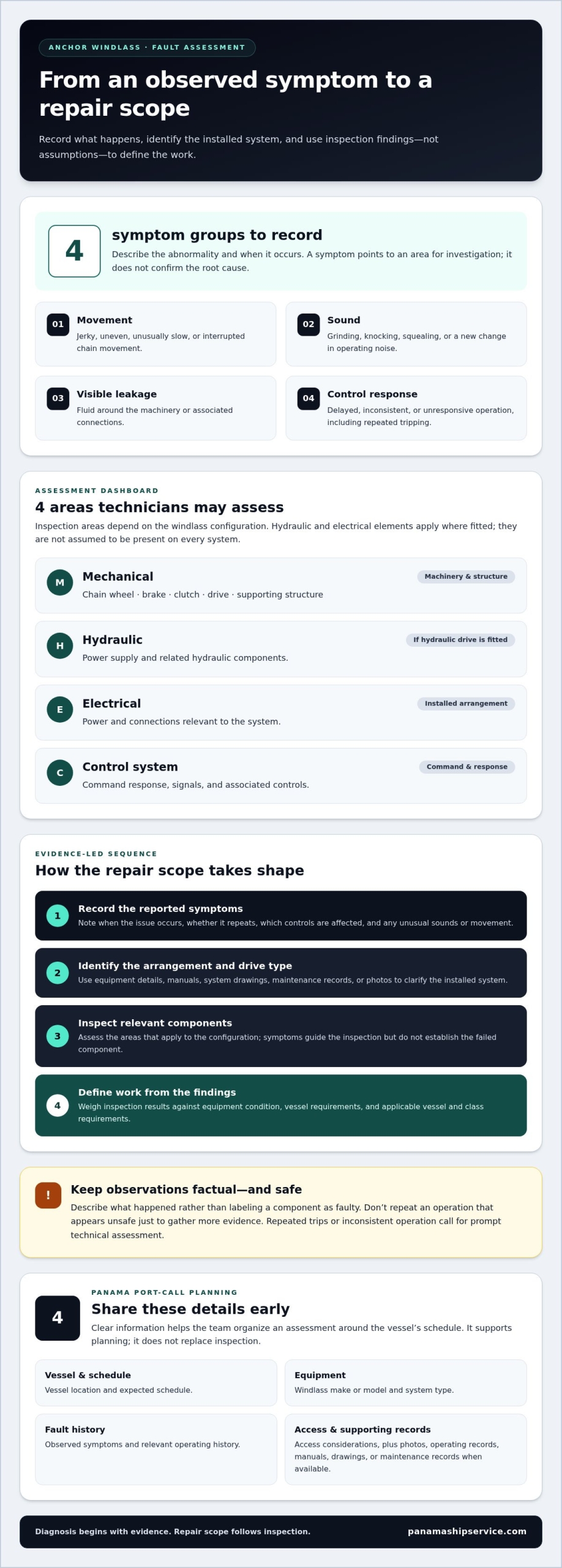
Record what happens, when it happens, and whether the issue is repeatable. These observations help guide assessment without assuming which component is at fault:
- Movement: jerky, uneven, unusually slow, or interrupted chain movement.
- Sound: grinding, knocking, squealing, or a new change in operating noise.
- Visible leakage: fluid around the machinery or associated connections.
- Control response: delayed, inconsistent, or unresponsive operation, including repeated tripping.
Repeated trips or inconsistent operation call for prompt technical assessment. Don’t treat a recurring symptom as an isolated nuisance. Note the operating conditions, and avoid concluding that a motor, brake, drive, or control component is at fault before inspection.
Why does a windlass fault matter during a Panama call?
A windlass that doesn’t respond reliably can affect anchoring readiness and the crew’s ability to plan vessel operations. The fault is therefore relevant to the wider port-call plan, not just to deck equipment. Early communication gives the repair team time to clarify the reported symptoms, understand the equipment involved, and organize an assessment around the vessel’s schedule.
For anchor windlass repair panama, share the vessel’s location and expected schedule alongside the windlass make or model, system type, fault history, and any access considerations. Include photographs or operating records when available. These details support initial planning and help place the work within broader mechanical ship-repair needs during the call. They don’t replace inspection, but they give the team a clearer starting point and help prevent delays caused by missing information.
How Technicians Diagnose an Anchor Windlass Before Repair
A reliable repair scope starts with evidence. Technicians record the reported symptoms, identify the windlass arrangement and drive type, inspect relevant components, and define the work supported by the findings. This sequence helps distinguish the operating problem from its underlying cause.
Symptoms guide the inspection; they don’t establish the root cause. Slow movement, for example, may have more than one possible explanation. Assessment should consider the installed system, equipment condition, and vessel operating requirements rather than assume a particular component has failed.
What information helps narrow down a windlass fault?
Share when the issue occurs, which controls are affected, and whether unusual sounds, movement, or interruptions accompany it. Note whether the fault is intermittent or persistent. Don’t repeat an operation that appears unsafe just to gather more evidence.
Equipment manuals, system drawings, and maintenance records can help clarify the arrangement and previous work. Photos of the equipment or control display may also help communicate what the crew observed. Keep notes factual: describe what happened rather than labeling a component as faulty.
Which windlass components may need assessment?
Inspection areas depend on the equipment’s configuration. A technician may assess the chain wheel, brake, clutch, drive, and supporting structure, then consider other elements relevant to the installed system. Hydraulic power components or electrical controls are examined where applicable, not presumed to be present on every windlass.
How do findings shape the repair scope?
Assessment may consider several fault areas without treating them as a diagnosis before inspection:
- Mechanical: chain wheel, brake, clutch, drive, or supporting structure.
- Hydraulic: power supply or related components, if the windlass uses hydraulic drive.
- Electrical: power and connections relevant to the installed arrangement.
- Control system: command response, signals, or associated controls.
Inspection findings are weighed against equipment condition and vessel requirements to define an appropriate scope. Applicable vessel and class requirements also inform repair planning; the International Maritime Organization provides an overview of SOLAS standards for deck machinery.
For anchor windlass repair panama, organized fault information makes planning during a vessel call more efficient. Panama Ship Service provides mechanical ship repairs in the Canal area, including windlass repair, and can coordinate repair needs alongside other vessel work. Explore mechanical ship-repair services as part of your planning.
Windlass Repair, Overhaul, or Replacement: Compare the Options
Once inspection findings are available, the decision is not simply whether the windlass can be repaired. Weigh the condition of the affected components, the wider system, and the vessel’s operating requirements. A bounded fault may support targeted work; broader wear or recurring problems may warrant comparing an overhaul or replacement. Neither option is automatic.
Use the options below as a planning framework, not a diagnosis. The actual scope depends on the windlass configuration, inspection results, and equipment-specific requirements.
| Option | When considered | Typical scope | Planning implications |
|---|---|---|---|
| Targeted repair | Assessment identifies a defined fault and the surrounding components are suitable for the proposed work. | Work focused on the affected area or component, as supported by inspection. | A narrower scope may simplify coordination, but the repair still needs to address the cause identified by assessment. |
| Overhaul | Findings show broader wear, recurring faults, or a need to assess multiple parts of the system. | A wider examination and repair scope covering relevant assemblies, depending on condition and configuration. | More components and work stages may need to be coordinated within the vessel’s schedule. |
| Replacement | Condition, repair scope, or operational requirements make replacement an option to evaluate. | Removal and replacement planning, including consideration of equipment compatibility and system requirements. | Planning must account for equipment selection, fit, and integration with the vessel’s arrangement. |
When might a targeted windlass repair be considered?
A focused repair may be appropriate when inspection identifies a bounded fault and the condition of related components supports that scope. For example, a problem isolated to one assessed area may not require work on the entire windlass. That conclusion depends on findings, not symptoms alone. A targeted repair doesn’t rule out other faults developing, so its scope should reflect the observed condition and system requirements.
When should overhaul or replacement enter the comparison?
Wider wear, repeated faults, and the extent of required work are reasons to include overhaul or replacement in the assessment, not automatic triggers. Replacement decisions also depend on the existing equipment’s condition, compatibility with the vessel, and operational needs. A technical assessment should guide the recommendation and explain why the proposed scope fits the findings.
For anchor windlass repair panama, align the selected option with the vessel’s schedule and the repair scope established through inspection. Clear findings help operators compare alternatives based on equipment condition and operational fit, rather than choosing solely by the apparent size of the initial fault.
Plan Anchor Windlass Repair Around a Panama Port Call
Port-call repair planning works best when the fault report, proposed scope, access needs, and vessel schedule are considered together. For anchor windlass repair panama, early coordination gives the repair team a clearer basis for planning and helps operators determine whether the windlass issue can be coordinated with other mechanical ship-repair needs.
What should operators prepare before requesting repair coordination?
Prepare a concise handover that explains the vessel, equipment, fault, and schedule. Include:
- Vessel name, location, and expected port-call timing.
- Windlass make, model, system type, and available manuals or drawings.
- Fault history, operating symptoms, and relevant inspection or maintenance records.
- Access considerations, operational constraints, and preferred timing.
- Photos or other records, where available and appropriate.
Separate confirmed observations from assumptions. A clear note that the fault occurs intermittently during a particular operation is more useful for initial planning than an unverified component diagnosis.
How can repair work reduce avoidable vessel delay?
Share schedule changes and access constraints as early as possible, then align the work plan with the scope established through assessment. This gives the team a practical basis for organizing repair needs during the call. Where operationally appropriate, coordinating related mechanical work can help consolidate vessel requirements instead of treating each repair as a separate planning exercise.
For further planning context, see the guide to mechanical ship repairs in Panama and the mechanical ship repair guide for the Panama Canal. These resources can help operators consider the windlass job within the vessel’s broader repair plan.
Keep coordination straightforward: share vessel and equipment details, communicate the fault history and timing constraints, then align access and related work with the defined repair scope. Panama Ship Service provides mechanical ship repairs and related vessel services at the Panama Canal, with a service model focused on consolidating vessel needs to help reduce delays. Coordinate mechanical repair needs for your Panama call.
Arrange Anchor Windlass Repair with Panama Ship Service
Anchor windlass repair is part of the mechanical ship-repair work Panama Ship Service provides for vessels at the Panama Canal. A clear initial report helps organize the next steps: review the symptoms and equipment information, understand the vessel’s call context, and define a repair scope based on the equipment condition and operational requirements. Related vessel services can be coordinated where they fit the job, supporting the aim of consolidating needs and minimizing transit delays.
What to include when arranging windlass repair
Prepare a concise handover for the repair team. Include the details that make the fault and operating context clear:
- Windlass information: system type, make and model, and available equipment details.
- Reported symptoms: what occurs, when it occurs, and whether operation is intermittent or persistent. Note the current operational status.
- Technical records: available drawings, maintenance history, inspection findings, and relevant photographs.
- Vessel call context: location, schedule constraints, preferred timing, and access considerations.
Distinguish observed behavior from suspected causes. For example, report that movement is uneven and identify when it happens rather than concluding that a particular drive or control component has failed. This keeps the initial repair scope grounded in available information and leaves diagnosis to technical assessment.
Coordinate your vessel’s repair requirements
Develop the repair scope around the windlass condition and vessel requirements. Communicate changes to the schedule or access plan promptly. If other mechanical repairs are relevant to the vessel’s needs, include them in the planning discussion so related work can be considered together rather than handled as disconnected tasks.
This approach supports practical coordination during a Panama call without assuming a fixed work window. Panama Ship Service provides mechanical ship repairs and related vessel services in the Canal area, with a focus on consolidating vessel needs to help reduce delays. Share the available equipment details, fault history, records, and schedule context to establish a useful starting point for planning.
Coordinate ship repair services in Panama.
Plan Your Next Repair Step with Confidence
Reliable anchor windlass repair panama planning starts with a clear fault report and technical assessment. Symptoms help direct inspection, but findings should guide the diagnosis and repair scope. Whether targeted repair, overhaul, or replacement is considered, equipment condition and vessel requirements matter.
Prepare windlass details, maintenance records, inspection findings, and the Panama call schedule early. Clear information helps align repair planning with access needs and other relevant mechanical work, keeping vessel requirements organized during a port call.
Panama Ship Service provides mechanical ship repairs and related vessel services at the Panama Canal. Its coordinated service model focuses on consolidating vessel needs to help minimize transit delays. Coordinate your vessel’s repair requirements with Panama Ship Service.
With practical preparation and a defined scope, operators can approach the repair process with greater clarity. Contact Panama Ship Service to coordinate your anchor windlass repair in Panama.
Frequently Asked Questions
What are the common signs of anchor windlass failure?
Common signs include abnormal noise, irregular chain movement, leaks, control problems, or a windlass that stops unexpectedly. These symptoms don’t identify the failed component by themselves. Record when the issue occurs and what the equipment does, then arrange a technical assessment. Avoid repeated operation if it appears unsafe or could worsen the fault. Clear observations help direct inspection without treating an initial symptom as a confirmed diagnosis.
Can an anchor windlass be repaired during a Panama port call?
Repair planning can be coordinated around a vessel’s Panama call, but the workable scope depends on the fault, equipment access, required parts, and schedule. Share windlass details and symptoms early so the repair requirements can be assessed against operational constraints. Don’t assume a specific repair duration or available port window before a project-specific plan is developed. Early communication supports practical coordination, but it doesn’t establish a guaranteed work period.
How is an anchor windlass diagnosed?
Diagnosis starts with the reported symptoms and the windlass configuration. A technician may assess mechanical components, the drive, and controls, along with hydraulic or electrical systems where fitted. Inspection findings are then used to identify the fault and define a suitable repair scope. The checks depend on the equipment design, its condition, and vessel requirements, so assessment should reflect the installed system rather than assume every windlass is alike.
Should I repair, overhaul, or replace an anchor windlass?
The right option depends on inspection findings, equipment condition, fault extent, and vessel operating requirements. A targeted repair may suit a bounded issue, while wider wear or recurring faults can prompt consideration of an overhaul or replacement. These are options to compare, not automatic outcomes. Have the equipment assessed before deciding, then weigh the recommended scope against the windlass configuration and the vessel’s operational needs.
What information should I provide when requesting anchor windlass repair?
Provide the vessel’s details, windlass type or available equipment documentation, a clear symptom description, and when the problem occurs. Include relevant maintenance records, inspection findings, and photographs if available. Also share access considerations and the vessel’s Panama call schedule. For anchor windlass repair panama, these details establish the repair-planning context and help coordinate next steps, but they don’t replace technical inspection or confirm a root cause.
Can a windlass fault be electrical or hydraulic as well as mechanical?
Yes. Depending on the installed design, symptoms may relate to mechanical components, electrical controls, hydraulic power, or more than one area. A windlass that stops or operates inconsistently doesn’t reveal its root cause on its own. The system configuration and inspection findings determine which components need further assessment and what repair scope is appropriate. Share the equipment details so the assessment can account for the actual arrangement.
Does anchor windlass repair require the vessel to be out of service?
Operational impact depends on the fault, equipment configuration, repair scope, and the vessel’s immediate requirements. Some work may require equipment isolation or restricted use, but the impact can’t be determined from a symptom alone. Communicate the windlass’s operational status and schedule constraints early. This helps the repair plan account for vessel priorities and clarify how the proposed work may affect operations during the call.