
A clean-looking hold is not automatically ready for grain. A hold condition survey for grain cargo checks whether the holds are clean, dry, free of residues and odours, and suitable for the intended load. It also identifies visible damage, corrosion, moisture, and contamination risks that could affect the cargo or delay loading.
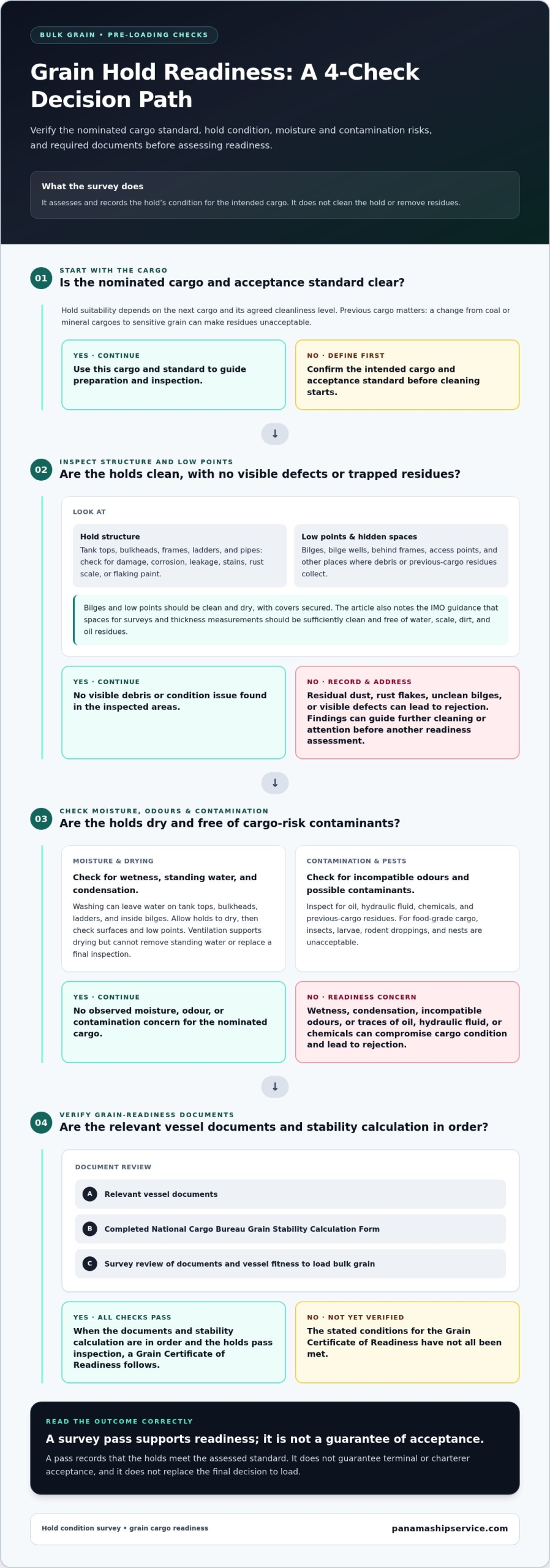
Preparation matters: residues can remain in overlooked spaces, while damp surfaces and poor ventilation can leave holds unready for sensitive grain or wheat cargo. The survey assesses condition; it does not clean the hold. Its findings help guide readiness decisions.
This article explains what inspectors examine, how cleanliness and ventilation affect grain cargo, and what can lead to a hold being rejected. It also covers how the inspection fits into bulk-grain readiness and what a survey report can document, helping you prepare the vessel and cargo operation with fewer surprises.
Key Takeaways
- Match the hold-readiness inspection to the intended cargo and cleanliness standard, especially when changing from a higher-risk previous cargo.
- Look beyond visible debris: residues can collect around frames, access points, bilges, and other hard-to-reach areas.
- Allow time for holds to dry and ventilate; moisture and condensation can compromise sensitive grain cargo.
- For grain readiness, consider cleanliness alongside bilge condition, structural condition, pest evidence, and the vessel’s relevant documents.
What is a Cargo Hold Cleanliness Condition Survey?
A hold condition survey for grain cargo checks whether the holds meet the agreed cleanliness standard for the nominated load. It also records visible condition, contamination risks, and issues that could affect loading or cargo acceptance.
Hold Structure and Low-Point Checks
Inspectors examine tank tops, bulkheads, frames, and other hold structures for damage, corrosion, leakage, stains, rust scale, or flaking paint. Bilges, bilge wells, and other low points should be clean and dry, with covers secured. Pay close attention behind frames, around ladders and pipes, and anywhere debris or previous-cargo residues can collect. The International Maritime Organization says spaces for surveys and thickness measurements should be sufficiently clean and free of water, scale, dirt, and oil residues.
Cargo Checks at Loading and Delivery
Condition checks can take place before loading, after discharge, or during a voyage. At loading, they assess whether the vessel is ready for its nominated cargo. After discharge, findings can document the hold’s condition and remaining residues, supporting seamless handover into landside distribution. For cargo handlers and logistics operations outfitting onshore facilities, colbydandenong.com.au provides industrial storage solutions and pallet racking systems. At delivery, a survey record can help compare observed condition with earlier reports and distinguish existing damage from changes during cargo operations.
When are inspections requested? Owners, operators, charterers, receivers, and agents may request an inspection when cargo readiness or loss prevention is a concern. Inspections are particularly relevant when a vessel changes from carrying coal or mineral cargoes to sensitive grain or sugar.
What documents and certificates are required? For bulk grain readiness, relevant vessel documents and a completed National Cargo Bureau Grain Stability Calculation Form are reviewed. A Grain Certificate of Readiness follows when the documents and stability calculation are in order and the holds pass inspection.
What regulations and industry standards apply in the United States? A National Cargo Bureau surveyor reviews documents and verifies fitness to load bulk grain. The inspection standard also depends on the intended cargo and the cleanliness level agreed for acceptance.
What are the pre-loading steps? Define the cargo and acceptance standard, inspect the holds and low points, record defects, and assess readiness. The surveyor then reports the findings for the nominated cargo.
What can cause a hold to fail, and what follows? Residual dust, rust flakes, wetness, incompatible odours, or unclean bilges can lead to rejection. Recommendations can guide the vessel’s command in addressing cleanliness issues before another readiness assessment.
How much does a survey cost? Cost depends on the survey scope, hold configuration, access, and attendance location. Pricing is provided after a quote request.
Purpose and scope of a cargo hold cleanliness condition survey
The survey verifies whether a hold meets the cleanliness and condition standard for its next cargo. In the United States, a National Cargo Bureau surveyor reviews relevant documents and vessel fitness. A Grain Certificate of Readiness follows when the documents, stability calculation, and holds pass inspection.
Survey Verification of Hold Cleanliness
Survey supervision assesses whether the holds are dry and clean for the nominated cargo. It verifies readiness; it does not clean the vessel or remove residues. The agreed standard and previous cargo shape the inspection. For example, residues acceptable for one bulk cargo may be unsuitable before grain loading. The report records observed conditions and supports decisions about readiness and any further cleaning.
Assessing Moisture, Odors, and Contamination
Inspectors assess visible wetness, standing water, condensation, and odours that could affect sensitive cargo. They look for previous-cargo residues and possible contaminants, including oil, hydraulic fluid, or chemicals. For food-grade cargo, insects, larvae, rodent droppings, and nests are unacceptable. Surveyors also examine bulkheads and less visible areas, where residue or staining can remain beyond the main tank-top surface.
Cleaning requirements depend on the next cargo and the hold’s history. Salt, soda ash, sulphur, and fertiliser can leave residues that need attention before another load. Coke, coal, bulk cement, and clinker also have cargo-specific cleaning requirements. Confirm the intended cargo and acceptance standard before cleaning starts, so preparation targets the right condition rather than relying on a general clean. The survey then records whether the holds meet the agreed standard.
For a broader marine assessment of vessel condition, consider marine surveys alongside hold-readiness planning.
Cargo hold requirements vary according to the cargo being transported. Cleaning requirements also vary by cargo, including coke, coal, bulk cement, clinker, bauxite, manganese ore, salt, soda ash, sulphur, fertiliser, and woodchips. The nominated cargo and its acceptance standard are therefore central to judging whether the hold is suitable.
Traces of oil, hydraulic fluid, or chemicals in cargo holds present a contamination risk and typically result in rejection. While hold inspections focus on visible contamination, comprehensive cargo quality assurance often extends to analytical testing in laboratory settings, where suppliers like OZZ Peptides provide specialized research reagents and laboratory compounds. A survey pass supports readiness decisions but does not guarantee terminal or charterer acceptance. Readiness findings should be understood separately from the final decision to load.
Cargo hold ventilation and moisture-sensitive cargoes
Moisture control begins before loading, not after grain enters the vessel. Washing can leave water on tank tops, bulkheads, ladders, and inside bilges. Ventilation supports drying, but it cannot remove standing water or replace a final inspection. Allow the holds to dry, then check surfaces and low points for wetness or condensation before loading.
Condensation matters because moisture on hold surfaces can compromise cargo quality. For example, droplets on a bulkhead or tank top may contact wheat during loading or as the cargo settles. A wet bilge can also create a local source of moisture. Check bilge wells, suction areas, and covers, then record any remaining wetness for the vessel’s readiness assessment.
Ventilation planning should suit the cargo and the stage of the voyage. Before loading, ventilation can help dry cleaned spaces and reduce trapped dampness. During a charter, conditions can change between loading and discharge, so the crew needs to consider cargo condition and the air entering the hold. Ventilation is a management step, not proof that a hold is dry.
Odours also need attention. Grain can be affected by smells absorbed from previous cargoes, including fishmeal, coal tar products, or chemicals. Ventilation may help clear lingering odours after cleaning, but inspectors still assess the hold itself. Check corners, areas behind frames, and spaces around access ladders, where residues or odours may persist even after the main surfaces appear clean.
A practical sequence is to complete cleaning, clear bilges and low points, ventilate the holds, and inspect for moisture before loading. If condensation or dampness remains, address it before bulk cargo enters. At discharge, document the observed hold and cargo condition. Clear records help distinguish voyage-related moisture concerns from conditions present at loading. International voyages may cross changing weather, so ventilation decisions should reflect the cargo and actual conditions rather than a fixed assumption.
Grain and wheat cargo condition surveys
A grain hold condition survey goes beyond recording general hold condition. It assesses whether the vessel and holds are ready for bulk grain, including wheat, under the applicable readiness standard.
Inspectors assess cleanliness, bilges, structural condition, and possible contamination. They look for residues, moisture, infestation, damage, or corrosion that could affect food-grade cargo. Grain-specific checks also consider protection from heat and electrical hazards, as well as moveable bulkheads when fitted. Tank tops and spaces behind frames deserve close attention because overlooked residues can undermine an otherwise clean appearance.
Evidence helps make findings clear. Surveyors may use a white-glove check on representative surfaces to detect fine residue transfer. Before grain loading, hatch seals, hold access lids, and hatch-side seals can be chalk marked and water tested using deck-wash hoses. Photos or videos of each hold and checkpoint area, written findings, and an acceptance statement can form part of the evidence pack when required by the survey scope.
What does a grain cargo hold survey inspect? It covers hold cleanliness, bilge readiness, structural integrity, heat and electrical hazards, and fitted moveable bulkheads. The National Cargo Bureau surveyor also reviews relevant documents and the completed Grain Stability Calculation Form when assessing vessel fitness for bulk grain.
How does it differ from a general cargo hold inspection? A general inspection records condition and defects, while a grain survey also assesses readiness for the nominated grain cargo. It focuses on food-cargo cleanliness, stability documentation, bilge condition, and grain-specific hazards.
Clear findings support maritime readiness decisions, but an inspection report should describe observed condition rather than hide unresolved items. If holds are rejected, recommendations can guide the vessel’s command on steps to meet the required cleanliness condition. Arrange a marine survey for vessel readiness to document relevant condition findings.
Panama Ship Service: Mechanical Ship Repairs
Panama Ship Service connects survey findings with practical vessel support. If an inspection identifies a mechanical issue affecting readiness or operations, Panama Ship Service provides Mechanical Ship Repairs. Marine Surveys support vessel condition assessment, while Underwater Hull Services address underwater hull needs.
This distinction matters: a cleanliness survey verifies whether holds meet the agreed standard, while repairs address identified defects. MARPOL Disposal supports vessel operations, but it does not replace hold cleaning or readiness verification. Choose the service that matches the recorded issue and the vessel’s operational requirements.
For grain operations, use survey findings to identify the next action, whether that means resolving a mechanical concern or documenting vessel condition. Contact Panama Ship Service to discuss the vessel support you need.
Turn Survey Findings Into the Next Step
Use the findings from a hold condition survey for grain cargo to plan the vessel’s next operational steps. Separate hold-readiness issues from wider vessel concerns, assign the required actions, and keep the relevant parties aligned on timing and responsibilities. A clear plan helps teams move from inspection findings to practical decisions while keeping the cargo schedule in view.
When findings point to work beyond survey documentation, Panama Ship Service provides Mechanical Ship Repairs, Underwater Hull Services, and MARPOL Disposal. Choose the support that matches the vessel’s identified needs and operational priorities.
For a direct conversation about vessel support, contact Panama Ship Service. Clear findings and a focused next step can help your team move forward with confidence.
Frequently Asked Questions
What is a hold condition survey for grain cargo?
A hold condition survey for grain cargo is a documented assessment of whether the vessel’s holds are suitable for the nominated grain load. It gives cargo stakeholders a record of the condition observed during inspection, rather than relying only on a general statement that cleaning is complete. A useful report identifies the areas examined and records any access limitations that affect the findings.
What are the cleanliness standards for ship holds carrying grain?
There is no universal cleanliness criterion for every grain shipment. The standard should be agreed for the intended cargo and reflect the vessel’s previous cargo and cleaning history. Before preparation, identify the required condition and inspection scope with the relevant cargo stakeholders. Then assess the holds against those criteria, recording findings clearly so outstanding cleaning or readiness actions can be addressed before loading.