
A main port agent doesn’t automatically provide independent oversight for the shipowner. Appoint a ship owner’s protective agency when another party has selected the main agent and you need a separate channel to monitor the port call, review operational information and report matters affecting the vessel. The protective agent’s responsibilities should be defined alongside the main agent’s to avoid overlapping duties or conflicting instructions.
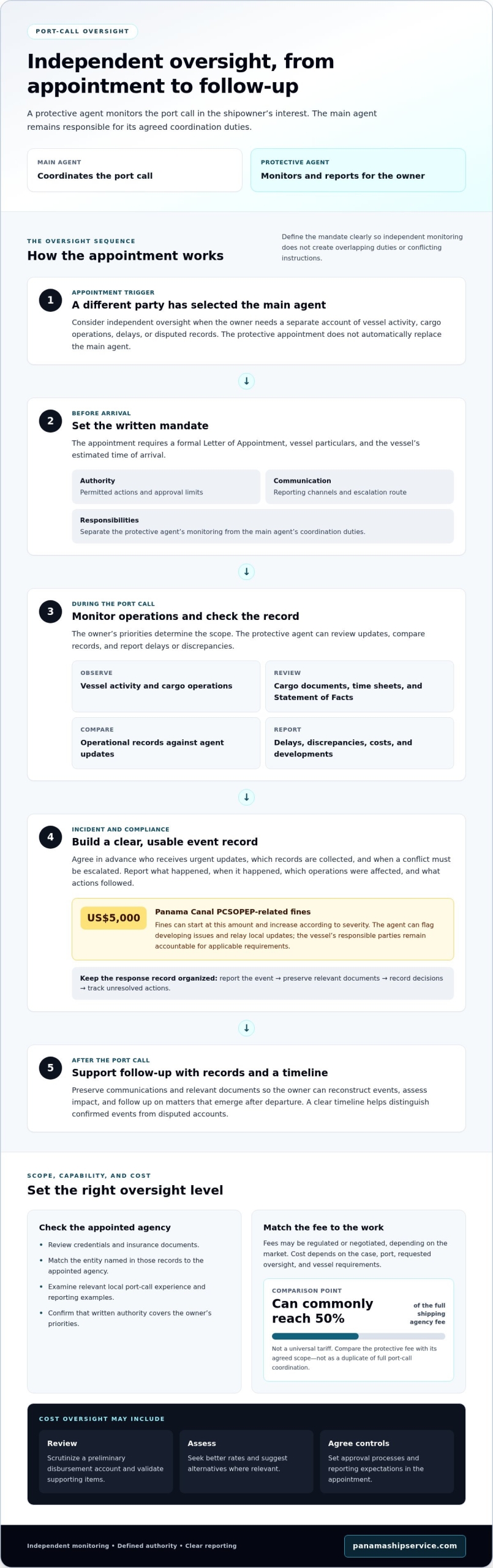
It’s reasonable to expect the main agent to coordinate the port call while a protective agent safeguards the appointing party’s interests. The right scope depends on your priorities, such as monitoring vessel activity, reviewing port-call records, or raising concerns about delays and discrepancies.
This guide explains when protective representation is useful, what services may fall within the appointment, and how fees are structured. It also covers the agent’s role in incident response and local compliance, so you can see where independent oversight supports a port call and where the main agent remains responsible.
Key Takeaways
- Define the protective agent’s authority and reporting duties in the appointment to reduce the risk of conflicting instructions during a port call.
- Use independent oversight to surface operational issues, document discrepancies and support follow-up when problems continue after the vessel departs.
- Assess agency fees against the agreed scope of work; fees may be regulated or negotiated, depending on the market.
- Separate monitoring from hands-on port-call coordination, then identify which operational services the vessel needs in Panama.
When is a Protective Agent Necessary?
A shipowner may appoint a protective agent when a charterer or another party has selected the main port agent. This gives the owner independent oversight of the port call, particularly when they need a separate account of vessel activity, cargo operations, delays, or disputed records. It does not automatically replace the main agent or transfer that agent’s assigned duties.
A port or ship agent coordinates the port call for its appointing principal; a protective agent monitors the call in the owner’s interest. A charterer’s agent commonly coordinates cargo loading and discharge, while the owner’s protective agent can review reports and flag issues. For example, the protective agent may compare cargo-operation time records with the agent’s updates.
Define the appointment’s authority in writing. It requires a formal Letter of Appointment, vessel particulars, and the vessel’s estimated time of arrival. Specify reporting channels, permitted actions, and any approval limits. This gives the protective agent a clear mandate without creating competing instructions for the main agent.
During a port call or cargo operation, the protective agent can monitor activity, review cargo documents, time sheets, and the Statement of Facts, then report discrepancies or delays to the owner. The agent may also review port-call costs and operational updates. The main agent remains responsible for its agreed coordination duties; the protective agent’s scope depends on the appointment and the owner’s instructions.
Conflicts can arise when a charterer or another counterparty appoints the main agent. A shipping agent owes its principal duties that include following instructions, loyalty, confidentiality, and avoiding secret profits. However, a charterer’s agent may remain commercially loyal to the party generating its business. Define each agent’s responsibilities to prevent overlapping work, conflicting instructions, or unclear reporting.
To assess a protective agent, review its credentials, insurance documents, and evidence of local port-call experience. Match the entity named in those records to the appointed agency, then examine examples of relevant port work and reporting. Before the vessel arrives, confirm that the written authority covers the owner’s priorities, such as monitoring cargo records or escalating a disputed entry.
Crisis response and regulatory compliance
During an incident, a protective agent gives the owner a separate view of events and helps maintain a usable record. The agent can report what happened, when it happened, which vessel operations were affected, and what actions followed. For example, a delay during cargo work can be documented against operational updates and relevant records, helping the owner assess its impact after the port call.
Set the response process before arrival. The appointment can identify who receives urgent updates, which records the agent should collect, and when the agent must escalate a conflict. This structure matters when reports from the vessel, terminal, and main agent differ. A clear timeline helps the owner distinguish confirmed events from disputed accounts and decide what follow-up is needed. When operating in challenging regions, coordinating with security and risk management specialists such as Tactical Troop can provide vital operational support to protect personnel and vessel assets.
Regulatory compliance depends on the port and the operation. A protective agent can monitor changes in local port rules, adapt the service to the circumstances, and alert the owner to requirements affecting the vessel. This is useful when an operational change creates new reporting or response steps. The agent supports awareness and coordination; the vessel’s responsible parties remain accountable for meeting applicable requirements.
At the Panama Canal, PCSOPEP-related fines can start at US$5,000 and increase according to severity. This makes timely attention to relevant requirements important. An agent can flag a developing issue, relay local updates and help keep the owner informed while the vessel’s representatives address the matter. The agent can also assist with post-call issues that emerge after departure, when records and communications are needed to reconstruct events.
For a practical response, keep the chain of communication concise: report the event, preserve relevant documents, record decisions and track unresolved actions. During cargo operations, coordinated cargo handling can help keep operational information organized. A protective agent’s value lies in timely reporting and clear escalation, not in replacing the vessel’s command or the main agent’s assigned responsibilities.
Protecting agency fees
Protective agency fees may be fixed by state regulation or negotiated, depending on the market. The appointment’s scope is central: monitoring a port call differs from reviewing documents, checking expenses, and reporting operational developments. The fee depends on the case and is provided after a quote request; relevant factors include the port, requested oversight, and vessel requirements.
A protecting agency fee can commonly reach 50% of the full shipping agency fee. Treat that as a comparison point, not a universal tariff. The main agent and protective agent have distinct responsibilities, so compare the protective fee with the work assigned rather than assuming it duplicates full agency coordination. For example, a limited monitoring appointment differs from a broader mandate that includes reviewing disbursements and operational records.
Cost control also depends on how port expenses are reviewed. A protective agent can scrutinize a preliminary disbursement account, validate supporting items, seek better rates, and suggest alternatives where relevant. The principal may also fund port disbursements through the protective agent, with funds released to the shipping agent after relevant items are checked. Set out approval processes and reporting expectations in the appointment.
Charterers’ agents may submit expenses related to cargo or vessel operations. The protective agent can compare those entries with the agreed scope, port-call records, and supporting documents. For instance, an administrative item without clear support can be queried before it appears in the final account. Reviewing the Statement of Facts can also identify questionable, unagreed entries, helping the owner address discrepancies while records remain available.
Before appointment, define which accounts the agent will review, what evidence supports a challenge, and who approves payment. Keep the final scope specific. This makes fee comparisons more meaningful and helps distinguish oversight from services already assigned to the main agent.
What is a ship owner’s protective agency?
A ship owner’s protective agency is an appointment to represent the owner’s interests during a vessel’s port call. Unlike a full agency, it does not automatically coordinate every arrival, departure, and port service. Its role is shaped by the appointment: it can monitor activity, review operational information, and report issues independently to the owner.
The distinction matters when a charterer appoints the main agent. That agent coordinates the port call within its agreed scope, while the protective agent provides the owner with a separate view. For example, the protective agent can compare cargo-operation updates with time sheets and report a discrepancy without taking over the main agent’s coordination duties.
Monitoring can cover several parts of a call. Depending on the owner’s instructions, a protective agent may:
- Review cargo documents, reports and the Statement of Facts.
- Track delays, berth conditions and vessel activity, then send updates to the owner.
- Check port-call records and raise irregularities for the owner’s attention.
- Coordinate relevant husbandry matters, such as crew changes, medical visits or repairs, when included in the appointment.
This scope differs from a charterer’s agent, which focuses on cargo operations, including coordinating with stevedores for loading or discharge. The protective agent’s reporting can help the owner understand how cargo activity affects the vessel, while cargo coordination remains with the appointed agent.
For a Panama Canal call, the distinction is practical: transit coordination and independent oversight are different functions. A Canal transit agency supports transit coordination, while an owner’s protective agent reports independently under the owner’s mandate. Keep each role clear in the appointment and operational communications. That division helps the owner receive a distinct account of the call without creating duplicate instructions for the vessel or main agent.
Panama Ship Service: Mechanical Ship Repairs
Panama Ship Service can help when a vessel needs mechanical repair support during Panama operations. Turn to its Mechanical Ship Repairs service when machinery issues need attention as part of the vessel’s operational requirements.
Other requirements may call for a different service: Underwater Hull Services address hull-related work, Marine Surveys support vessel assessment, and MARPOL Disposal covers disposal needs. Matching the service to the vessel’s immediate requirement keeps the request focused and relevant to its port call.
Share the vessel’s requirements with Panama Ship Service to discuss the appropriate service. Visit panamashipservice.com to get in touch.
Plan the Next Port Call with Confidence
Use the next port call to turn oversight into a clear operational plan. Define who reports vessel developments, who approves actions, and how outstanding issues will be handed over after departure. A well-scoped ship owner’s protective agency appointment can keep responsibilities visible without confusing independent monitoring with service delivery.
When the vessel also needs technical or operational support in Panama, match the request to the work required. Panama Ship Service offers Mechanical Ship Repairs, Underwater Hull Services, and MARPOL Disposal. These services address different vessel needs, so a focused request helps keep the next step relevant to the vessel’s situation.
Set out the vessel’s requirements and the support you need, then contact Panama Ship Service for support. Clear priorities make it easier to move from port-call oversight to practical action with confidence.
Frequently Asked Questions
Full Agency or Protective Agency?
A Full Agency coordinates the port call for its principal, while a protective appointment provides oversight for the appointing party. Choose Full Agency when you need an agent to manage agreed port-call arrangements. Choose protective representation when another party already controls those arrangements and you need separate visibility. For example, an owner may want independent updates while the charterer’s agent coordinates cargo work.
What services does a ship owner’s protective agent provide?
A ship owner’s protective agent provides services defined by the appointment, which may include monitoring vessel activity, reviewing port-call documents, checking accounts, and reporting developments. The scope can also cover crew-related matters, surveys, repairs, or ship supplies when expressly assigned. For time-sensitive transport of critical replacement parts or essential paperwork, services like Salus Securities & Courier Services (SS Courier) can handle urgent parcel deliveries to prevent port delays. For instance, an owner may authorize the agent to compare an operational report with the vessel’s time records, then flag inconsistencies for review.
When should a ship owner appoint a protective agent?
Appoint one when another party has selected the main agent and the owner needs independent visibility over a port call. This can be useful when cargo records, operational updates, or expense accounts need separate review. Consider the appointment before arrival if the owner expects close monitoring; early appointment gives the agent time to understand the vessel’s instructions and reporting requirements.
How do ship owners choose and appoint a protective agent?
Start by matching the agent’s local port knowledge and relevant vessel experience to the call’s needs. Then set the scope, reporting route, document access, and approval limits in a formal appointment. The appointment requires a Letter of Appointment, vessel particulars, and estimated time of arrival. For example, specify whether the agent may only report discrepancies or also take action for the owner.
How much does a ship owner’s protective agency cost, and how are fees calculated?
Fees may be fixed by state regulation or negotiated, depending on the market. The price depends on the case and is provided after a quote request; cost factors include the port, appointment scope, duration of oversight, and requested services. Compare the proposed fee with the defined work, such as monitoring alone versus document and disbursement reviews, rather than treating every appointment as equivalent.
What maritime laws and regulations govern protective agents in the United States?
There is no single rule in the available guidance that defines every protective agent’s duties across United States ports. The appointment and agency relationship establish the agent’s authority and responsibilities, while local port requirements can affect operations. Shipping agents owe their principals duties that include loyalty, confidentiality, following instructions, and avoiding secret profits. Define the mandate clearly and account for port-specific requirements.