
The parts list can matter more than the first figure you see. Getting a ship repair estimate online gives you a preliminary cost picture based on the work described, the parts and materials involved, and the vessel’s condition and type. It is not the same as a quote: an estimate helps frame expected costs, while a quote prices a defined scope of work.
It is reasonable to want a clear figure before planning repairs, especially when the scope depends on what needs replacing or fixing. The more specific the repair details and parts information, the more useful an online estimate can be. This article explains how materials, vessel condition, and vessel type shape an estimate, what information affects its accuracy, and how to distinguish an estimate from a quote. You will also see when an online figure is useful for planning and when a closer assessment of the repair scope is needed.
Key Takeaways
- See how the repair scope, parts, materials, vessel condition, and vessel type influence an online cost estimate.
- Learn why fiberglass, engine, electronics, and painting work can involve different cost drivers.
- Understand the difference between a preliminary estimate and a quote for defined work.
- Find out what repair details help build a clearer estimate and when mechanical ship repair support may be useful.
Fiberglass, engine, electronics, and painting costs
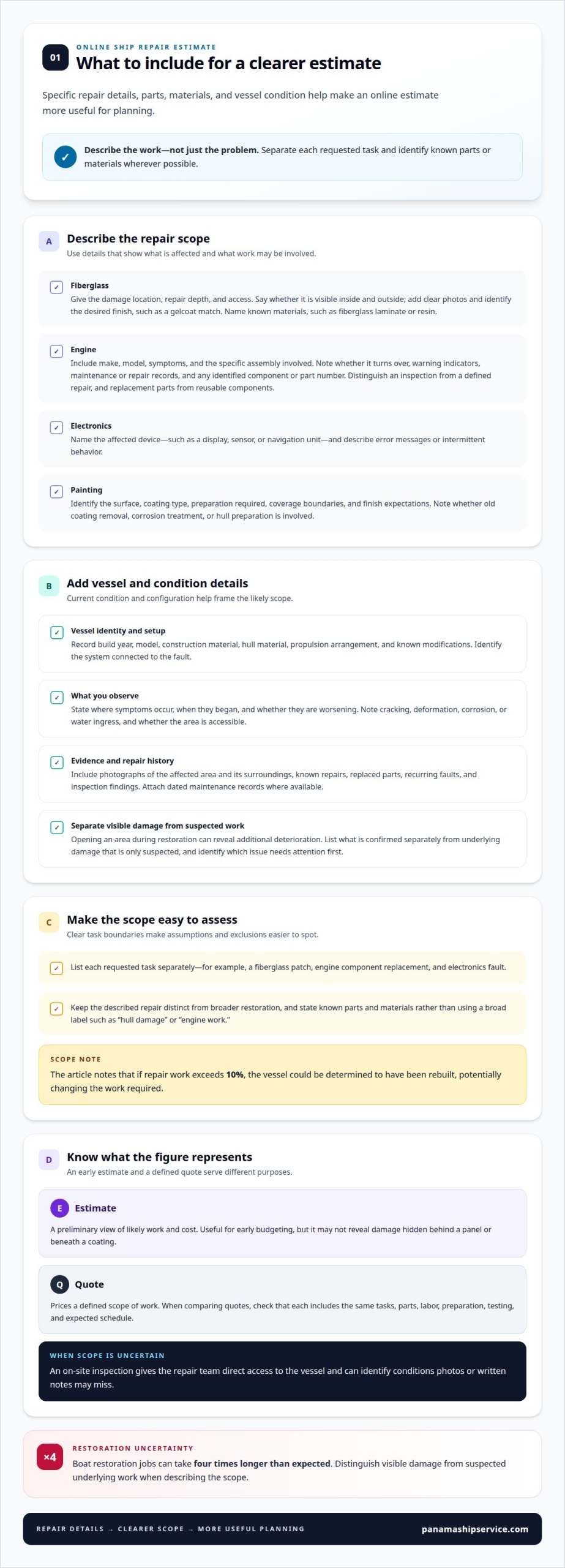
Fiberglass work depends on the damage location, repair depth, and access to the affected structure. A surface crack requires different work from a repair involving removal of damaged laminate and rebuilding. For a useful online estimate, describe the affected area, say whether damage is visible inside and outside, and provide clear photographs. Identify the required finish, such as a gelcoat match, because surface restoration involves different work from structural repair. Specify known materials, including fiberglass laminate or resin, rather than describing the job only as “hull damage.”
Engine estimates need the make, model, and symptoms, as well as the specific assembly involved. A starter fault, fuel-system issue, and internal engine damage call for different parts and labor. State whether the engine turns over, note warning indicators, and share maintenance or repair records. If a mechanic has identified a component, include its name and part number. Separate a requested inspection from a defined repair, and distinguish replacement parts from reusable components. A request that says only “engine work” leaves the scope unclear.
Electronics estimates depend on which equipment has failed and how the fault is diagnosed. Name the affected device, such as a display, sensor, or navigation unit, and describe any error message or intermittent behavior. For painting, identify the surface, coating type, and preparation required. Removing old coating, treating corrosion, and preparing a hull can change the work involved before new paint is applied. Include coverage boundaries and finish expectations. These details help distinguish coating materials from preparation and application labor.
Repair scope can also affect how the work is classified. According to the U.S. Government Publishing Office, if repair work exceeds 10 percent, the vessel could be determined to have been rebuilt, potentially changing the work required. Keep the described repair distinct from broader restoration, and list each requested task separately. For example, record a fiberglass patch, engine component replacement, and electronics fault as separate items. This makes exclusions and assumptions easier to spot. When getting a ship repair estimate online, specific parts and material details help make the projected scope more useful for planning.
Boat age, condition, and type
A vessel’s age provides context, but its present condition shapes the repair scope more directly. Two boats built in the same year can need different work if one has documented maintenance and the other has hidden corrosion or previous repairs. Identify the build year, construction material, and known repair history. For example, describe whether a steel hull shows corrosion near a previous plate repair, rather than reporting only the vessel’s age. This helps distinguish age-related wear from a specific, localized fault.
Condition details make an estimate more useful. Note where symptoms occur, when they began, and whether they are worsening. A leak near a fitting, for example, differs from water appearing across several compartments. Include photographs showing both the affected area and its surroundings. Mention visible cracking, deformation, corrosion, or water ingress, and explain whether the area is accessible. These observations help show whether the job concerns a component, a wider section, or an inspection needed to define the work.
Vessel type also affects which systems and structures may be involved. A sailboat may have rigging and keel concerns, while a powerboat may need attention to propulsion or engine-room equipment before heading back out to waterfront destinations like The Shack Riverfront Restaurant & Tiki Bar. Record the vessel’s model, hull material, propulsion arrangement, and the system connected to the fault. For example, “starboard propulsion vibration under load” gives a clearer starting point than “boat problem.” Include equipment names and known modifications, since different configurations can affect access and repair scope.
Restoration requires particular care because opening one area can reveal additional deterioration. Boat restoration jobs can take four times longer than expected, so distinguish visible damage from suspected underlying work in your description. List known repairs, replaced parts, recurring faults, and inspection findings. Attach dated maintenance records where available, then identify which issue needs attention first. A well-maintained vessel with a localized fault presents a different estimate picture from an older vessel with undocumented alterations and widespread damage. These details help frame the estimate around the vessel’s actual condition, not age alone.
Estimates versus quotes
An estimate gives a preliminary view of likely work and cost; a quote prices a defined scope. Knowing the difference helps you compare repair plans without treating early figures as identical commitments.
Online Estimate Accuracy
Online estimate accuracy depends on how clearly you describe the repair scope and vessel details. An estimate can help with early budgeting, but it cannot reveal damage hidden behind a panel or beneath a coating. An on-site inspection gives the repair team direct access to the vessel and can identify conditions that photographs or written notes may miss.
For example, a photo of a corroded area may show its surface but not the condition beneath it. Use an online estimate to frame an initial plan, then factor in inspection findings when repairs involve concealed structures or uncertain damage.
Quote Comparisons
When comparing shipyard quotes, check that each price covers the same repair scope, parts, labor, and expected schedule. A lower total may exclude preparation, testing, or a specific replacement component. Pricing depends on the job and is provided after a quote request; scope, parts, access, and labor all affect it.
Compare labor rates alongside the work assigned to each role, not as isolated figures. Check whether each quote separates labor from materials and includes the same tasks. For turnaround times, compare the stated work duration and any assumptions about vessel access or parts delivery. A repair plan with clear inclusions is easier to assess than a single total.
Estimate Changes After Work Begins
An estimate can change after work begins if inspection reveals damage beyond the visible repair area. Hidden corrosion, failed fasteners, or an additional defective component can expand the required scope. For example, opening a panel to reach a pipe may reveal deterioration that was not visible in the initial photographs.
Separate the original work from newly discovered tasks in any revised estimate. Look for the specific finding, added labor or materials, and any schedule change. This makes it easier to understand why the projected total shifted and which repair decision led to the change.
Online ship repair estimate building
Before approving work, review the vessel’s insurance terms, applicable warranty coverage, licensing requirements, and repair-site safety procedures. An online request should identify the vessel, repair location, reported fault, requested work, and supporting records. Useful photos and survey documents can help clarify the scope.
Information for an Online Request
An online repair request is a concise record of the vessel, fault, location, and work requested. Clear details help distinguish the reported symptom from the repair you expect. Include the vessel type, model, construction material, system affected, fault history, and preferred repair window. Name the equipment or component if known, and explain whether the issue is constant or intermittent.
For example, “pump fails to maintain pressure after startup” gives more context than “pump problem.” Add the vessel’s current location, access constraints, and any operational deadline. Separate confirmed defects from suspected causes, then list each requested task. This helps shape the estimate around defined work instead of assumptions about the fault.
Photos, Surveys, and Documentation
Photos and records document visible conditions and previous findings. Include a wide view showing where the damage is, followed by close-ups of the affected area, connections, and equipment labels. A ruler or other scale reference can show the size of a crack or corroded section. Photograph the area from more than one angle when access allows.
Attach relevant survey reports, inspection notes, drawings, maintenance records, and details of earlier repairs. For example, a past report identifying a recurring leak can help distinguish a repeat fault from a new one. Label files by location or system, and include dates where available. Organized records make it easier to match each image to the vessel and repair request.
Build the request as a traceable scope: describe the symptom, identify the affected system, attach evidence, and separate requested repairs from suspected follow-up work. Before approval, compare the proposed scope with the submitted information and note any inspection findings that change it. This creates a clear record of what the estimate addresses and what decisions remain. Submit your ship repair request with the relevant vessel details and supporting documents.
Panama Ship Service: Mechanical Ship Repairs
Panama Ship Service provides Mechanical Ship Repairs for vessels with defined repair needs. Turn to its team when engine-room equipment, machinery, or other mechanical systems need attention, particularly when clear repair details can support planning around vessel operations at the Panama Canal.
For related needs, Panama Ship Service also offers Underwater Hull Services and Marine Surveys. A survey can help establish a vessel’s condition, while underwater hull work addresses needs below the waterline. Together, these services can connect inspection findings with subsequent repair decisions.
Share the vessel’s details, symptoms, and available records when discussing repair work. Contact Panama Ship Service or visit panamashipservice.com to discuss your vessel’s needs.
Turn the Estimate Into a Repair Plan
Use an estimate as a planning tool, then align the repair scope with the vessel’s operational priorities. Organize the inspection findings, repair requirements, and supporting records into one request. This provides a practical starting point for discussing the work your vessel needs.
Panama Ship Service offers Mechanical Ship Repairs, Underwater Hull Services, and MARPOL Disposal. These services support vessels with mechanical work, underwater hull needs, or disposal requirements as part of their operational planning. For a repair request, share the vessel details and relevant findings so the discussion can focus on the work required.
Getting a ship repair estimate online can help frame your next decision, but the repair plan is where you put that information to work. Contact Panama Ship Service to discuss your vessel’s repair needs and move forward with a clear plan.
Frequently Asked Questions
How do online ship repair estimate forms and quote processes work?
An online form collects details needed to assess a repair request and define its scope. Describe each job separately, identify essential work, and distinguish known faults from requested inspections. The repair team can use this information to prepare an initial estimate; a quote follows once the work and requirements are defined. Before approving work, compare the written scope with the tasks you expect to be performed.
What are typical ship repair costs by repair type and vessel size?
Repair costs depend on the work, parts, materials, vessel configuration, and access to the affected area. Pricing depends on the job and is provided after a quote request. A hull repair may involve different materials and access needs from machinery work, while vessel size can affect the amount of material and work involved. Compare quotes by their defined tasks and inclusions, not by vessel size alone.