
Robotic equipment can clean underwater, but it does not automatically replace manual propeller polishing. For underwater propeller polishing in Panama, robotic methods may suit routine cleaning, while manual work is important when a propeller needs a precise finish. The right approach depends on the propeller’s condition, the fouling present, and the required result.
When vessel schedules are tight, a faster, less disruptive option may seem appealing. But cleaning and polishing are different tasks. Planning underwater propeller polishing in Panama means matching the method to the propeller’s surface and maintenance needs. This guide explains when robotic cleaning can, and cannot, replace manual polishing.
You’ll also learn how propeller condition relates to drag, fuel use, and emissions, and what to consider when scheduling underwater propeller polishing in Panama. The goal is to help you choose an approach that supports vessel performance without treating automation as a universal substitute for skilled work.
Key Takeaways
- Learn how propeller condition and the type of work needed shape the choice between robotic cleaning and manual polishing.
- Understand how a smoother propeller can relate to vessel fuel use and emissions, without assuming the same result for every ship.
- See the main stages of underwater polishing and how the method is matched to the propeller’s surface.
- Recognize the risks that careful inspection and controlled work help manage during underwater maintenance.
What is Underwater Propeller Polishing and Why it Matters?
Underwater propeller polishing removes fouling and smooths the propeller’s working surfaces. Divers inspect the blades, then use suitable tools to remove deposits and polish the metal. A fouled blade, for example, may need cleaning before polishing can restore a smoother finish. This is more targeted than general hull cleaning because the propeller’s shape and surface directly affect its operation.
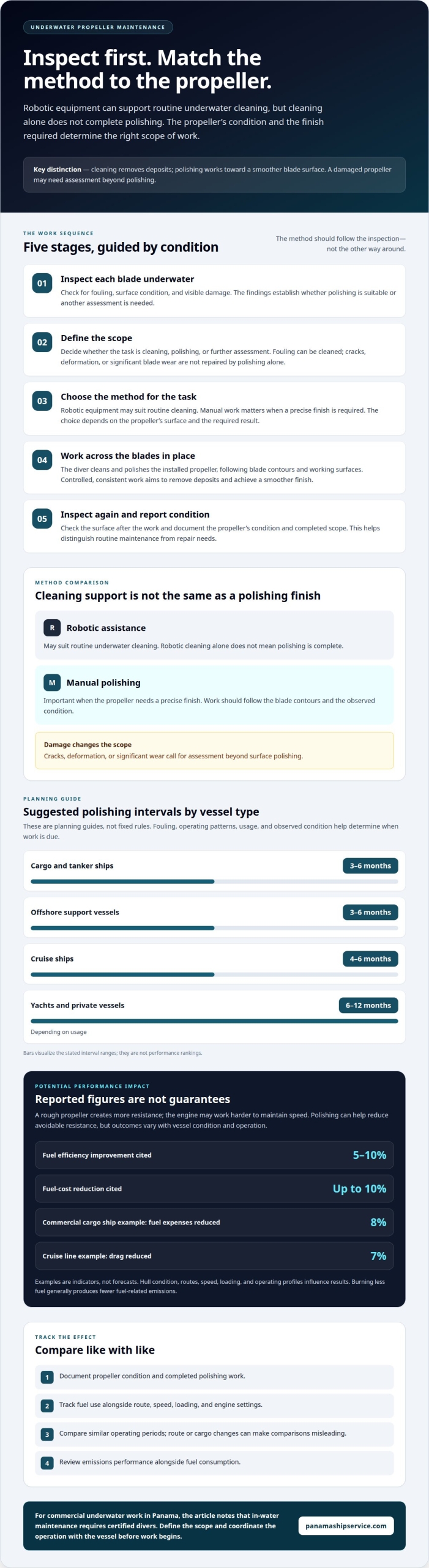
There is no single interval for every vessel in Panama. Cargo and tanker ships are recommended to polish every 3-6 months, as are offshore support vessels. Cruise ships are recommended to polish every 4-6 months. Yachts and private vessels are recommended to polish every 6-12 months, depending on usage. These schedules provide a planning guide; fouling, operating patterns, and observed propeller condition help determine when work is due.
For commercial underwater work in Panama, in-water maintenance requires certified divers. Select a team with the required certification, define the scope, and coordinate the operation with the vessel before work begins. This preparation supports safe access and keeps the task focused on the propeller.
When choosing a service, start with the vessel’s need: routine polishing, visible damage, or a broader underwater inspection. Define a clear scope that distinguishes cleaning from polishing and specifies whether manual or robotic methods suit the propeller. Establish how the blades will be inspected and their condition reported afterward. This helps determine whether the proposed work matches the observed fouling and the vessel’s schedule.
Polishing can help maintain a smoother blade surface, but it cannot repair structural damage. If an inspection reveals cracks, deformation, or significant blade wear, polishing alone is not the right remedy. A condition-led assessment separates routine maintenance from repair needs and helps inform the next step.
Fuel savings and emissions
A rough propeller creates more resistance as it turns. The engine must work harder to maintain operating speed. That extra load can increase fuel consumption and related emissions. Polishing restores a smoother blade surface, helping reduce avoidable resistance. Underwater propeller polishing in Panama can improve fuel efficiency by 5-10%. A polished propeller can cut fuel costs by up to 10%. These figures show why propeller condition matters to vessel performance.
Reported examples illustrate potential outcomes, not universal results. One commercial cargo ship reduced fuel expenses by 8% after regular underwater polishing. A cruise line reduced drag by 7% after propeller polishing. Vessels differ in hull condition, routes, speed, and operating profiles. Those factors influence the fuel impact of maintenance. Treat the examples as useful indicators, not forecasts for every ship.
Fuel use and emissions are closely linked: burning less fuel generally produces fewer fuel-related emissions. The International Maritime Organization promotes fuel efficiency through propeller maintenance. For operators planning underwater propeller polishing in Panama, this work can form part of broader efficiency management. It does not replace attention to engine performance, hull condition, or operating practices.
To assess the effect of polishing, compare performance over consistent operating periods. Record fuel consumption alongside speed, route, loading, and engine settings, then compare similar voyages before and after maintenance. A route change or different cargo load can affect consumption, making a simple comparison misleading. Consistent records help separate maintenance effects from operational changes.
Use these steps to connect propeller maintenance with vessel performance:
- Document propeller condition and completed polishing work.
- Track fuel use alongside route, speed, and loading.
- Compare similar operating periods to identify trends.
- Review emissions performance alongside fuel consumption.
This approach gives technical teams a clearer basis for planning underwater propeller polishing in Panama. It also helps distinguish propeller-related changes from those caused by vessel operations. Regular, condition-led records support informed decisions about future maintenance and efficiency measures.
How underwater propeller polishing works
The process begins with an underwater inspection of the propeller. The diver examines each blade for fouling, surface condition, and visible damage. This assessment determines whether polishing is suitable or another intervention is needed. Deposits, for example, can be addressed through cleaning, while visible deformation needs assessment beyond surface polishing.
Once the scope is clear, the propeller is cleaned and polished in place. The diver works across the blades, paying attention to their contours and working surfaces. The aim is to remove deposits and achieve a smoother finish without treating every propeller as identical. Robotic equipment can support underwater cleaning, but cleaning alone does not mean polishing is complete. The task must match the propeller’s condition and the required finish.
Underwater polishing is done with the propeller installed, so the work takes place at the vessel rather than in a workshop. Workshop polishing requires removing the propeller and handling it separately. The workshop route provides access to the removed component, while in-water work avoids removal. The appropriate option depends on the propeller’s condition, inspection findings, and whether it can be serviced effectively in place.
A clear workflow keeps the work focused:
- Inspect the propeller and identify fouling or damage.
- Set the scope: cleaning, polishing, or further assessment.
- Choose manual work or robotic assistance for the task.
- Polish the blades in a controlled, consistent manner.
- Inspect the surface again and report any remaining concerns.
After polishing, the condition report helps distinguish a completed surface-maintenance task from a repair need. If inspection identifies cracks or deformation, polishing cannot correct that structural issue. This is where underwater hull services can support coordinated underwater maintenance. The practical decision is whether the propeller needs surface finishing or a different form of work.
What are the risks of polishing a propeller underwater?
Underwater polishing requires care around a large, precisely shaped component. Excessive abrasion can remove material unevenly, altering a blade’s surface instead of refining it. The diver must follow the blade contour and apply consistent pressure. Lingering on one area, for example, can create a visibly different finish from the rest of the blade. Polishing also cannot correct cracks, bends, or other structural damage.
Rotating equipment presents a serious hazard during underwater work. The propeller must remain stationary while a diver works nearby. Clear coordination with the vessel helps prevent unexpected movement. Poor visibility can make it harder to see blade edges, surface defects, or nearby obstructions. Damage hidden by deposits may be missed unless inspection takes place before polishing begins.
Tool choice and control matter. An abrasive tool used too aggressively can leave marks or produce an uneven finish. Loose equipment or hoses can snag on nearby structures. Before work starts, define the task, check the work area, and establish clear communication with the vessel. During polishing, the diver can work systematically across each blade and stop if damage or unsafe conditions become apparent.
Key risks to manage include:
- Blade damage: Excessive abrasion or uneven pressure can affect the surface.
- Missed defects: Fouling or poor visibility can conceal cracks or deformation.
- Moving machinery: Unexpected propeller movement can endanger the diver.
- Snagging: Tools and hoses can catch on nearby equipment.
- Wrong scope: Polishing cannot resolve structural defects requiring repair.
A condition report after polishing helps record visible defects and unfinished work. If the inspection identifies a structural concern, stop treating polishing as the remedy and arrange an appropriate assessment. For a closer look at underwater conditions, request an underwater hull inspection as part of maintenance planning.
Panama Ship Service: Underwater Hull Services
Panama Ship Service provides Underwater Hull Services for vessel operators planning underwater maintenance. Use this service when propeller fouling, visible blade damage, or another underwater condition needs attention. Inspection findings help distinguish routine surface work from issues requiring a different response.
If the propeller has structural damage, polishing alone will not resolve it. Mechanical Ship Repairs may be appropriate when repair work is needed, while Marine Surveys can support a broader vessel assessment. These services help operators connect an underwater finding with an appropriate next step instead of treating every condition as a polishing task.
For vessel maintenance planning in Panama, share the propeller concern and relevant inspection findings with Panama Ship Service. Contact Panama Ship Service to discuss your vessel’s underwater maintenance needs.
Plan Your Next Maintenance Window
Make propeller condition part of vessel maintenance planning, not a last-minute decision. For underwater propeller polishing in Panama, use inspection findings to define the work scope and coordinate it with other operational requirements. This gives your team a practical basis for scheduling underwater maintenance alongside repairs or port-call priorities.
Panama Ship Service offers Underwater Hull Services, Mechanical Ship Repairs, and MARPOL Disposal. These services support vessel operators managing underwater maintenance and related operational needs. To plan the next step, outline the vessel’s concern, the work already identified, and any timing constraints for the planned call.
Contact Panama Ship Service to discuss your vessel’s maintenance requirements and plan a suitable next step. A clear plan helps your team move forward with greater focus and confidence.
Frequently Asked Questions
How Does Biofouling Affect Propeller Efficiency?
Biofouling makes blade surfaces rougher and can disrupt water flow around them. Both a thin film and heavier growth, such as attached marine organisms, change the propeller’s surface. This can reduce thrust for the same rotation. Fouling may also be uneven across the blades, so an inspection can identify where deposits are concentrated.
How Does Propeller Polishing Save Fuel and Improve Efficiency?
Polishing can reduce surface roughness, helping the propeller move water more effectively. The engine may then need less effort to produce the thrust required under the vessel’s operating conditions. When less fuel is burned, fuel consumption and fuel-related emissions can fall together. The practical benefit depends on the propeller’s condition and vessel operation, so track performance alongside maintenance records.
What is underwater propeller polishing and how is it performed?
Underwater propeller polishing is maintenance performed on the installed propeller to remove deposits and refine its surface. A diver inspects the blades, identifies the work needed, and uses suitable equipment to clean and polish them. Robotic cleaning may remove fouling, but cleaning does not automatically give the propeller a polished finish. The scope should clearly distinguish these tasks.
Which companies offer underwater propeller polishing in Panama?
Panama Ship Service offers underwater hull services that include propeller polishing and underwater inspection. This is relevant when an operator needs the propeller’s condition assessed alongside underwater maintenance. If an inspection identifies damage beyond surface fouling, the next step may be a repair assessment rather than polishing alone. Panama Ship Service also offers Mechanical Ship Repairs for vessel repair needs.
Which Panama ports and marinas offer in-water propeller polishing?
Panama Ship Service provides operational and technical support on both sides of the Panama Canal. The practical location for a vessel is the port or berth where it is scheduled to receive service. Share the vessel’s location and planned maintenance window when arranging work, so it can be considered in the context of the vessel’s call and underwater access.
How long does underwater propeller polishing take and what vessel access is needed?
Work duration depends on propeller size, fouling, surface condition, and the agreed scope. Vessel access must allow the underwater team to reach the stern and work around the propeller. Coordination with the vessel is also needed to keep the propeller stationary during the operation. Clear access and a well-defined task help the team plan the work efficiently.