
One coating does not suit every part of a vessel. A marine paint and coatings supply plan should match the coating system to the surface, exposure, and intended use, with preparation supporting adhesion and protection. Below the waterline, antifouling paint helps reduce marine growth; above it, topside coatings protect exposed areas such as decks, cabins, and upper hull surfaces.
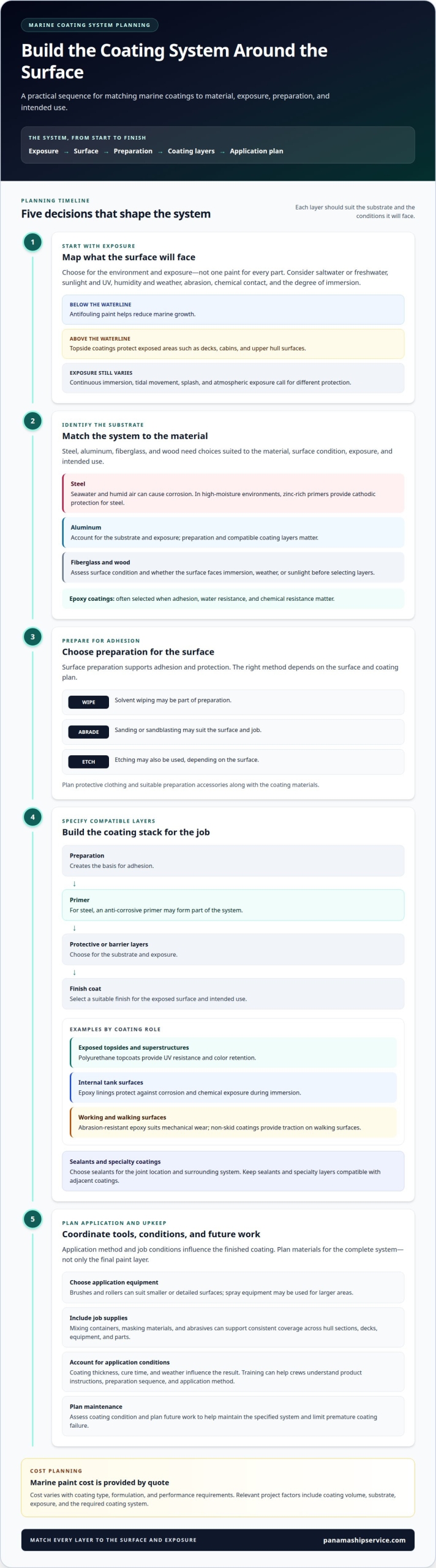
Choosing a coating is only part of the job. Saltwater, freshwater, UV exposure, abrasion, and immersion place different demands on boats, commercial vessels, trailers, equipment, and individual parts. The right system depends on those conditions and the material being coated, whether steel, aluminum, or fiberglass.
This guide explains how common marine coatings protect different surfaces, how primers and topcoats work together, and why preparation matters to the finished result. It also covers hard, non-ablative antifouling paint and the factors that shape coating selection, helping you understand how the pieces fit together before planning work on a vessel or its equipment.
Key Takeaways
- Match the coating system to the surface material and its exposure, including immersion, salt spray, UV, and abrasion.
- Choose coatings by application: above-waterline finishes, wear-resistant coatings, and non-skid deck coatings serve different purposes.
- Plan surface preparation and each coating layer together to support adhesion and lasting protection.
- Understand how hard antifouling paint differs from ablative paint, and when vessel use and mooring conditions matter to selection.
Marine coating protection in saltwater, freshwater, UV, humidity, and weather
Saltwater, freshwater, sunlight, and changing weather expose marine surfaces to different stresses. Select a protective coating for the environment, substrate, and exposure rather than relying on one paint for every surface.
Corrosion Protection for Steel and Aluminium
Steel exposed to seawater or humid air can corrode, so its coating system may combine an anti-corrosive primer with barrier layers and a durable finish. Zinc-rich primers provide cathodic protection for steel in high-moisture environments. For aluminum, account for the substrate and exposure when specifying the system; preparation and compatible layers matter. Immersion, splash, and atmospheric exposure each require different protection.
Coating Suitability for Marine Materials
Fiberglass, aluminum, steel, and wood need coating choices suited to their substrate, exposure, and intended use. Epoxy coatings are often selected when adhesion, water resistance, and chemical resistance matter. Steel may need an anti-corrosive primer, while exposed surfaces can use a suitable finish coat. For wood and fiberglass, assess the surface condition and whether it faces immersion, weather, or sunlight before selecting the layers.
Salt spray, moisture, and UV exposure affect coatings differently. Polyurethane topcoats provide UV resistance and color retention on exposed topsides and superstructures. Epoxy linings protect internal tank surfaces from corrosion and chemical exposure during immersion. Whether a surface faces continuous immersion, tidal movement, or spray also matters: those conditions shape the protective coating and its role in the system.
Marine paint cost per gallon varies with coating type, formulation, and performance requirements. The price depends on the project and is provided by quote; relevant factors include coating volume, substrate, exposure, and the required system.
Surface preparation and application tools affect the finished coating. Depending on the surface, preparation may involve solvent wiping, sanding, sandblasting, or etching. Application tools, coating thickness, cure time, and weather also influence the result. Include protective clothing and suitable accessories in the job plan alongside the coating materials.
Long-term asset protection starts with matching the coating to the environment and maintaining the specified system. Primers, barrier coatings, and durable finish coats can help extend asset life when matched to the exposure. For example, corrosion protection for an immersed steel hull differs from protection for a weather-exposed structure. Matching the system helps limit premature coating failure and avoidable maintenance.
Marine coating applications for boats, vessels, trailers, equipment, and parts
Coating selection starts with the surface, its exposure, and the vessel’s intended use. The application determines which coating types and supporting supplies belong in the system.
Product Selection and Application Support
Boats and ships may use epoxy systems, corrosion-resistant primers, durable topcoats, and antifouling bottom paint. Topside paint suits areas above the waterline, while abrasion-resistant epoxy fits surfaces exposed to mechanical wear. Non-skid coatings provide traction on walking surfaces. Match the product to the substrate, exposure, and required finish.
Compare suppliers by the range of relevant coating types, delivery arrangements, application guidance, and returns policies. Technical support is most useful when it explains how the selected product fits the surface and application method. Maintenance guidance should also explain how to assess coating condition and plan future work.
In the United States, marine coatings are available through marine supply businesses and industrial coating distributors. Choose a purchasing channel based on the coating system, application requirements, and delivery arrangements for the vessel or project.
Application Equipment and Supplies
Application equipment depends on the coating method and the area being covered. Brushes and rollers can suit smaller or detailed surfaces, while spray equipment may be used for larger areas. Supplies can include mixing containers, masking materials, and abrasives. The right combination supports consistent coverage across hull sections, decks, equipment, and parts.
Application training helps crews understand product instructions, preparation sequence, and the method suited to each surface. Clear guidance can also help coordinate coating, equipment, and job supplies before work begins. Plan materials for the complete system, not just the final paint layer, so each stage is covered.
For example, a vessel’s exposed deck may need a non-skid finish, while a cargo area may call for abrasion-resistant epoxy. A trailer or removable part has different exposure and use requirements. A marine paint and coatings supply plan should account for these differences before products are selected.
For hull-related operational needs, explore underwater hull services.
Coating system specification and surface preparation
A marine coating system combines preparation, primer, protective layers, and finish coats. Specify each stage for the substrate and its exposure.
Marine Sealants and Specialty Coatings
Marine sealants help keep joints, seams, and openings watertight. Select them for the joint location and surrounding coating system. Specialty coatings address specific exposures, such as chemical contact inside tanks or abrasion on working surfaces. Epoxy linings protect tank interiors from corrosion and chemical exposure during immersion. Keep sealants and specialty layers compatible with adjacent coatings to maintain a continuous protective system.
Technical and Specification Support
A useful specification identifies the substrate, exposure, corrosion severity, and application conditions. It should distinguish atmospheric exposure from splash-zone conditions and continuous immersion. For example, an immersed steel surface needs a system suited to seawater exposure, not simply an exterior finish. Technical guidance should clarify the preparation method, primer, coating layers, film thickness, and cure sequence required for the selected environment.
VOC, Antifouling, and Environmental Regulations
For U.S. projects, consider VOC limits, antifouling requirements, and environmental controls that apply to the coating and location. Requirements can vary by product and jurisdiction, so check the product label and applicable federal, state, and local rules. Confirm the selected coating’s intended use, especially below the waterline. Include handling and disposal directions in the job plan.
Preparation lays the foundation for adhesion. Depending on the surface, work may include solvent wiping, sanding, sandblasting, or etching. Remove contamination and address existing coating conditions before applying the specified primer. Then follow the selected system’s application and cure instructions; weather, tools, and coating thickness can affect the finished result.
Keep the specification practical for the asset. A steel hull, tank interior, and exposed structure face different conditions. Match primers, barrier coatings, and finish coats to each exposure to help extend asset life. Record the products and application sequence for maintenance planning, so future repairs can follow the same compatible system.
Hard, non-ablative antifouling bottom paint
Antifouling paint is applied below the waterline to help reduce marine growth, including barnacles and algae. Marine bottom paints commonly fall into two categories: ablative and hard, non-ablative. Understanding the difference helps narrow the choice for a vessel’s operating pattern and underwater hull conditions.
Hard, non-ablative paint forms a durable coating that does not rely on wearing away during use. Ablative paint, by contrast, gradually wears as the vessel moves through water. The categories perform differently, so selection should consider how the boat operates, where it is moored, and how often it is used. Neither category replaces proper surface preparation or a compatible coating system.
Start by assessing the vessel’s operating profile. Bottom paint selection can depend on vessel speed, frequency of use, whether the boat stays in the water year-round, and how stagnant its mooring location is. A frequently used vessel and one sitting in a sheltered, still berth face different conditions. These factors help determine which antifouling approach suits the hull’s service environment.
Preparation affects how well the selected paint performs. Remove unsuitable coatings and prepare the hull using a method appropriate to its condition. Apply compatible primers where the coating system calls for them, then apply the antifouling layer according to its product instructions. Assess a hard coating as part of the full system, rather than choosing by paint type alone.
Plan maintenance around the hull’s actual condition and operating pattern. Inspect for damaged or worn areas during scheduled hull work, then address surface defects before recoating. Marine growth, coating condition, and the vessel’s time in the water all inform the next maintenance step. For a vessel needing underwater attention, arrange an underwater hull assessment as part of planning its antifouling work.
Panama Ship Service: Marine Surveys
Panama Ship Service provides Marine Surveys for vessel operators assessing condition and planning maintenance. A survey can inform decisions when coating concerns, visible hull issues, or upcoming repair work need attention. It complements coating planning by helping operators consider the vessel’s condition alongside its operational requirements.
When underwater coating condition or hull concerns are part of the assessment, Underwater Hull Services can help. If the vessel needs mechanical work, Mechanical Ship Repairs address that operational need. These services connect survey findings with practical next steps, without treating coating selection as a substitute for inspection or repair.
For a vessel requiring condition assessment or related marine support, contact Panama Ship Service.
Plan the Next Step for Your Vessel
Use the coating plan as part of broader vessel maintenance planning. Align upcoming work with operational priorities, and reassess the plan when new damage or changing hull conditions arise. A coordinated marine paint and coatings supply approach keeps coating decisions connected to the vessel’s wider maintenance needs.
Panama Ship Service supports related operational requirements through Marine Surveys, Underwater Hull Services, Mechanical Ship Repairs, and MARPOL Disposal. These services are relevant when vessel condition, underwater hull needs, mechanical repairs, or disposal requirements form part of the maintenance picture. Keeping those needs in view helps you plan the next step clearly.
For support with your vessel’s operational requirements, contact Panama Ship Service. Take the next step with a clear view of the work your vessel needs.
Frequently Asked Questions
Which marine paint brands and products are best for hulls, decks, and underwater surfaces?
There is no single best coating for every hull, deck, or underwater surface. Choose according to material, exposure, and task: epoxy systems can suit water and chemical resistance, polyurethane topcoats can protect exposed areas from UV, and antifouling paint is intended for below-waterline surfaces. For a deck, consider whether it needs a non-skid finish. Match the complete system, not just the paint name, to the task.
How do I choose antifouling bottom paint for my boat and local waters?
Choose based on how the boat is used and where it stays. Consider its speed, frequency of use, whether it remains in the water year-round, and how stagnant its mooring is. Marine bottom paint is commonly either ablative or hard, non-ablative. These types behave differently, so compare them with the vessel’s operating pattern and the conditions where its hull spends time.
What surface preparation and application steps are required for marine paint?
Prepare the surface before applying the coating system. Depending on its condition, preparation may include solvent wiping, sanding, sandblasting, or etching. Then follow the selected system’s sequence for primer, protective layers, and finish coat. For example, a repair over existing paint may need a different preparation approach than a bare surface. Application conditions, coating thickness, and cure instructions also affect the result.
How much marine paint is needed for a boat, and how long does it take to cure?
Paint quantity depends on the area being coated, the number of layers, and the specified coating thickness. Estimate surfaces separately, such as the hull, deck, or equipment, rather than treating the boat as one area. Cure time depends on the product and application conditions, including weather. Use the product’s coverage and cure instructions to plan material quantities and when the vessel can return to service.
What safety risks and protective equipment should I consider when applying marine coatings?
Coating application requires attention to product-specific handling instructions and work-site conditions. Before starting, review the product label and safety data sheet, then include suitable protective clothing and application equipment in the job plan. Consider the application method, work area, and weather when organizing the task. Follow the manufacturer’s directions for handling, application, and curing, and keep those instructions available to the crew.