
The right marine technician is the one whose experience matches your vessel and its repair needs. Finding reliable marine technicians in Panama means looking beyond a general promise of service: experience with the engine make and model, relevant maritime qualifications, customer recommendations, and the ability to reach your vessel all matter. The wrong expertise can cost valuable time.
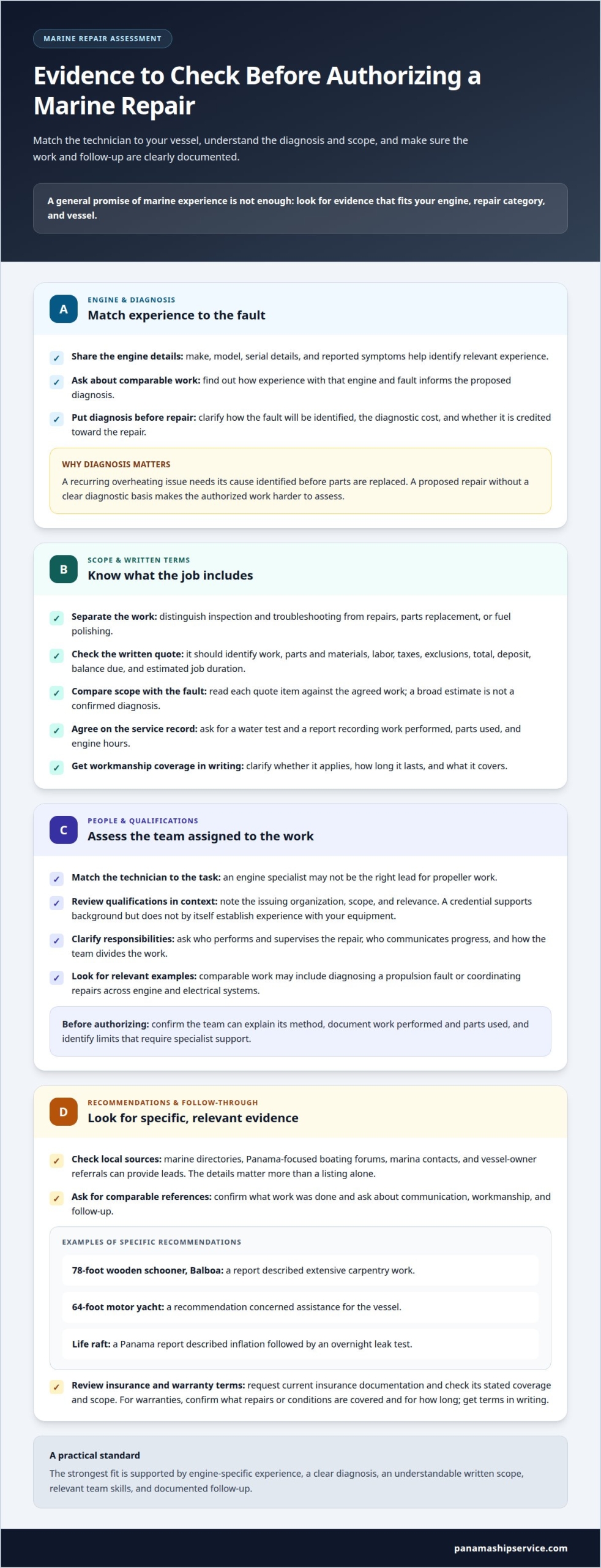
It’s reasonable to want clear evidence of competence before authorizing work, especially when a vessel’s schedule depends on a sound repair. This guide explains how to assess engine-specific experience, review qualifications and recommendations, and plan technician access for vessels at anchor or alongside. It also covers diagnosis, repair planning, and follow-up to help you make a practical decision based on the details that matter to your operation.
Key Takeaways
- Prioritize technicians with experience matching your engine’s brand and model, and a diagnosis-first approach.
- Assess maritime qualifications alongside practical repair experience to understand whether the team fits the job.
- Use relevant customer recommendations to gauge communication, workmanship, and follow-through.
- Clarify how technicians reach vessels at anchor or alongside, and whether the repair can be completed afloat.
How a marine repair provider assesses experience with the vessel’s engine brand and model
Engine experience is specific: familiarity with one manufacturer does not prove competence across every model. Start by identifying the vessel’s engine make, model, serial details, and reported symptoms. This information helps match the job to relevant repair experience rather than relying on a general claim of marine expertise.
Diagnosis should come before repair. For marine engine repairs in Panama, clarify how the provider will identify the fault, what the diagnostic cost is, and whether that cost will be credited toward the repair. A recurring overheating issue, for example, needs its cause identified before parts are replaced. A proposed repair without a clear diagnostic basis makes it harder to understand the work being authorized.
- Match the job: Describe the engine model and fault, then ask how similar work informs the diagnosis.
- Define the scope: Separate inspection and troubleshooting from repairs, parts replacement, or fuel polishing.
- Record the result: Agree on what the repair report will document after the work.
A written quote should identify the work, parts and materials, labor, taxes, and exclusions. It should also state the total, deposit, balance due, and estimated job duration. These details make the proposed work easier to compare with the fault being addressed, without treating a broad estimate as a confirmed diagnosis.
After engine work, ask for a water test and a report recording the work performed, parts used, and engine hours. This creates a practical service record and connects the repair to its outcome. If the issue returns, those details help explain what was already inspected or replaced.
Before authorizing the job, clarify whether workmanship coverage applies, how long it lasts, and what it covers. Get any terms in writing. Specific answers about the engine model, diagnosis, scope, and follow-up provide a stronger basis for finding reliable marine technicians in Panama than a general promise of experience.
Maritime team qualifications and experience
Assess the people assigned to the work, not only the company’s general claims. Match each technician’s training and practical experience to the task: an engine specialist may not be the right lead for propeller work. Ask who will perform and supervise the repair, and how the team divides responsibilities. For an international vessel, clear technical communication also matters during handover.
Review any qualifications presented and note their issuing organization, scope, and relevance to the job. A credential can support a technician’s background, but it does not by itself show experience with your vessel’s equipment. Look for examples of comparable maritime work, such as diagnosing a propulsion fault or coordinating repairs across engine and electrical systems. The team should explain its proposed work in terms you can follow.
Technician rates and service quality in Panama City, Colón, and Bocas del Toro depend on the job scope, parts, travel, and vessel access. Compare written scopes rather than assuming one city is cheaper or better. A clear breakdown helps distinguish labor and logistics from the technical work itself.
Hiring someone without qualifications relevant to the task can increase the risk of misdiagnosis, incomplete repairs, and repeat downtime. For example, incorrect propeller work can leave a vessel with unresolved performance issues. Ask whether the assigned team can explain its method, document completed work, and identify any limits that require specialist support.
Use a brief review before authorizing work:
- Match the named technician’s experience to the repair category.
- Clarify who supervises and communicates job progress.
- Agree on records for work performed and parts used.
For a broader view of vessel support, review marine technical service options as you plan the work.
Customer reputation and recommendations
Use recommendations to assess how a technician handled work similar to yours, not just whether a customer was satisfied. Panama-focused directories, boating forums, and referral networks can surface leads; specific examples and service details make those leads more useful.
Directories, Forums, and Referral Networks
Search marine directories by Panama location and repair category, then review relevant discussions in boating forums covering Panama or regional cruising. Marina contacts and vessel-owner referrals can add firsthand context. These channels show which technicians appear in local searches, but the details of a recommendation matter more than its presence in a listing.
Look for examples that match the vessel and work. A cruiser reported extensive work by carpenters on a 78-foot wooden schooner in Balboa. Another recommendation concerned assistance for a 64-foot motor yacht. These reports illustrate why vessel type, job scope, and location help you judge whether a reference applies.
References and Service Terms to Expect
Request references for comparable marine services, then ask what work was completed and whether communication and follow-up met expectations. For insurance, request current documentation and review the stated coverage and scope. For warranties, ask whether workmanship is covered, how long the coverage lasts, and which repairs or conditions it includes; get the terms in writing.
A written estimate should make the planned work and financial terms understandable before authorization. It should identify the work, parts and materials, labor, taxes, exclusions, total price, deposit, balance due, and estimated duration. Read each item against the agreed scope, so omitted work or unclear exclusions don’t create surprises later.
Check what a reference actually confirms. A Panama report described a serviced life raft being inflated and left overnight for a leak test. That detail is more useful than a broad endorsement because it identifies a specific procedure. For electrical work, seek references involving fault diagnosis, not simply general maintenance.
Compare recommendations with the job at hand: a positive report about hull work does not establish engine expertise. Record the reference’s vessel type, repair category, and outcome, then weigh those details alongside the written terms.
Technician dispatch to vessels at anchor or alongside
Dispatch depends on the vessel’s position, access arrangements, and repair scope. In Panama City, inboard work such as cooling-system repairs, fuel-system service, electrical diagnostics, and sterndrive maintenance can be completed without hauling the boat out. The initial diagnosis helps determine what equipment, parts, and personnel need to reach the vessel.
Marina and port rules can affect where certain work happens. Some Panama ports require authorization for in-water hull cleaning. This concerns the work location and activity, so distinguish hull cleaning from an engine repair when coordinating access.
For dispatch planning, provide the vessel’s location, access instructions, engine details, symptoms, and operating schedule. The technician can then assess whether the work is suitable alongside or at anchor, or whether it requires another arrangement. Confirm who coordinates entry and how the technician will reach the vessel.
Marine technician labor rates and diagnostic fees in Panama vary with the repair scope, parts, travel, access, and time required. Request a quote that identifies the diagnostic work and distinguishes it from repair labor, so you can see what each charge covers.
Before authorizing dispatch, align on the practical details:
- Share the vessel’s location and safe access instructions.
- Describe the fault and any recent symptoms or alarms.
- Confirm the planned diagnostic work and estimate scope.
- Agree how findings and further repair decisions will be communicated.
For repairs that can be handled afloat, arrange mechanical ship repairs around the vessel’s position and the work required.
Thousands of vessels cross the Panama Canal each year, so dispatch planning can sit alongside broader passage preparations. A cruiser reported requesting 25m of 5/8-inch nylon rope for anchor springs from a Panama City marine hardware supplier; confirming onboard line and mooring needs can help make an alongside visit more useful.
Maintain vessel engines by checking for leaks, overheating, and wear, and inspect commercial vessels every 3 to 6 months. For Panama maritime paperwork services, ask for the provider’s fee and the authority’s fee separately, along with the estimated processing time. Keep those administrative arrangements distinct from the technician’s diagnosis and repair estimate, and confirm that any parts or supplies needed for the visit are available.
Panama Ship Service: Marine Surveys
Panama Ship Service conducts Marine Surveys for vessel owners who need a professional assessment of a vessel’s condition or a clearer basis for maintenance planning. A survey can help identify issues that deserve attention and inform repair decisions. When findings point to mechanical work, Mechanical Ship Repairs may be relevant; underwater concerns can call for Underwater Hull Services.
A survey is a practical next step when inspection findings need to be documented or considered alongside planned vessel work. Panama Ship Service also provides MARPOL Disposal for vessels requiring that service. Share the vessel’s situation and the work under consideration to guide the discussion.
Contact Panama Ship Service to discuss your marine survey needs.
Turn Your Findings Into a Clear Next Step
Use the technician’s findings to set practical maintenance priorities for your vessel. A clear next step connects the identified condition with the work needed and the vessel’s operating plans. This keeps decisions focused on the specific issue rather than adding unrelated work to the schedule.
For ongoing vessel needs, Panama Ship Service provides Mechanical Ship Repairs, Underwater Hull Services, and MARPOL Disposal. Choose the service that fits the work ahead, whether it involves a mechanical issue, an underwater hull concern, or disposal requirements. Finding reliable marine technicians in Panama is ultimately about matching professional support to your vessel’s actual needs.
Share the vessel’s requirements and planned work with Contact Panama Ship Service. A focused discussion can help you move from assessment to the next operational decision with greater clarity.
Frequently Asked Questions
How can a marine repair provider demonstrate a technician’s certifications and experience in Panama?
Ask the provider to identify the technician assigned and show credentials connected to that person, including the issuer and scope. Then clarify which parts of the proposed work those qualifications cover. A practical example is an engine fault that also affects electrical systems: confirm who handles each discipline and who records the completed work. This helps distinguish relevant competence from a general company profile.
Where can clients find reputable marine technicians in Panama City, Colón, and other Panamanian marinas?
Search marine-service directories and Panama-focused boating forums using the city, marina, and type of repair. Local vessel-owner and marina communities can also point to technicians familiar with a particular port. Look for recommendations that describe the work and location rather than relying on a name alone. This gives you a more useful starting point for matching a technician to your vessel’s situation.
What questions should a marine technician be prepared to answer before a client hires them in Panama?
A technician should explain the proposed work sequence, what could change its scope, and how findings will be communicated during the job. Ask what access or vessel information the team needs, who will approve additional work, and how the repair will be tested before handover. Clear answers establish responsibilities and reduce confusion if the initial diagnosis reveals a related issue.