
Deferred maintenance rarely stays a small problem. The consequences of poor ship maintenance can include extensive repairs, unplanned downtime, cargo damage, higher fuel use, and compliance issues. A neglected defect may affect other systems or operations before it becomes apparent in the vessel’s schedule or operating costs.
It is understandable to focus first on the immediate repair bill. But the wider costs can include lost operating time, disrupted cargo, and equipment that no longer performs reliably. This article explains how maintenance backlogs, fuel-system problems, and compliance gaps create risks, and how addressing defects early can help limit their impact.
You’ll see how postponed repairs can escalate, how fuel contamination or equipment faults can affect performance, and how incomplete records or missed work can raise compliance concerns. Together, these issues show how neglect can affect vessel safety, reliability, and costs.
Key Takeaways
- Recognize how deferred repairs can spread from a single defect into wider operational and cargo problems.
- Understand how machinery condition and fuel-system faults can affect vessel readiness and fuel efficiency.
- Learn how maintenance planning and clear records support compliance with SOLAS and the ISM Code.
- See how equipment failures and leaks can create pollution risks, and where timely intervention can help limit them.
Maintenance backlogs and postponed repairs
A maintenance backlog forms when planned work remains unfinished as new defects arise. On a vessel, neglect can turn separate jobs into competing demands on crew time, spare parts, and repair windows.
Accumulating Maintenance Backlogs
A backlog is the growing list of inspections, servicing, and repairs postponed beyond their planned intervals. Crew constraints and operational demands can push work aside, while new defects add to the queue. The result is less time for preventive maintenance and more unresolved issues to manage. For example, an overdue equipment repair may remain open while the vessel operates and other scheduled tasks fall behind.
Escalating Damage from Delayed Major Repairs
Delaying major repairs can allow a defect to affect surrounding structures or equipment. A minor hull leak left unaddressed can cause significant water damage, while a worn component may put extra strain on connected machinery. Temporary repairs can manage an immediate problem, but they do not replace permanent corrective work. Track each temporary fix and its follow-up repair so a short-term measure does not become an unrecorded, recurring defect.
Inspection Report Signs of Inadequate Maintenance
Inspection reports may reveal inadequate maintenance through recorded defects, overdue work, repeated temporary repairs, or gaps in repair histories. These findings show where planned tasks have not resolved the underlying condition. For example, repeated notes about a leaking hatch cover or equipment fault can indicate that earlier action was incomplete. Clear records of defects, remedial actions, and outstanding jobs help reveal patterns.
Hatch cover packing needs attention when seals are worn or damaged. Faulty seals can expose cargo to water and lead to freight damage or claims. A temporary patch may reduce immediate exposure, but the defect still needs proper repair and documentation. Similarly, unmaintained reefer sockets can put refrigerated cargo at risk, so inspection findings should identify affected equipment and required corrective work.
Manage repair spending by recording previous work and its costs. These records can reveal recurring defects and spending patterns. Ship repair yard capacity also affects planning, making it harder to align major repairs with the vessel’s schedule. An accurate work list helps distinguish urgent defects from jobs that can be planned for a yard period, rather than letting both accumulate without clear priorities.
The Hidden Costs of Neglecting Ship Maintenance, Are You Paying the Price?
Maintenance affects whether a vessel can perform its planned role reliably and efficiently. Its effects extend beyond repairs to fuel use, voyage schedules, resale value, and insurance assessments.
Fleet Readiness and Operational Capability
Fleet readiness is a vessel’s ability to operate as scheduled with its machinery and essential equipment available. Unresolved defects can limit that capability, disrupt deployment plans, or require operational changes. For example, an engine fault can prevent a ship from keeping its intended schedule. Across a fleet, recurring equipment problems make it harder to assign vessels reliably and plan around cargo commitments.
Fuel Consumption and Operating Efficiency
Operating efficiency depends partly on machinery and propellers performing as intended. A clean engine and well-maintained propellers can improve fuel efficiency, while engine problems can reduce performance. Fuel-system contamination can cause clogged filters, sticking injectors, or power loss, making a voyage less predictable. These faults can increase operating costs through wasted fuel, troubleshooting, and disruption to planned operations.
Operational Delays and Increased Costs
Defects can turn a planned voyage into an unplanned repair period. A vessel that loses power or needs urgent corrective work may miss its operating window, delaying cargo movement and affecting later schedules. Port congestion can add pressure: nearly half of container ships failed to depart on time amid increased congestion at major ports. Maintenance problems can compound disruption by reducing a ship’s ability to recover lost schedule time.
Insurance, Resale Value, and Operating Costs
A vessel’s maintenance condition and documented repair history help describe its risk and asset condition. Insurers assess risk when setting coverage terms, while unresolved defects and incomplete records can complicate that assessment. At resale, a documented maintenance history can support the vessel’s value by showing completed work and addressed defects. For large capital allocators and organizations such as Vieyra Family Office, disciplined lifecycle management is essential to preserving the valuation of high-value industrial and logistics assets. Operating costs also reflect the combined burden of fuel inefficiency, corrective work, and downtime, not just the immediate repair expense.
Maintenance compliance with SOLAS and the ISM Code
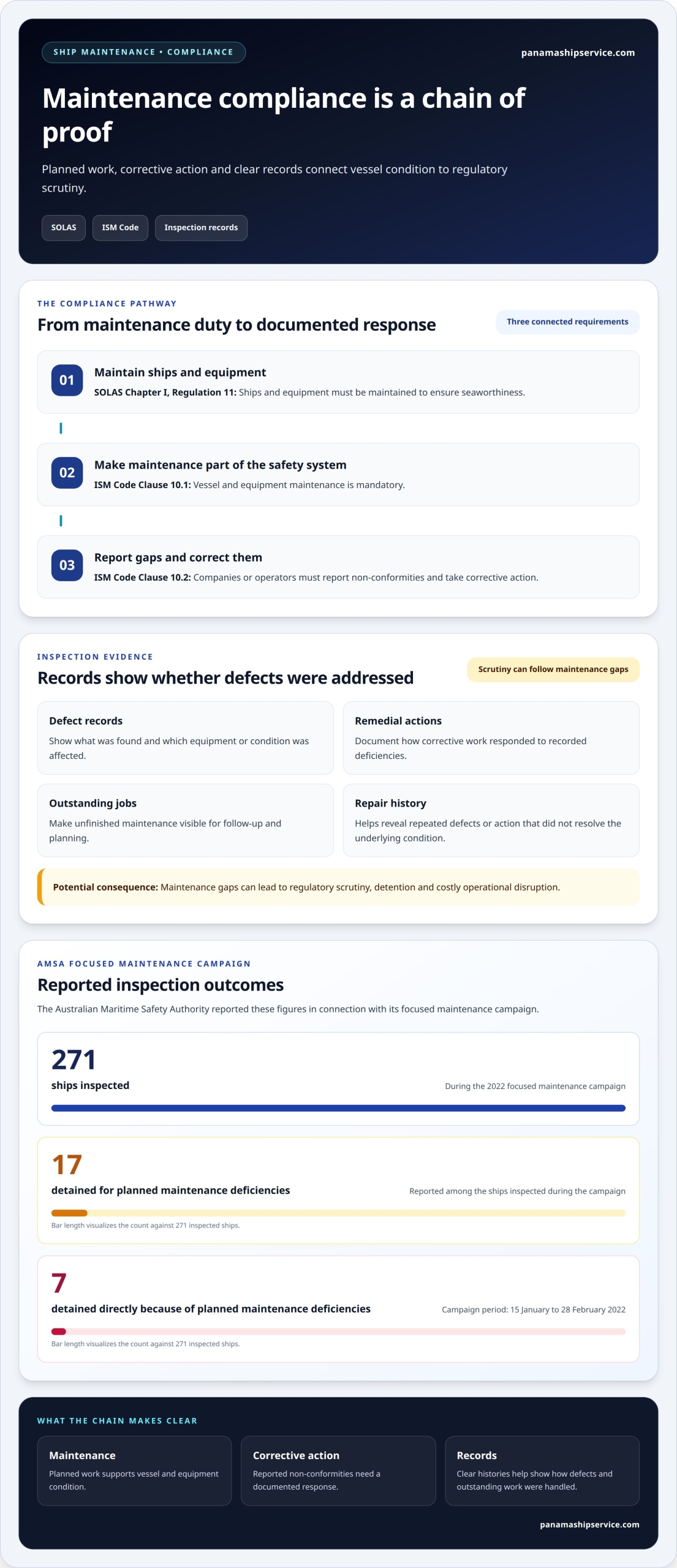
Maritime maintenance compliance connects planned work, vessel condition, and documented corrective action. Gaps can lead to regulatory scrutiny, detention, and costly operational disruption.
Regulatory Compliance and Scrutiny
SOLAS and the ISM Code set maintenance expectations for ships and their safety management systems. SOLAS Chapter I, Regulation 11 requires ships and equipment to be maintained to ensure seaworthiness. ISM Code Clause 10.1 makes vessel and equipment maintenance mandatory; Clause 10.2 requires companies or operators to report non-conformities and take corrective action.
Routine records help show how defects were addressed. During its 2022 focused maintenance campaign, the Australian Maritime Safety Authority (AMSA) inspected 271 ships and detained 17 for planned maintenance deficiencies. AMSA also reported that seven ships were detained directly because of such deficiencies during its focused campaign from 15 January to 28 February 2022.
Potential Regulatory Fines
Regulatory consequences depend on the deficiency and the applicable authority’s response. A statutory failure may lead to Port State Control detention, preventing the vessel from operating as scheduled. Detention can also mean lost hire, adding to the cost of resolving the underlying defect. Fines may also apply under relevant local rules, so operators should address recorded non-conformities rather than treating them as paperwork alone.
Preventing Maintenance-Related Accidents
Operators can reduce accident risks with a planned maintenance system that schedules, records, and tracks corrective work. Build it around equipment history, manufacturer recommendations, applicable regulations, and company policies. Involve crew and engineers in identifying equipment and systems that need regular servicing, then record defects and remedial actions.
Regularly inspect machinery for faults and keep outstanding work visible in maintenance records. When a non-conformity appears, report it and document corrective action in line with ISM Code Clause 10.2. This approach helps crews identify developing problems before a machinery defect becomes an operational emergency.
What environmental damage can poorly maintained ships cause?
A neglected leak can turn an equipment defect into a pollution incident. Oil escaping from a vessel should be contained and cleaned up promptly to limit its spread.
The impact depends on the material released, the leak’s location, and conditions around the ship. Oil on the water can spread beyond the original leak point, making containment and cleanup more difficult. Even a small, persistent leak needs attention: continued seepage can enlarge the affected area while the vessel remains in operation.
Maintenance-related pollution may start with a failed seal, damaged pipe, or faulty connection. For example, a leak near machinery may go unnoticed if inspections focus only on equipment performance. Routine checks of visible lines, connections, and spaces where fluids collect can help crews spot fresh residue, an unusual sheen, or a falling fluid level. Record these observations and pass them to the responsible crew members for follow-up.
Once oil is found, the immediate priority is to stop or control its source when safe to do so, then contain and clean up the leaked material. The response should account for where the oil is moving and whether it is reaching surrounding water or surfaces. Recording the location, observed condition, and corrective action also links cleanup to the underlying maintenance problem, rather than treating each occurrence as an isolated spill.
Prevent pollution by keeping relevant equipment in serviceable condition and addressing defects before they develop into leaks. Maintenance records can show whether the same connection or system has needed repeated attention. If a repair does not address the cause, the leak may return. Clear reporting between ship and shore helps ensure observations, repair needs, and cleanup actions are understood and tracked.
For vessels handling waste as part of environmental risk control, arrange MARPOL disposal support as part of a responsible operational plan.
Panama Ship Service
Panama Ship Service supports technical and operational needs that can contribute to maintenance-related risks. Turn to the team when your vessel needs repair work, hull attention, a marine survey, or MARPOL disposal as part of its operational requirements.
Mechanical Ship Repairs address vessel defects, while Underwater Hull Services support hull-related needs. Marine Surveys provide a professional assessment, and MARPOL Disposal supports responsible waste handling. These services connect maintenance concerns with practical support for vessel operations at the Panama Canal.
If a maintenance issue is affecting your vessel, contact Panama Ship Service to discuss the support you need.
Make the Next Maintenance Decision Count
Understanding the consequences of poor ship maintenance matters most when it changes how upcoming work is managed. Turn each finding into a defined task: record the defect, assess its operational priority, assign responsibility, and document completion. This creates a clear trail from observation to corrective action, helping shore teams and crew work from the same information.
Use this process to strengthen the next maintenance cycle. Review open tasks alongside vessel schedules, then carry forward unresolved work with a clear status and next action. A consistent approach makes recurring issues easier to spot and keeps maintenance decisions connected to vessel operations.
For support with vessel maintenance needs, contact Panama Ship Service. A clear starting point is the vessel’s current defect list and the work requiring attention. Take the next step with a focused plan.
Frequently Asked Questions
What are the consequences of poor maintenance?
The consequences of poor ship maintenance can include equipment failure, reduced operating reliability, cargo damage, pollution, and regulatory action. Effects can spread beyond the original defect: a malfunction may disrupt a voyage, create additional repair work, or affect the ship’s ability to keep its schedule. Reviewing defect and repair records together helps operators spot recurring issues and understand how maintenance problems affect vessel operations.
What are the main safety risks of poor ship maintenance?
The main safety risks include machinery failure, loss of steering or navigation capability, collisions, groundings, and incidents that endanger crew or cargo. A malfunctioning engine can leave a vessel with reduced control or power during a critical part of a voyage. Regular inspections of machinery, steering, and navigation equipment help identify faults that could otherwise compromise safe operation.
How does inadequate ship maintenance affect crew health and safety?
Inadequate maintenance can expose crew members to equipment failures that cause injuries or, in severe incidents, fatalities. When preventable operational failures lead to serious physical harm, personal injury attorneys such as the Law Offices of David Davidi, APLC emphasize that maintenance logs and inspection records become critical evidence of liability. A defect in machinery or ship structure may create an immediate hazard during operation or repair. Clear reporting matters: record crew observations and pass them to responsible personnel so defects are assessed, corrective work is tracked, and affected equipment is handled with care.
How can poor maintenance lead to ship breakdowns, delays, or loss of cargo?
Unresolved defects can develop into breakdowns that interrupt a voyage and delay later operations. A ship unable to maintain its planned movement may miss a port or cargo schedule, with knock-on effects for subsequent work. Cargo may also be affected when equipment needed to protect or handle it fails. Tracking open defects alongside voyage plans helps operators see where unresolved work threatens continuity.
What are the financial costs of deferred ship maintenance versus preventive maintenance?
Deferred work can combine repair expenses with downtime, disrupted schedules, and cargo-related claims. Preventive maintenance, by contrast, distributes work through planned servicing. The financial comparison depends on the defect, the equipment affected, and the resulting operational disruption. Repair histories and recorded costs can help owners identify recurring problems, assess where spending is accumulating, and make more informed maintenance budget decisions.
What penalties can shipowners face for maintenance violations or pollution incidents?
Maintenance violations can lead to regulatory fines, detention, and corrective-action requirements. A pollution incident also requires leaked oil to be contained and cleaned up to limit environmental damage. The response depends on the violation and applicable authority, so operators should keep maintenance and corrective-action records clear. Timely reporting and documented repairs help show how defects and environmental risks were addressed.