
A calendar alone won’t tell you when a vessel’s anodes are spent. In Panama’s tropical waters, marine anodes are generally recommended for replacement every 6-12 months, while the broader interval for vessel anodes is 12-24 months, depending on water type, vessel operation, and alloy. Anode replacement services in Panama can include inspection and, when the anodes are accessible, replacement underwater without hauling the vessel out.
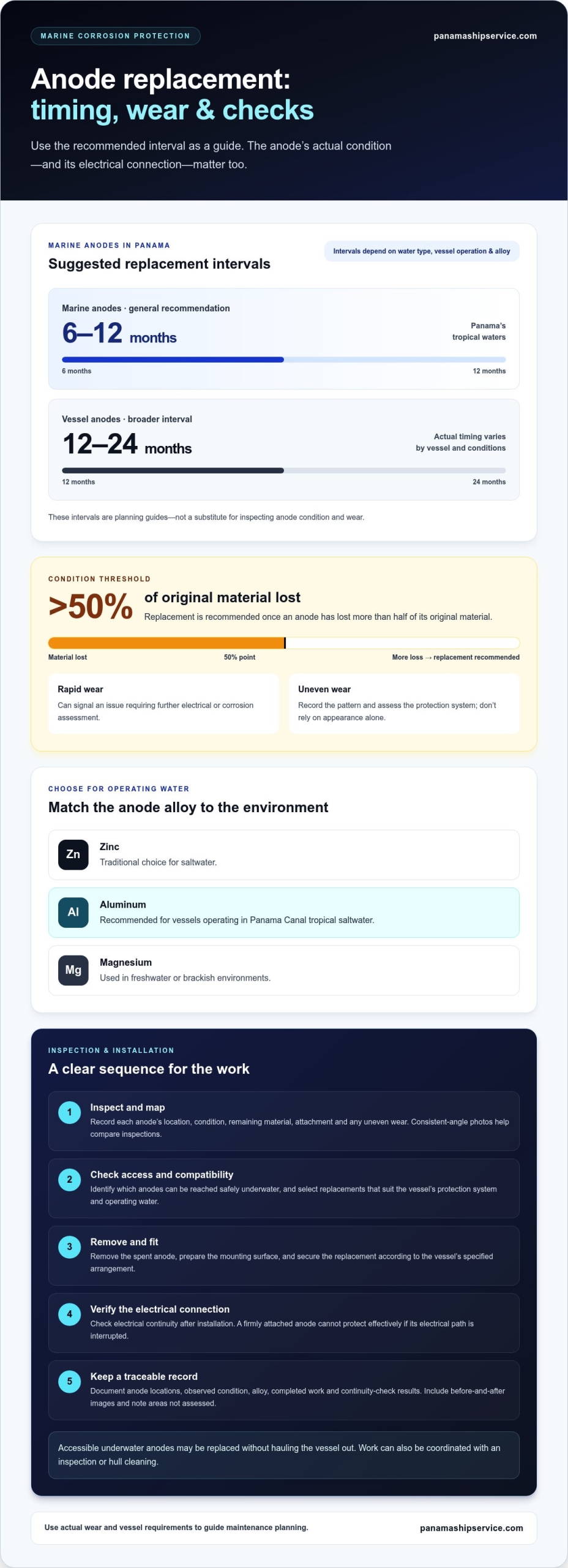
That timing is a useful guide, but the anodes’ actual condition matters too. Replacement is recommended after an anode loses more than 50% of its original material, and uneven or rapid wear can point to a need for closer assessment.
This guide explains how anode inspection and installation work, what affects replacement timing, and how underwater work can fit into vessel operations. You’ll also learn what the process involves, including checking electrical continuity after new anodes are installed, so you can plan the work around your vessel’s condition and schedule.
Key Takeaways
- Inspect anodes for material loss, secure attachment, and signs of uneven wear; these clues help determine whether replacement or further corrosion assessment is needed.
- Underwater replacement can address accessible anodes without hauling the vessel out, and the work may be coordinated with an inspection or hull cleaning.
- Choose an anode alloy for the vessel’s operating water: zinc is a traditional saltwater option, aluminum suits tropical saltwater, and magnesium is used in freshwater or brackish environments.
- After installation, electrical continuity should be checked to confirm the new anodes are properly connected to the metal they protect.
Anode inspection and installation process
For marine anode replacement in Panama, use the vessel’s corrosion-protection design and applicable class and flag requirements as your references. Port controls may also apply to diving operations. Documentation requirements depend on the vessel’s class and survey arrangements.
Begin with a visual inspection of each anode and its attachment point. Record its location, condition, remaining material, and any loose fasteners or damaged bonding surfaces. Photos taken from consistent angles help compare wear across inspections. Replacement is recommended after an anode loses more than 50% of its original material. Rapid or uneven loss can signal a problem that needs further electrical or corrosion assessment.
Installation should maintain the protection system’s electrical connection to the structure. Remove the spent anode, prepare the mounting surface, and secure the replacement according to the vessel’s specified arrangement. Check electrical continuity after installation: even a firmly attached anode cannot protect the hull effectively if its electrical path is interrupted. Record the alloy and location so the next inspection can compare like with like. Zinc is a traditional choice for saltwater, while aluminum is recommended for vessels operating in the Panama Canal’s tropical saltwater.
In-home service-line inspections address drinking-water plumbing, not a vessel’s underwater corrosion protection. A household inspection looks for water-service-line materials; a marine inspection examines anodes, hull connections, and the protection system. Keep these records separate to avoid confusing residential lead-line findings with vessel maintenance documentation.
For class inspection documentation, record the inspection date, anode locations, observed condition, completed work, and continuity-check results. Include clear before-and-after images and note any areas that could not be assessed. These details provide a traceable record for the surveyor and help the crew plan the next inspection based on actual wear rather than assumptions.
Use the vessel’s corrosion-protection design and applicable class and flag requirements as references. Port controls may also apply to diving work. Documentation requirements depend on the vessel’s class and survey arrangements.
In-water replacement for accessible anodes
Zinc is a traditional choice for saltwater, while aluminum is recommended for vessels operating in Panama Canal waters. Magnesium anodes suit freshwater or brackish environments, rather than typical tropical saltwater operation.
Before underwater work, map the anodes and identify which ones divers can reach safely. Confirm the vessel’s position, access points, and replacement material, then plan the work around the hull’s condition and vessel operations. The diver can inspect each location, remove an accessible spent anode, prepare its mounting point, and secure the replacement. Checking electrical continuity after installation helps confirm the connection.
Accessible Anode Replacement
Underwater replacement can avoid hauling a vessel out when anodes and fasteners are accessible. The diver works through the identified locations, replacing anodes that can be reached and secured underwater. A bulk carrier in Colón had anode replacement completed during the same dive session as its inspection. Combining the steps can help coordinate the work with an existing underwater operation.
Risks of Incorrect or Delayed Replacement
An anode alloy that does not suit the water may provide ineffective cathodic protection. Delaying replacement until an anode is spent can leave the protected metal more exposed to galvanic corrosion. Rapid or uneven material loss may also indicate an electrical or corrosion issue that needs further assessment. Record the wear pattern and assess the protection system rather than replacing anodes based on appearance alone.
Lead-reducing water filters address drinking-water concerns in buildings; they do not protect a vessel’s hull or replace marine anodes. Keep household service-line inspections and marine corrosion records separate. For example, a filter in a residence has no role in a ship’s cathodic protection system.
For vessel work that also requires attention to hull condition, review hull condition support alongside the dive findings.
Sacrificial anode installation services
In Panama, anode replacement can involve underwater inspection, removal of spent anodes, installation of replacements, and post-installation continuity checks. For boats and ships, look for marine contractors that perform underwater hull services. The work should match the vessel’s protection system and operating water.
Sacrificial anodes protect connected metal structures by corroding in place of the metal they protect. Installing a new anode involves more than fitting a replacement piece: its location, attachment, and electrical connection all affect how well it functions within the protection system. After installation, checking electrical continuity can reveal a poor connection before the vessel returns to operation.
A practical service sequence starts by mapping anode locations and recording each anode’s condition. The work team then identifies accessible fittings, removes anodes that need replacement, prepares the mounting points, and installs compatible replacements. A final inspection records the locations serviced and continuity results. This creates a clear maintenance record and helps the vessel team compare wear during regular inspections.
For a vessel passing through Panama, work planning can account for underwater access and the operating schedule. Accessible anodes may be replaced during an underwater work session, while areas that cannot be reached need a different maintenance plan. Combining installation with a hull inspection can also document nearby corrosion, damaged fittings, or other visible concerns, without treating those findings as proof of anode failure.
Sacrificial anodes have been used for decades to protect functional parts from galvanic corrosion. Their service life depends on the surrounding water, vessel use, alloy, and condition of the protection system. Treat rapid or uneven material loss as a reason to assess the system, not simply replace anodes everywhere. Targeting installation based on observed wear supports effective protection and more useful planning for the next inspection.
Underwater anode replacement for vessels
Choose an anode material suited to the vessel’s operating water and protection-system design. Aluminum is recommended for Panama Canal operations in tropical saltwater; zinc remains a traditional saltwater choice, while magnesium suits freshwater or brackish conditions. Match size and placement to the vessel’s existing design, protected structures, and specified anode arrangement.
Underwater replacement can address accessible anodes without hauling the vessel out. A practical sequence is to map each fitting, inspect its condition, remove the spent anode, prepare the mounting surface, and secure the replacement. Then check electrical continuity between the new anode and the structure it protects. Record locations and findings so the crew can compare wear at the next inspection.
A Colón case study shows why underwater inspection matters. During hull cleaning, divers found that 60% of the anodes on a 180-meter bulk carrier were nearly spent. The team completed replacement during the same dive session as inspection. This example illustrates how inspection findings can guide the work plan and help coordinate maintenance with other underwater operations.
For sizing, start with the vessel’s established anode specification, not a visual guess. Match the replacement’s material, shape, and mounting arrangement to the existing protection system and the metal being protected. Vessel design, operating water, and anode alloy all affect replacement planning. If wear is uneven, document the pattern and investigate the electrical connection or corrosion conditions before treating every fitting alike.
Before the vessel resumes operation, confirm that each new anode is firmly secured and electrically connected. Anode replacement does not replace inspection of other underwater damage; hull condition and fitting integrity also matter. A clear record of findings, replaced locations, and continuity checks supports maintenance decisions and helps identify changes at the next inspection.
Arrange underwater hull support to assess accessible anodes and related hull condition during the same underwater work plan.
Panama Ship Service: Mechanical Ship Repairs
Panama Ship Service provides Mechanical Ship Repairs, Underwater Hull Services, MARPOL Disposal, and Marine Surveys.
When an anode inspection reveals worn fittings or related hull concerns, Underwater Hull Services are a relevant next step. A Marine Survey can document vessel condition and findings for maintenance planning. Mechanical Ship Repairs address shipboard mechanical needs when an inspection identifies issues beyond the underwater protection system.
These services help vessel teams assess hull, survey, and repair needs alongside anode findings. The next step depends on the inspection: underwater hull concerns call for attention to submerged areas, while mechanical issues require repair planning. Clear findings help crews organize maintenance around vessel operations.
Contact Panama Ship Service to discuss your vessel’s maintenance requirements.
Plan the Next Maintenance Step
For vessel operators considering anode replacement services in Panama, the next step is to turn inspection findings into a clear maintenance scope. Separate issues that need attention from observations to monitor, then keep the records with the vessel’s maintenance plan. This helps the crew coordinate decisions with operational priorities.
Panama Ship Service offers Underwater Hull Services for underwater vessel needs, Mechanical Ship Repairs for mechanical issues, and MARPOL Disposal. Bringing relevant condition findings and work requirements together can clarify which support fits the vessel’s needs. A defined scope also gives the team a practical starting point for maintenance planning.
Explore support for your vessel and take the next maintenance decision forward with confidence.
Frequently Asked Questions
How Often Should Anodes Be Replaced?
For anode replacement services in Panama, vessel anodes are generally replaced every 12-24 months, depending on water type, vessel operation, and alloy. Use that interval as a planning guide, then compare it with inspection records and observed wear. A vessel operating regularly in warm, saline water may need closer monitoring than one in less saline conditions. Let the anodes’ condition guide the maintenance decision.
Can anodes be changed without hauling out?
Yes, divers can replace accessible anodes underwater without hauling the vessel out. The work plan depends on whether each anode and its fastening point can be reached and serviced safely. A diver can report inaccessible fittings or damage that needs separate attention. This approach can suit a vessel whose berth plan or operating schedule makes hauling out impractical.
How often should boat anodes be inspected and replaced in Panama?
In Panama’s tropical waters, marine anodes are generally recommended for replacement every 6-12 months. Inspect them during planned underwater maintenance and after operating conditions or wear patterns change. Keep dated notes on each anode’s location and remaining material. Comparing records across inspections helps boat operators identify whether actual wear calls for a shorter maintenance cycle.
What is included in a professional anode replacement service?
Anode replacement services in Panama typically include identifying anode locations, assessing wear, removing anodes selected for replacement, fitting compatible parts, and checking electrical continuity. The work record can note serviced locations, observed damage, and areas requiring follow-up. Boat owners can use that record to brief the crew and plan future inspections without relying on memory or incomplete handover notes.