
A bow thruster affects a vessel’s manoeuvrability when it fails to respond or pushes in the wrong direction. Bow thruster hydraulic failure troubleshooting at anchorage starts by checking control signals and response, then tracing hydraulic pressure, flow and visible leaks. A running motor does not necessarily mean the thruster is producing the commanded thrust.
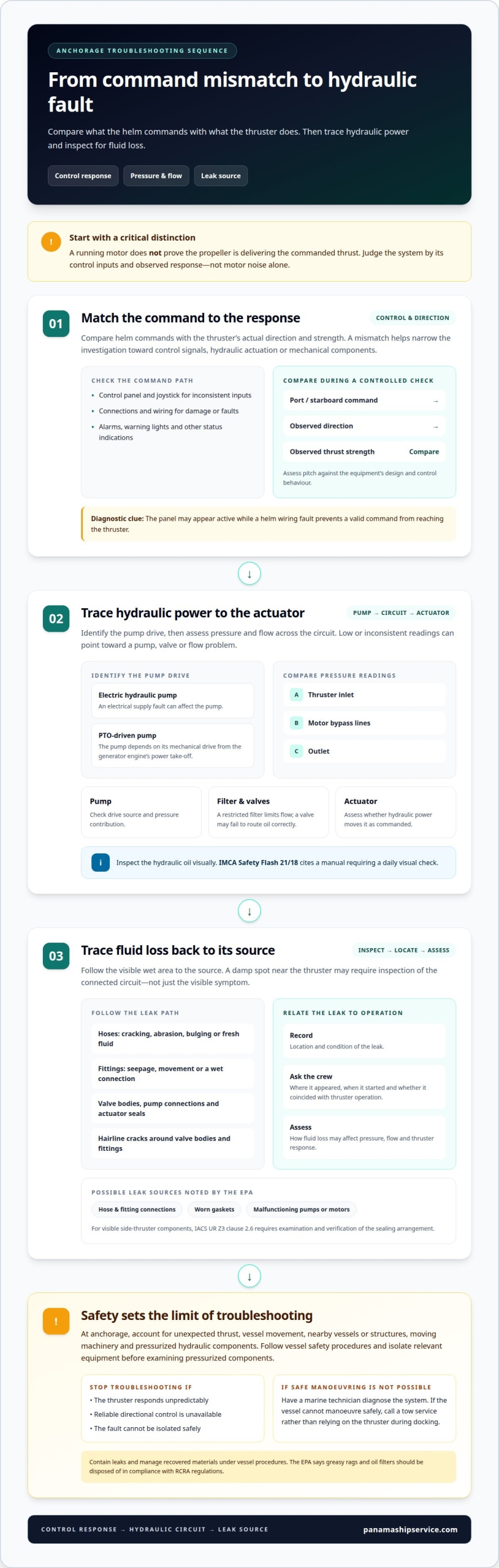
An unreliable thruster is more than a minor inconvenience when precise manoeuvring matters. A structured professional assessment can distinguish a control fault from a problem with the pump, filters, valves, actuators, hoses or seals. This guide explains how technicians assess direction and control response, inspect hydraulic components and locate leaks while a vessel is anchored. It also outlines what information can help move the diagnosis forward.
Key Takeaways
- Compare the commanded direction with the thruster’s actual response to help distinguish control faults from hydraulic or mechanical problems.
- Assess the pump, filters, valves and actuators together; pressure and oil flow can reveal why thrust is reduced or absent.
- Inspect hoses, fittings and seals for signs of fluid loss, and trace leaks to their source rather than treating only the visible symptom.
- Consider overheating, obstruction, restricted flow and mechanical damage when diagnosing repeat trips or poor performance at anchorage.
1. Thruster direction, pitch and control response
A marine technician begins by comparing the helm command with the thruster’s actual response. If the propeller pushes the bow opposite to the selected direction, the fault may involve control signals, hydraulic actuation or mechanical components. A running thruster motor does not prove that the propeller is delivering the commanded thrust.
The technician assesses the control panel and joystick for inconsistent inputs, damaged connections and wiring faults that could interrupt the command signal. During a controlled functional check, they compare port and starboard commands with the observed direction and strength of thrust. If the control indicates one direction but the vessel responds differently, that mismatch helps narrow the diagnosis. Pitch response is assessed against the equipment’s design and control behaviour, not inferred from motor noise alone.
Status indications offer another diagnostic clue. The technician records alarms, warning lights and changes on the control panel, then compares them with the thruster’s response. An indication can help direct the investigation, but it should be considered alongside control inputs and observed operation. For example, a fault in the helm wiring can prevent a valid command from reaching the thruster even when the panel appears active.
At anchorage, technicians manage the risk of unexpected thrust, vessel movement and contact with nearby vessels or structures. Repair work also requires control of hazards around moving machinery and pressurized hydraulic components, using the vessel’s safety procedures and appropriate isolation.
Stop troubleshooting if the thruster responds unpredictably, cannot provide reliable directional control, or has a fault that cannot be isolated safely. A marine technician should diagnose the system. If the vessel cannot manoeuvre safely, call a tow service rather than relying on the thruster during docking.
This measured approach makes bow thruster hydraulic failure troubleshooting at anchorage a process of matching control commands and status indications with actual thrust before deciding which systems need further inspection.
2. Hydraulic pump, filters, valves and actuators
A technician traces hydraulic power from its source to the thruster actuator. The system may use an electric hydraulic pump or a pump driven by a generator engine’s power take-off. Identifying the drive source helps focus testing. An electrical supply fault can affect an electric pump, while a PTO-driven pump depends on its mechanical drive.
Pressure readings help locate a restriction or loss across the circuit. Technicians can compare readings at the thruster inlet, motor bypass lines and outlet. Low or inconsistent pressure between these points can indicate a pump, valve or flow problem. A valve that fails to route oil correctly may prevent the actuator from moving the tunnel thruster as commanded, even when the pump is running.
Filters also matter. A restricted filter can limit oil flow, so technicians inspect its condition alongside the pump and valves rather than treating reduced thrust as an isolated actuator fault. They check hydraulic oil visually; IMCA Safety Flash 21/18 cites a manual requiring a daily visual check. If vibration accompanies poor performance, the assessment should identify its source instead of addressing vibration alone.
At anchorage, professionals coordinate repairs with vessel procedures and isolate relevant equipment before examining pressurized components. This helps control unexpected movement and exposure to hydraulic fluid. The technician also assesses whether the vessel can remain safely at anchor during testing, taking its position and nearby traffic into account.
For environmental protection, professionals contain leaks and manage recovered materials under applicable vessel procedures. The U.S. Environmental Protection Agency says greasy rags and oil filters should be disposed of in compliance with RCRA regulations.
If a pump, filter, valve or actuator needs repair, a marine technician can use the component findings to define the mechanical work and determine whether further system inspection is needed.
3. Hydraulic leaks around hoses, fittings and seals
A marine technician traces hydraulic fluid from the visible wet area to its source. Hoses, fittings, valve bodies, pump connections and actuator seals can all develop leaks. The U.S. Environmental Protection Agency lists leaking hose and fitting connections, worn gaskets, and malfunctioning pumps or motors as possible sources of hydraulic-fluid leaks. A damp joint near the thruster may therefore need closer inspection of the connected circuit.
Technicians examine hose surfaces for cracking, abrasion, bulging or fresh fluid, then inspect fittings for seepage and movement. Hairline cracks in valve bodies and fittings can be difficult to spot, so the inspection includes the component and its surrounding connections. A seal leak may leave fluid around an actuator or shaft, while a loose or damaged fitting can wet the hose connection itself.
For visible side-thruster components, IACS UR Z3 clause 2.6 requires examination and verification of the sealing arrangement. That inspection helps assess whether a seal is containing hydraulic fluid and whether the visible assembly shows signs of failure. The technician records the leak location and condition, then considers how fluid loss may affect pressure, flow and thruster response.
At anchorage, the repair assessment also considers where leaked oil could travel. A spill near deck drains or overboard openings needs prompt containment under vessel procedures. The crew can tell the technician where the leak appeared, when it started and whether it coincided with thruster operation. These details help distinguish an active leak from residue left by earlier maintenance.
Repair decisions depend on the damaged part and the cause of the leak. Replacing a seal without addressing a worn shaft or faulty connection may leave the source unresolved. A marine technician therefore assesses the surrounding assembly before defining the repair, then checks for continued fluid loss afterward. Clear findings help the vessel plan further inspection and manage the thruster’s return to service.
4. What are common causes of hydraulic bow thruster failure?
Reduced thrust often points to low hydraulic pressure or restricted oil flow. A pump may fail to deliver sufficient flow, while a blocked filter or faulty valve can restrict delivery to the actuator. The technician compares performance across the hydraulic circuit to distinguish a supply problem from a fault at the thruster drive.
Overheating is another possible cause, particularly after prolonged operation. Bow thrusters are designed for short bursts, not continuous running. If a thruster trips after extended use, technicians assess motor temperature, ventilation and cooling. Repeated overload trips can indicate an obstruction, excessive load or mechanical damage. Resetting protection without finding the cause leaves the underlying fault unresolved.
A damaged or obstructed propeller can reduce thrust while increasing load on the drive system. Marine growth, fishing line or other debris in the tunnel may prevent the propeller from turning, even when the motor receives power. A technician considers the propeller’s condition and mechanical resistance alongside the hydraulic system, rather than treating weak thrust as a pump fault alone.
Symptoms can also point outside the hydraulic circuit. A clicking sound without thruster movement may suggest a faulty solenoid or relay, while a trip during starting calls for assessment of starting current, motor condition and electrical supply. These distinctions matter: replacing hydraulic components will not resolve an electrical control or motor fault.
Operating a thruster out of the water without resistance can damage its motor. A professional assessment follows the equipment manufacturer’s procedures and technical history, and checks whether the fault follows operation, obstruction or an earlier repair. The repair scope depends on identifying the cause, not just the symptom. For recurring trips, abnormal vibration, overheating or reduced thrust, arrange a detailed inspection before relying on the thruster for manoeuvring.
Panama Ship Service
Panama Ship Service provides Mechanical Ship Repairs for vessels facing mechanical issues identified during troubleshooting. Its Marine Surveys can help assess equipment condition. If inspection points to an underwater obstruction or damage around the thruster, Underwater Hull Services may also be relevant. Share the symptoms, control response, warning indications and location of any hydraulic fluid. These details help define the issue and the work needed, since not every loss of thrust has the same cause. Contact Panama Ship Service for support with your vessel’s mechanical or underwater service needs.
Plan the next step with clear vessel information
At anchorage, a repair plan depends on the vessel’s operating condition and the evidence gathered during assessment. Record when the fault began, whether it followed a particular manoeuvre and how the thruster behaved during later commands. Include relevant maintenance history and any alarms or fluid loss observed. This context helps the technical team focus on the fault and plan work around the vessel’s operational needs.
A deliberate approach to bow thruster hydraulic failure troubleshooting at anchorage can help prevent an unresolved fault from becoming a constraint on the vessel’s next movement. If the thruster remains unreliable or requires mechanical attention, bring the assessment and vessel details to Panama Ship Service. Contact Panama Ship Service for support and take the next step toward a clear repair plan.
Frequently Asked Questions
Do bow thrusters matter for safe manoeuvring?
Yes. A bow thruster helps control the bow during close-quarters manoeuvring, especially when docking or working with limited clearance. If it responds incorrectly or stops producing thrust, the vessel may have less control than the bridge expects. Treat it as an aid, not a substitute for the vessel’s propulsion and manoeuvring plan. The bridge team should account for the fault before attempting a movement.
How do I tell if there is water in thruster oil?
Milky or cloudy oil in an oil-fed thruster gear-leg feed tube can indicate water contamination. This differs from clear oil and warrants a marine technician’s inspection of the gear leg and its sealing arrangement. Water can affect lubrication and signal a leak path that needs attention. Do not treat the appearance as proof of the exact failure point; the technician needs to trace where the water entered.
What causes a thruster seal leak?
A seal leak can result from a worn or damaged sealing element, or damage to the surface it must seal. A technician examines the seal arrangement and nearby shaft or housing for signs of wear, impact or corrosion. The leak’s location matters: fluid around a joint may point to a different source than seepage at the thruster’s underwater seal. Identifying the cause helps define the repair.
Why does a bow thruster trip on overload?
An overload trip means the protection system has detected a condition it treats as excessive load. Possible causes include a blocked tunnel, a damaged propeller, mechanical resistance or prolonged operation that overheats the equipment. The timing helps narrow the investigation: a trip during starting differs from one after extended use. Repeatedly resetting protection without identifying the cause can leave the fault unresolved.
How do marine technicians safely troubleshoot a hydraulic bow thruster at anchorage?
Technicians coordinate with the responsible crew before testing, agree on the operating boundary and follow vessel safety procedures and isolation requirements. They consider the vessel’s position, nearby traffic and the risk of unexpected thrust before operating the equipment. For bow thruster hydraulic failure troubleshooting at anchorage, the crew’s account of symptoms and recent operation helps focus the assessment without unnecessary thruster cycling.
What hydraulic pressure and flow readings do technicians check on a bow thruster system?
Technicians can compare pressure at the thruster inlet, motor bypass lines and outlet to help locate a system fault. The pattern across those points matters more than an isolated reading: a change between inlet and outlet may help identify a restriction or loss. They interpret readings against the equipment’s specifications and operating condition, since expected values depend on the installed system.