
An engine failure during a 2026 Panama Canal transit doesn’t just stall your schedule; it triggers an immediate $250,000 disruption charge from the Panama Canal Authority (ACP). You already know that the margin for error in these locks is nonexistent. With average waiting times rising to 47 hours this year, every minute of off-hire time directly impacts your bottom line. Identifying common ship repairs during Panama Canal transit before you arrive at the Balboa or Cristobal anchorages is the only way to safeguard your vessel against detention and ensure a zero-delay passage.
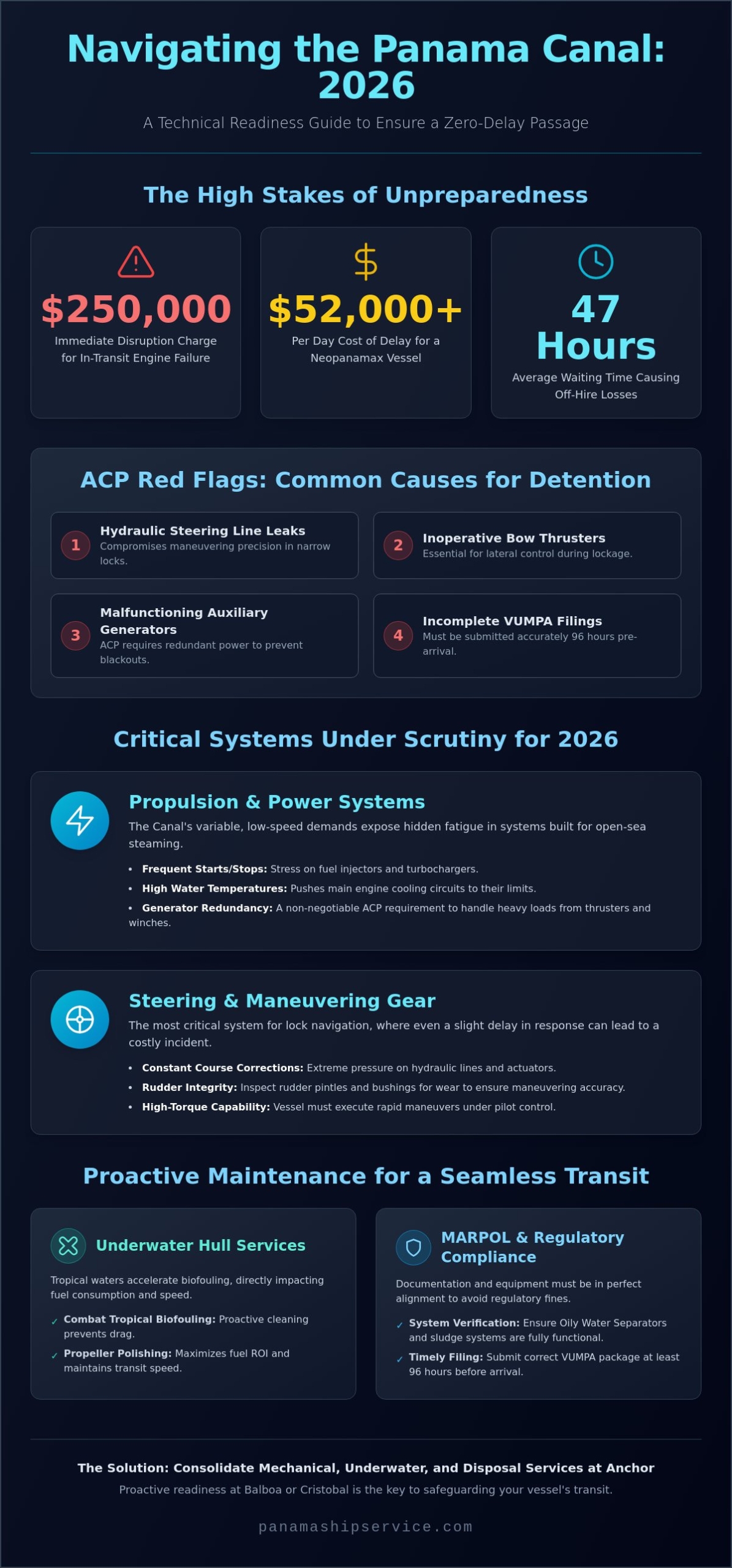
Managing a fleet in 2026 requires more than just reactive maintenance; it demands a strategic approach to technical readiness. This guide provides a technical framework for fleet managers to identify critical repair needs and master the latest regulatory requirements for a seamless transit. We’ll examine the most frequent mechanical failures, the impact of tropical biofouling on fuel ROI, and the essential MARPOL and VUMPA filings needed to avoid costly fines and keep your vessel moving efficiently.
Key Takeaways
- Understand the critical alignment between mechanical readiness and Panama Canal Authority (ACP) standards to avoid the high financial impact of off-hire time.
- Identify the most common ship repairs during Panama Canal transit, specifically focusing on steering gear and propulsion systems essential for lock navigation.
- Learn how proactive underwater hull services and propeller polishing combat tropical biofouling to maximize fuel ROI and transit speed.
- Ensure MARPOL compliance by verifying oily water separators and sludge management systems before arrival to prevent regulatory fines.
- Discover the operational advantages of consolidating mechanical, underwater, and disposal services while at anchor in Balboa or Cristobal.
Why Technical Readiness is Non-Negotiable for Panama Canal Transits
Technical readiness for a 2026 Panama Canal transit isn’t a suggestion; it’s a rigid operational requirement. The Panama Canal Authority (ACP) defines readiness as the total alignment of a vessel’s mechanical, navigation, and safety systems with their specific boarding and lockage standards. Unlike open sea voyages where a minor mechanical glitch might be managed en route, the Canal’s narrow locks and high-traffic lanes leave no room for equipment failure. A single engine stall or steering lag can result in immediate vessel detention and massive financial penalties.
The mechanical stresses placed on vessels during lock operations are intense. Propulsion systems must endure frequent starts and stops. Steering gear remains under constant load for hours. To maintain charterer trust and insurance stability, fleet managers must prioritize proactive maintenance. Identifying common ship repairs during Panama Canal transit before arrival ensures that your vessel remains an asset rather than a liability in this high-stakes corridor.
The Financial Impact of Transit Delays
Missing a scheduled transit window in 2026 creates a financial cascade that most fleet budgets can’t absorb. A single day of delay for a Neopanamax vessel can cost over $52,000 in lost charter hire and rescheduling fees. If an engine failure occurs during the actual transit, the ACP may levy an immediate $250,000 disruption charge. This makes the cost of planned mechanical ship repairs performed at anchor significantly lower than the price of an emergency intervention. Red flag items that frequently lead to detention include:
- Leaks in hydraulic steering lines.
- Inoperative bow thrusters.
- Malfunctioning auxiliary generators.
- Outdated or incomplete VUMPA filings.
ACP Technical Expectations for 2026
The ACP has tightened its scrutiny on propulsion and maneuvering systems for 2026. Technical superintendents must ensure that all auxiliary power units are fully operational, as the Canal requires redundant power sources during lockage to prevent total blackouts. Documentation is equally critical. The Vessel Universal Measurement and Pre-Arrival (VUMPA) package must be submitted at least 96 hours before arrival. Any discrepancy between your physical equipment and your digital certification can result in a forfeited slot. Addressing common ship repairs during Panama Canal transit while at the Balboa or Cristobal anchorages allows you to verify these systems under the supervision of experts who understand ACP’s specific 2026 protocols.
Critical Mechanical Repairs: Propulsion and Steering Gear
Safe navigation through the locks requires absolute precision. Steering gear is the most critical system during this phase because even a slight delay in response can lead to contact with lock walls or other vessels. Mechanical failures in these systems are among the most common ship repairs during Panama Canal transit. When you’re under the control of a Canal pilot, your vessel’s ability to execute rapid, high-torque maneuvers is your only defense against a costly incident.
Propulsion systems face unique stresses during transit. Transitioning from long-haul steaming to the variable, low-speed demands of the Canal often reveals hidden fatigue in fuel injection systems and turbochargers. If your main engine cooling circuits are already marginal, Panama’s high ambient water temperatures will push them to the limit. Addressing these mechanical vulnerabilities at the Balboa or Cristobal anchorages is the only way to ensure your vessel meets the ACP’s rigid 2026 safety standards.
Steering Systems and Rudder Integrity
The Canal’s narrow channels demand constant course corrections. This high-frequency usage puts extreme pressure on hydraulic lines and actuators. We recommend a thorough inspection of rudder pintles and bushings for wear before you enter the locks. Any excessive play in the rudder assembly can compromise maneuvering accuracy. For technical specifications on these critical components, you can review our detailed guide to mechanical ship repairs at the Panama Canal.
Main Engine and Auxiliary Power Reliability
Generator redundancy is a non-negotiable requirement for a safe transit. You must verify that your auxiliary power units can handle the sudden, heavy loads from bow thrusters and deck winches without risk of a total blackout. Engine room teams should focus on a strict checklist:
- Inspect fuel pumps and injectors for consistent delivery.
- Clean and test turbocharger cooling systems.
- Verify the integrity of engine mounts and structural plating through specialized welding if fatigue is detected.
While mechanical integrity drives the ship, crew safety depends on functional A/C and refrigeration systems. In Panama’s tropical climate, a failed HVAC system isn’t just an inconvenience; it’s a safety hazard that impacts crew focus. Maintaining these systems also supports broader operational efficiency. For instance, following IMO Biofouling Guidelines to maintain a clean hull reduces the overall load on your propulsion system. If your vessel is showing signs of mechanical strain, a quick consultation with Panama Ship Service can help you resolve these issues before they trigger a detention.
Underwater Services: Combating Biofouling in Tropical Waters
Panama’s warm, nutrient-rich waters accelerate marine growth at rates far exceeding those in cooler climates. For vessels awaiting transit at the Balboa or Cristobal anchorages, biofouling begins almost immediately. This accumulation of barnacles, tubeworms, and slime increases hull drag, forcing engines to work harder and consume more fuel. Addressing these issues through common ship repairs during Panama Canal transit is a strategic move to restore vessel performance, much like the comprehensive grooming and antifoul care provided by Boat Valet Auckland for vessels in the South Pacific.
In-water hull cleaning is essential for maintaining operational efficiency without the need for dry-docking. Modern techniques utilize specialized brush systems designed to remove growth while preserving the integrity of expensive anti-fouling coatings. Beyond performance, the Panama Canal Authority regulations emphasize the need for seaworthiness, and a heavily fouled hull can sometimes trigger closer inspection from ACP officials.
Maximizing Fuel Efficiency Through Hull Maintenance
The ROI of a clean hull is most evident during the long-haul transits that follow a Canal passage. Removing even a thin layer of slime can improve fuel efficiency by as much as 5% to 10%. In the Panama region, marine growth is aggressive. Identifying the specific types of fouling on your vessel allows divers to select the most effective cleaning tools. For a detailed look at our technical process, explore our comprehensive guide on underwater hull services.
Propeller Polishing and Performance
Propeller polishing remains one of the highest-ROI tasks available to fleet managers. Rough propeller blades cause cavitation and increased vibration, which lead to mechanical wear on shaft seals and bearings. A multi-stage polishing process achieves a ‘Rubert Grade A’ finish, significantly reducing engine load. We recommend this service for any vessel that has spent more than 48 hours at anchor in tropical hubs. It’s one of the most effective common ship repairs during Panama Canal transit to ensure you maintain the speed and maneuverability required for lock navigation.
Finally, class-approved Underwater Inspection in Lieu of Dry-docking (UWILD) surveys are critical. These surveys use high-definition CCTV and divers to verify structural integrity, ensuring your vessel remains in compliance with both class societies and local authorities. By consolidating these underwater tasks during your transit window, you eliminate the need for separate service calls and minimize total downtime.
MARPOL Compliance and Regulatory Maintenance
Regulatory compliance is the gatekeeper of a successful 2026 transit. The Panama Canal Authority (ACP) and Port State Control (PSC) maintain a rigorous inspection regime to ensure every vessel meets strict environmental standards. Malfunctions in pollution prevention equipment are frequent, making the restoration of Oily Water Separators (OWS) and sludge management systems some of the most common ship repairs during Panama Canal transit. If your OWS fails a random discharge test or your MARPOL logs show discrepancies, your vessel will be detained until the issue is rectified by certified technicians.
Bunker surveys have also become more critical in 2026. These surveys ensure accuracy in fuel delivery and consumption reporting, which is essential for meeting the latest carbon intensity standards. Technical managers must verify that all environmental systems are fully functional before reaching the 96-hour pre-arrival deadline. Relying on makeshift fixes for MARPOL equipment is a high-risk strategy that often leads to heavy fines and the forfeiture of expensive transit slots.
Waste and Sludge Management
Coordinating waste removal while at anchor in Balboa or Cristobal is a strategic logistical move. It allows your crew to clear sludge tanks and garbage before the ACP boarding party arrives for inspection. The primary advantage of choosing a localized partner is the ability to manage MARPOL disposal without interrupting your transit schedule. You must ensure all documentation, including the Oil Record Book and garbage receipts, is meticulously maintained and matches the physical volumes on board.
Health, Sanitary, and Cargo Surveys
Obtaining transit clearance also requires passing sanitary inspections. This includes verifying valid deratting certificates and ensuring that fresh water and provisions meet international health standards. If you’re carrying sensitive cargo, independent marine surveys are invaluable for damage assessment and hold cleanliness verification. These surveys provide an authoritative record that protects the shipowner’s interests during the transit. Addressing these regulatory needs alongside common ship repairs during Panama Canal transit ensures that your vessel is technically and legally prepared for the locks.
Don’t risk an expensive detention due to a failed MARPOL inspection. Contact Panama Ship Service today to schedule your regulatory maintenance and ensure a compliant, zero-delay transit.
Coordinating Repairs with Panama Ship Service for 2026
Managing multiple technical vendors while navigating the specific bureaucracy of the Panama Canal Authority (ACP) is an unnecessary operational burden. Efficiency in Panama depends on consolidation. By integrating mechanical, underwater, and disposal services into a single service window, you eliminate the friction of coordinating separate arrival windows and security clearances. Panama Ship Service acts as a strategic partner, ensuring that all common ship repairs during Panama Canal transit are executed simultaneously while your vessel is at anchor.
Our 24/7 emergency response model in Balboa and Cristobal is designed for the high-stakes environment of 2026. We understand that technical issues don’t follow a schedule. Whether it’s a sudden steering gear failure or a last-minute MARPOL compliance requirement, our teams are positioned to respond immediately. This localized expertise allows us to handle the complex paperwork and regulatory hurdles that often delay foreign service providers. You can delegate the technical complexity to us, allowing your team to focus on the broader logistics of the voyage.
The One-Stop-Shop Advantage
Reducing operational overhead starts with a single point of contact. Consider the logistical complexity of scheduling hull cleaning with one company and main engine maintenance with another. Consolidating these tasks allows for shared launch hire costs and synchronized work permits. For example, a vessel can undergo a class-approved underwater survey while technicians simultaneously overhaul fuel injectors in the engine room. This approach leverages our local spare parts sourcing network, bypassing the international shipping delays that often plague vessels in transit. For broader shipping needs, parcelinternational.com provides a global logistics platform with delivery solutions to over 220 countries. By handling these requirements in one window, you significantly reduce the risk of missed transit slots.
Next Steps for Technical Superintendents
To ensure a seamless repair window, pre-arrival communication is essential. We recommend providing detailed vessel specifications and technical drawings at least 96 hours before arrival. This allows our engineering teams to stage the necessary equipment and specialized labor in advance. Scheduling a pre-transit technical assessment is the most effective way to identify common ship repairs during Panama Canal transit before they escalate into an ACP detention. Our systematic approach ensures that every repair is documented and compliant with 2026 standards.
Our team is ready to assist with your 2026 preparedness strategy. Clear communication and technical precision are the foundations of our service. Contact Panama Ship Service for a comprehensive vessel repair quote to secure your transit window and optimize your fleet’s operational efficiency.
Strategic Technical Readiness for Your 2026 Canal Transit
Technical readiness is the foundation of a successful voyage through the locks. By addressing mechanical vulnerabilities and ensuring regulatory compliance before you reach the boarding station, you eliminate the threat of unexpected detention and astronomical disruption fees. Proactive maintenance, from propulsion overhauls to class-approved underwater surveys, ensures your vessel remains efficient and compliant throughout its journey. Identifying common ship repairs during Panama Canal transit while at the Balboa or Cristobal anchorages allows you to consolidate your technical needs into a single, efficient service window.
Panama Ship Service provides the specialized expertise required to navigate these operational challenges with confidence. Our teams offer 24/7 emergency support, class-approved UWILD services, and full MARPOL Annex compliance to protect your schedule and your bottom line. It’s time to prioritize your vessel’s technical integrity with a partner who understands the local landscape. Secure your transit schedule-request a technical repair quote from Panama Ship Service today. We look forward to being your reliable technical partner at the Canal.
Frequently Asked Questions
What are the most common mechanical failures that delay Panama Canal transits?
Steering gear malfunctions and auxiliary power failures are the primary mechanical issues. These are among the most common ship repairs during Panama Canal transit because the locks demand constant, high-torque maneuvering. If hydraulic lines leak or generators fail to handle the bow thruster load, the ACP will likely deny transit. Proactive testing of these systems at the anchorage prevents the $250,000 disruption charge associated with engine failure during lockage.
Can underwater hull cleaning be performed while the vessel is at anchor in Panama?
Yes, underwater hull cleaning is routinely performed at the designated Balboa and Cristobal anchorages. Performing these services while your vessel awaits its transit window is a highly efficient way to minimize downtime. Our diving teams use specialized equipment to remove tropical biofouling without damaging the hull’s anti-fouling coating. This restores fuel efficiency and ensures your vessel meets the ACP’s seaworthiness expectations before entering the locks.
How does the Panama Canal Authority (ACP) verify vessel technical readiness?
The ACP verifies technical readiness through a combination of digital VUMPA filings and physical boarding inspections. Inspectors focus on propulsion reliability, steering gear responsiveness, and the functionality of mooring winches. In 2026, there is increased scrutiny on redundant power sources and environmental compliance. Any discrepancy between your pre-arrival documentation and the physical state of the ship can lead to immediate detention and the loss of your transit slot.
Are Panama Ship Service’s underwater inspections approved by major class societies?
Our underwater inspections and surveys are fully approved by all major class societies. We provide high-definition CCTV footage and detailed technical reports that meet the requirements for Underwater Inspection in Lieu of Dry-docking (UWILD). This certification ensures that your vessel remains in compliance with international maritime standards while operating in the Panama hub. Our divers are trained to identify structural fatigue and coating degradation that could impact long-term operational safety.
What is the typical turnaround time for emergency mechanical repairs in Balboa?
Turnaround times for emergency mechanical repairs depend on the technical scope, but our 24/7 response model prioritizes transit-critical issues. We aim to complete most common ship repairs during Panama Canal transit within the vessel’s scheduled anchorage window. By leveraging our local network for spare parts and specialized labor, we eliminate the delays associated with international logistics. Our goal is always to restore technical readiness before your assigned pilot boarding time.
Does Panama Ship Service provide MARPOL-compliant certificates for sludge disposal?
We provide full MARPOL-compliant documentation for all sludge and garbage disposal services. Our process includes the issuance of official receipts and certificates that satisfy both Port State Control and ACP inspectors. Maintaining an accurate Oil Record Book is essential for avoiding the heavy fines associated with MARPOL Annex violations. We handle the entire logistical chain, ensuring that waste is disposed of at certified facilities in accordance with international environmental laws.
How often should propeller polishing be done for vessels transiting tropical waters?
Propeller polishing should be performed every four to six months for vessels frequently operating in tropical hubs like Panama. The rapid rate of marine growth in these warm waters creates rough surfaces that cause cavitation and engine strain. Polishing to a ‘Rubert Grade A’ finish reduces fuel consumption and vibration. If your vessel has been at anchor for more than 48 hours, a quick inspection is recommended to verify propeller integrity.
What types of marine surveys are essential before a vessel purchase in Panama?
Pre-purchase and condition surveys are essential when acquiring a vessel in the Panama region. These marine surveys provide a comprehensive assessment of the hull’s structural integrity, mechanical systems, and regulatory compliance. We also recommend a class-approved underwater inspection to identify any hidden damage or biofouling issues. Having an independent technical record protects the buyer’s interests and ensures the vessel is prepared for immediate operation within the Canal’s demanding environment.