
For any vessel transiting the Panama Canal with bulk cargo, accuracy is not just a goal; it is a financial necessity. Understanding the critical role of draft surveys is the first step toward verifying cargo quantity, preventing costly disputes, and ensuring a smooth, efficient port call. This guide explains the entire process, highlighting why an independent, expert survey is indispensable for protecting your interests.
What is a Draft Survey and Why is it Essential in Shipping?
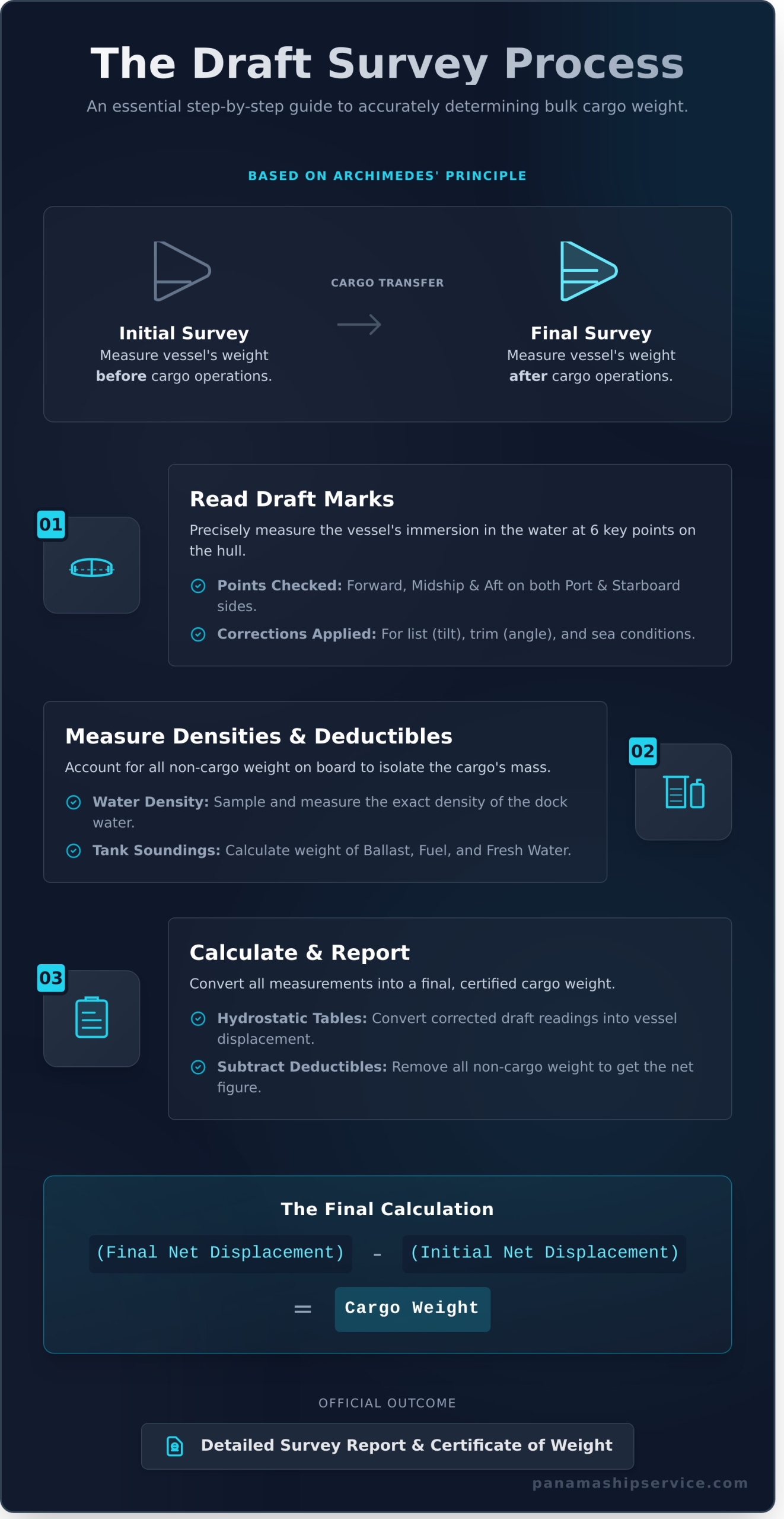
A draft survey is a precise and internationally recognized method to determine the weight of cargo loaded onto or discharged from a vessel. The entire calculation is based on Archimedes’ principle: by measuring the volume of water displaced by the ship, we can accurately calculate its weight. This survey serves as the primary tool to prevent commercial disputes over cargo quantity, providing an independent, verifiable weight certificate that is accepted by ship owners, charterers, traders, and port authorities.
The Main Purpose: Verifying Cargo Weight
The core function of a draft survey is to calculate the weight of bulk cargoes where direct weighing is impractical or impossible. This includes commodities like grain, coal, iron ore, steel scrap, and other raw materials. For high-value or weight-sensitive shipments, it provides a crucial check against shore scales or the quantities listed on the bill of lading, safeguarding against financial losses from shortages or overages.
Initial Survey vs. Final Survey
The process involves two key stages. The initial survey is conducted before any cargo operations begin to determine the vessel’s weight as it arrives. The final survey is performed after loading or discharging is complete. The difference in the vessel’s displaced weight between these two surveys is the definitive weight of the cargo that has been transferred.
The Draft Survey Process: A Step-by-Step Overview
Our qualified and experienced surveyors follow a meticulous, internationally standardized procedure to guarantee the highest level of accuracy. Every step is performed with precision, as even the smallest error can impact the final weight calculation.
Reading the Draft Marks
The survey begins with a visual inspection of the vessel’s draft marks at six points on the hull: forward, midship, and aft on both the port and starboard sides. Our surveyors carefully account for any list (sideways tilt) or trim (forward/aft tilt) of the vessel. They also make necessary corrections for sea conditions, visibility, and parallax error to ensure the readings are as accurate as possible.
Measuring Densities and Deductibles
A crucial step is sampling and measuring the exact density of the sea or dock water in which the vessel is floating, as this directly affects the displacement calculation. Concurrently, the surveyor will sound all ballast water tanks, fuel oil tanks, and fresh water tanks. Calculating the precise weight of these “deductible” liquids is essential to isolate the vessel’s own weight from the cargo’s.
Calculation and Final Reporting
Using the vessel’s approved hydrostatic tables, the surveyor converts the corrected draft readings into a displacement volume and then a weight. The weight of all deductibles-ballast, fuel, fresh water, and other known constants-is subtracted from this total displacement. The result is the net weight of the cargo. Upon completion, we issue a detailed survey report and an official Certificate of Weight. Put your transit in our hands. Request a survey today.
Why Accurate Draft Surveys are Crucial at the Panama Canal
As a critical chokepoint for global trade, the Panama Canal demands efficiency, accuracy, and reliability. A professionally conducted draft survey is a key component of a smooth and commercially secure transit.
Preventing Costly Commercial Disputes
An impartial survey report from a trusted third party provides undeniable evidence of cargo quantity, protecting the interests of owners, charterers, and traders alike. It is the most effective way to avoid lengthy and expensive claims related to cargo shortages or discrepancies, ensuring you pay for or receive precisely the correct amount of cargo as per your contractual agreements.
Choosing a Qualified Surveyor in Panama
When selecting a surveyor in Panama, look for a team with extensive experience across various vessel types and bulk cargoes. Deep local knowledge of the port conditions in Balboa and Cristobal is vital for accurate measurements. Above all, ensure your provider delivers clear, comprehensive, and timely reports. Panama Ship Service offers expert, impartial surveyors 24/7, dedicated to upholding the highest standards of accuracy and integrity.
Frequently Asked Questions About Draft Surveys
How long does a draft survey typically take to complete?
A standard draft survey can typically be completed within 2 to 4 hours, depending on the size of the vessel, accessibility of draft marks, and the number of tanks that need to be sounded. Our team works efficiently to minimize any potential delays to your operations.
What is the difference between a draft survey and a bunker survey?
A draft survey measures the weight of cargo by calculating the vessel’s displacement. A bunker survey, on the other hand, measures the quantity of fuel oil (bunkers) on board, typically before and after a bunkering operation, to verify the amount of fuel delivered.
Can a draft survey be performed in any weather conditions?
While surveys can be conducted in most conditions, significant swell, strong currents, or poor visibility can impact the accuracy of draft readings. Our experienced surveyors are trained to assess the conditions and apply appropriate corrections, but in extreme weather, it may be necessary to wait for a calmer sea state.
What documents are required from the vessel for the survey?
The surveyor will need access to the vessel’s hydrostatic tables, tank capacity plans (calibration tables), and the general arrangement plan. The ship’s crew will also need to provide the last port of call’s survey report, if available, and current tank sounding data.
Is a draft survey accurate for all types of cargo?
Draft surveys are most accurate and widely used for solid bulk cargoes loaded in full shiploads, such as ores, grains, and coal. While the principle applies to all cargo, its practicality and accuracy can be lower for general cargo, containers, or liquids, where other measurement methods are standard.
With over 20 years of maritime expertise at the Panama Canal, Panama Ship Service provides the independent, professional draft surveys you need to protect your financial interests. Our rapid response and meticulous reporting are designed to verify your cargo weight accurately while minimizing vessel downtime. Don’t leave your cargo quantity to chance. Request a Quote for Your Draft Survey in Panama and ensure your commercial interests are secure.