
A single hull reading can miss differences between the underwater metals it is meant to protect. A professional hull potential measurement compares voltage between a reference electrode in the water and bonded metal points on the vessel. Readings are taken separately for components such as the shaft, propeller, rudder stock and through-hulls. The results are interpreted in relation to the metals present and their protection needs.
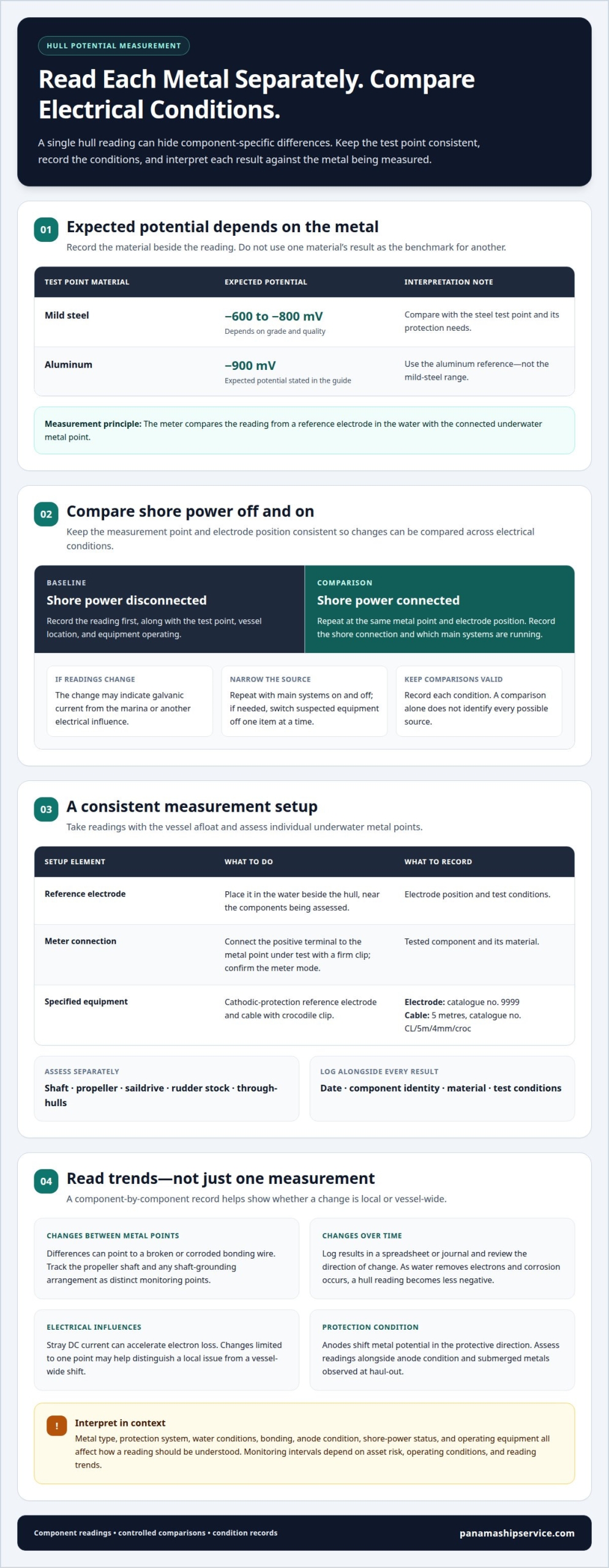
It is also important to determine whether shore power or onboard equipment is affecting the readings. A professional can compare results with shore power connected and disconnected, then repeat tests with onboard systems in different states to help identify possible sources of electrical current. This guide explains how the electrode is positioned, which underwater components are assessed, and how electrical conditions can affect results. It also covers why readings are recorded alongside test conditions and the observed condition of anodes and submerged metal parts.
Key Takeaways
- Assess underwater metals individually so a single reading doesn’t hide a component-specific issue.
- Use changes in readings across electrical conditions to help narrow down possible sources of current.
- Track readings alongside test conditions and anode condition to identify meaningful changes over time.
- Interpret results in context: metal type, water conditions, bonding, and anode condition all matter.
Reference electrode placement and meter connections
Take measurements with the vessel afloat, placing the reference electrode in the water beside the hull. The meter compares the electrode’s reading with that of a connected underwater metal point.
- Position the reference electrode beside the hull while the vessel is afloat. Keep it in the water near the underwater components being assessed, and take readings at individual metal points. This gives the professional a component-specific result instead of relying on one reading to represent every submerged structure.
- Connect the meter’s positive terminal to the metal point under test. A crocodile clip should make a firm connection to the metal hull or drive. Before taking a reading, confirm that the meter is set to the correct mode. It measures voltage between the reference electrode and the connected underwater metal.
-
Selecting a Reference Cell for Professional Hull Potential Measurement
Identify whether each test point is steel or aluminum, then record the material with its reading. The reference electrode sits in the water; the metal being assessed is the connected measurement point. A mild steel reading is expected to be -600 to -800 mV, depending on grade and quality, while the expected potential for aluminum is -900 mV. Don’t treat one material’s result as the benchmark for another.
-
How Professionals Connect the Meter and Reference Electrode
Use a suitable reference electrode and inspect the cable and clip connection before measuring. The specified cathodic-protection reference electrode has catalogue number 9999; the specified cable is 5 metres long and has catalogue number CL/5m/4mm/croc. Record the tested component and its material with the result, so readings can be interpreted against the correct metal.
A silver/silver chloride reference electrode measures hull electrical potential and helps determine the current required from an impressed-current cathodic protection system, according to the U.S. Environmental Protection Agency. Keep the electrode in the water beside the hull and maintain a firm clip connection at the test point.
Professional comparison of hull potential readings with shore power on and off
Compare readings with shore power connected and disconnected, then assess the vessel’s main systems in different states. Shore-power status, onboard equipment and current entering from the marina can affect the result.
-
Comparing Hull Potential Readings With Shore Power On and Off
Record a baseline reading with shore power disconnected, then repeat the measurement with shore power connected. Keep the tested metal point and electrode position consistent so the comparison reflects changes in electrical conditions. Note the vessel’s power status, location and equipment operating during each reading.
A change after connecting shore power may indicate galvanic current from the marina. The comparison can show whether an external electrical influence is affecting the vessel, but it does not identify every possible source on its own. Record details about the shore connection and which main systems were running during the readings.
-
Consider Factors Affecting Readings
Consider the shore-power state, onboard equipment and the specific underwater metal tested. Hull potential readings can change when outside current enters from a marina or an onboard electrical leak affects the vessel. Differences between metal points may also help identify a bonding issue, so record each component separately.
Repeat the readings with the vessel’s main systems on and off. If an onboard source is suspected, professionals can switch equipment off one item at a time and observe whether the reading changes. This controlled sequence helps narrow the investigation without confusing a system change with the effect of shore power.
Use the same measurement points and record the test conditions for each comparison. Clear vessel information, including shore-power status and operating equipment, helps professionals interpret hull potential measurement results and distinguish external influences from onboard changes.
Continuous hull and submerged-structure potential monitoring
Build a record for each underwater metal, then compare readings over time. Monitoring reveals trends that a single test cannot show.
Interpret readings against applicable standards for the metal and protection system. Set the monitoring interval according to asset risk, operating conditions and reading trends, and repeat tests when these conditions change. Professionals follow safe procedures around electrical systems and shore power during testing.
- Record separate readings for the shaft, propeller, saildrive, rudder stock and through-hulls. Include the date, test conditions and component identity so later measurements remain comparable. A difference between metal parts can point to a broken or corroded bonding wire.
- Track the propeller shaft and any shaft-grounding arrangement as distinct monitoring points. Compare their trends with those of the propeller and nearby underwater metals. A change limited to one point can help distinguish a local bonding or protection issue from a vessel-wide shift.
- Log each result in a spreadsheet or journal, then review the direction of change. As water removes electrons and corrosion occurs, a hull reading becomes less negative. Stray DC current can accelerate electron loss, while anodes shift metal potential in the protective direction.
- Assess cathodic protection alongside the condition of anodes and submerged metals observed at haul-out. A silver/silver chloride reference electrode measures hull potential and helps determine current required from an impressed-current cathodic protection system, according to the U.S. Environmental Protection Agency. Excessive protection can lift paint, particularly on aluminum hulls and drive legs.
- Apply the same trend-based recordkeeping to vessel and offshore assets with submerged metal structures. Compare readings for each asset and component against applicable potential ranges. For example, a fiberglass boat in saltwater is typically at -550 to -900 mV when protected by sufficient anode area.
Measuring hull and underwater components
Professionals measure a ship’s potential while it is afloat by comparing underwater metal with a reference electrode in the surrounding water. They test each component separately, record the conditions and interpret results against the relevant metal’s potential range.
- Identify the vessel’s hull material and underwater components before testing. Include the shaft, propeller, saildrive, rudder stock and through-hulls. A separate reading for each metal helps reveal a local issue that one hull reading could miss.
- Take readings at consistent points and record the date and test conditions. Note the water type, shore-power status and tested component. These details help professionals compare later measurements and interpret changes alongside anodes and metal condition at haul-out.
- Compare each result with its material’s expected range, not a universal target. Aluminum is expected at -900 mV; mild steel is typically -600 to -800 mV, depending on grade and quality. Rusted mild steel may measure -300 to -600 mV.
- Assess unusual readings with the component’s anode and bonding condition. A result outside the metal’s expected range can indicate an anode that is undersized, spent, or disconnected. A fiberglass boat reading around -300 to -400 mV may indicate insufficient or depleted anodes.
- Interpret results with the operating environment in view. A fiberglass boat in saltwater is typically at -550 to -900 mV when protected by sufficient anode area. Anode material should suit salt, brackish, or fresh water, while anode number and position depend on the metal area protected.
- Use the full set of readings to guide follow-up, not a single value alone. Hull potential measurement combines the component readings, material, anodes, and observed underwater condition. Arrange underwater hull service when the vessel needs professional assessment.
These readings matter especially for aluminium-hulled boats, saildrives, aluminium drive legs, and boats kept on shore power for long periods. The owner measured -0.180 volts in a freshwater lake.
Panama Ship Service: Underwater Hull Services
Panama Ship Service provides Underwater Hull Services when readings point to a concern with submerged metal or the hull needs closer assessment. A potential result can indicate where follow-up may be useful, but interpreting it alongside the physical condition of underwater components provides a fuller picture.
Bring relevant readings and vessel details into the discussion, including the components measured, test conditions and changes observed over time. This context helps connect electrical findings with the underwater hull condition. If inspection identifies a repair need, Mechanical Ship Repairs may also be relevant. Marine Surveys can support vessel assessment.
For professional support with an underwater hull concern, contact Panama Ship Service.
Make the next assessment part of vessel planning
Use hull potential measurement to decide what needs closer attention, then connect the findings to the vessel’s maintenance planning. Readings can inform discussions about underwater condition and follow-up work, while the vessel’s operating schedule helps determine when that work fits.
Panama Ship Service offers Underwater Hull Services, Mechanical Ship Repairs and MARPOL Disposal. Share the vessel’s operating context and the concern you want addressed to support a focused conversation about the next step.
Contact Panama Ship Service for assistance and move forward with a clear plan for your vessel.
Frequently Asked Questions
What does hull potential testing show in electrochemistry?
Hull potential measurement is an electrochemical assessment of voltage between a vessel’s underwater metal and a reference electrode in the surrounding water. The reading indicates the metal’s electrical potential under the test conditions. Professionals interpret it alongside the metal type, protection system and water environment, rather than treating it as a standalone diagnosis of hull condition.
What equipment is used to measure hull potential?
Professionals use a voltage meter, a reference electrode and a cable with a crocodile clip. The electrode is placed in the water, while the clip connects the meter to the metal being assessed. For example, when testing a propeller and then a shaft, record each metal point separately so the results can be matched to the correct component.
Which reference electrode is used for hull potential tests?
A silver/silver chloride reference electrode is used to measure hull electrical potential. According to the U.S. Environmental Protection Agency, this electrode can also help determine the current required from an impressed-current cathodic protection system. The electrode type matters because readings are interpreted against potential ranges that correspond to the reference system and the metal under assessment.
What are typical hull potential values for steel ships?
Mild steel readings can vary, so interpret them in context rather than as a universal pass-or-fail threshold. Rusted mild steel may read between -300 and -600 mV. These ranges are context for assessment, not a universal pass-or-fail threshold: professionals also consider the steel’s condition, the anodes, and the applicable potential ranges used for interpretation.
How can readings help assess cathodic protection?
Hull potential measurement helps show whether underwater metals fall within the relevant potential range for their protection system. A value outside the expected range can point to an undersized, spent or disconnected anode. Professionals use this finding to direct attention to the relevant component and compare electrical results with the observed condition of anodes and submerged metal during inspection.
What safety risks apply when measuring hull potential?
Follow safe procedures around electrical systems and shore power during testing. For personnel working across marine and industrial environments, specialist training providers such as Dangle® offer workplace safety courses to help teams manage electrical and operational hazards safely.