
A single hour of lost visibility during a vessel transit creates a cascade of logistics delays that most operators can’t afford. You know that timing is everything when managing a fleet schedule, yet finding a reliable panama canal live camera feed often leads to frustrating, broken links or lagging third-party streams. It’s difficult to manage what you can’t see, especially when you’re responsible for a transit that must meet a strict arrival window.
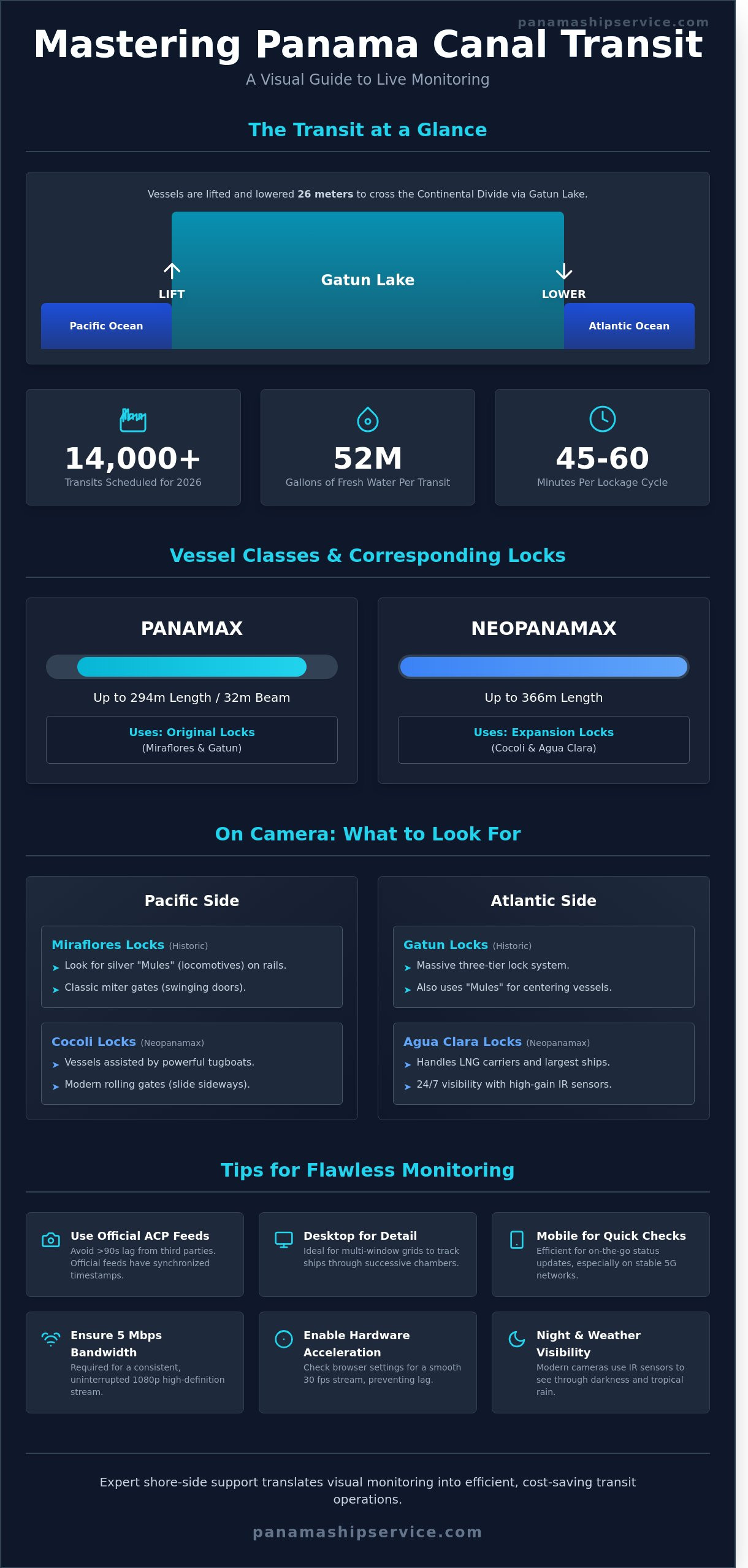
We’re experts in canal operations so you don’t have to be. We’ve compiled the official, high-definition links for the Miraflores, Gatun, and Agua Clara locks to give you a clear view of the 14,000 plus transits scheduled for 2026. This guide shows you how to access these 24/7 feeds, identify specific vessel types on screen, and interpret real-time operational status. You’ll learn the exact steps to monitor your vessel’s progress through each lock system without the common frustration of technical lag.
Key Takeaways
- Access the official Panama Canal Authority (ACP) multimedia hub to ensure you are viewing the most accurate and reliable real-time transit data.
- Learn to use the panama canal live camera feeds to monitor vessel progress and distinguish between traditional locomotive “mules” and modern tugboat assistance.
- Discover how professional ship owners utilize live visual inspections to verify transit schedules and vessel conditions during the lockage process.
- Optimize your viewing experience by mastering technical tips for time zone synchronization and navigating visibility challenges caused by tropical weather.
- Understand the critical role of expert shore-side support in translating visual monitoring into efficient, cost-saving transit operations.
Accessing Panama Canal Live Cameras: The Official 2026 Links
Monitoring ship movements requires precision and zero-latency data. The Panama Canal Authority (ACP) provides the only reliable panama canal live camera feeds for tracking transits in real-time. Third-party sites often experience significant lags, sometimes exceeding 90 seconds. This creates unnecessary risks for logistics planning and vessel husbanding. Relying on the official multimedia hub ensures you see exact vessel positions as they happen. We are experts at navigating these operational complexities, so you don’t have to be. Put your transit monitoring in our hands by using official sources to avoid the frustration of outdated visual data.
The intricate Panama Canal lock system operates on a strictly managed schedule where timing is everything. Accessing the correct feed depends entirely on which ocean the vessel is entering. For professional-grade monitoring, desktop viewing is the superior choice. It allows for multi-window grids to track a ship through successive chambers. Mobile viewing is efficient for quick status updates on 5G networks, but it often lacks the stability required for long-duration transit observation. Ensure your hardware acceleration is enabled in your browser settings to maintain a consistent 30 frames-per-second stream.
- Direct Hub Access: Always start at the ACP Live Cameras portal for verified streams.
- Source Accuracy: Official feeds include timestamp overlays synchronized with Canal local time (EST).
- Bandwidth Management: High-definition streams require at least 5 Mbps for uninterrupted 1080p viewing.
Pacific Side: Miraflores and Cocoli Locks
The Pacific entrance is the primary gateway for vessels arriving from Asian markets. The Miraflores feed captures the historic locks and the high-activity visitor center. You can identify vessel direction by observing the “mules” or towing locomotives. Northbound ships move away from the camera toward Gatun Lake. The Cocoli Locks feed is essential for monitoring Neopanamax vessels, which can reach lengths of 366 meters. These newer locks utilize rolling gates rather than miter gates, a key visual distinction for those tracking modern container fleets.
Atlantic Side: Gatun and Agua Clara Locks
The Atlantic side features the massive three-tier Gatun Locks system. This section is where vessels are raised or lowered 26 meters. The Agua Clara feed offers the most detailed views for Liquefied Natural Gas (LNG) carriers and ultra-large container ships. Night operations are fully supported through high-gain infrared sensors installed during the 2025 tech refresh. This ensures 24/7 visibility even during the intense tropical rain squalls frequent in the Colon province. Efficient monitoring here allows charterers to confirm lockage completion times with absolute certainty.
Understanding the Lock Systems: What You Are Seeing on Camera
When you view a panama canal live camera feed, you are watching a gravity-fed water bridge in action. Ships do not sail through the canal at sea level. Instead, they rise and lower exactly 26 meters to cross the Continental Divide via Gatun Lake. This massive lift process consumes approximately 52 million gallons of fresh water per transit. Every vessel you see on screen is participating in a complex hydraulic feat that has functioned since 1914, now updated with 21st-century technology.
Identifying the vessel class on your screen is the first step to understanding the operation. Panamax ships are the traditional workhorses, built to fit the original locks with a maximum length of 294 meters and a beam of 32 meters. Neopanamax vessels are significantly larger, reaching up to 366 meters in length. These giants only use the newer Expansion Locks. Monitoring these movements is essential for global logistics, as the economic importance of the Canal dictates the flow of commodities and consumer goods between the Atlantic and Pacific oceans.
The Mechanics of a Transit Cycle
A full lockage cycle usually takes between 45 and 60 minutes. On camera, ships often appear stationary for long periods. This is not a delay. It is the precise moment water levels are equalizing within the chamber. You’ll see the massive miter gates at Miraflores or Gatun swing shut before the valves open to move water by gravity. Safety protocols require absolute stability before the gates move to prevent surges. In the original locks, silver locomotives known as “mules” use high-tension cables to keep the ship centered, while the ship’s own engines provide minimal propulsion.
The Expansion Locks (Cocoli and Agua Clara)
The Cocoli and Agua Clara locks operate with different technology than the 1914 original structures. Instead of miter gates that swing open, these locks use massive rolling gates that retract into side recesses. You won’t see mules here. High-powered tugboats, often working in pairs at the bow and stern, position Neopanamax vessels with incredible precision. These locks also feature three water-saving basins per chamber. These basins recycle 60 percent of the water used in each transit, which is a critical feature for maintaining Gatun Lake levels during the dry season. For operators managing these transits, having a trusted partner at the Panama Canal ensures that technical complexities don’t lead to costly maritime delays.
Operational Monitoring: How Ship Owners Use Live Feeds
Efficiency at the canal depends on precision. Ship owners use the panama canal live camera network to verify transit timing and ensure schedule adherence. Relying solely on AIS data isn’t enough when thousands of dollars are at stake. By utilizing the Official Panama Canal Webcams, fleet managers get a visual confirmation of vessel position. This allows them to monitor weather and visibility at the canal entrances in real-time. If tropical rain reduces visibility to less than 1,000 meters, owners can anticipate the inevitable slowdowns before official notices even arrive. We provide the expertise to interpret these conditions so you don’t have to.
Visual inspection during the lockage process offers a layer of security that remote data cannot provide. Owners watch for vessel condition and draft levels as the ship moves through the chambers. It’s a proactive way to coordinate with local agents and service providers. When everyone sees the same live feed, communication becomes faster and more accurate. This level of transparency is vital for maintaining the tight schedules required in modern global shipping.
Coordinating Technical Services
Service providers need exact windows to operate. We use live views to confirm arrival for underwater hull services and other technical inspections. Ship repair teams waiting at the Balboa or Cristobal anchorages rely on these visual cues to mobilize. If a vessel is still in the Culebra Cut, our teams don’t waste fuel or man-hours waiting at the dock. We synchronize our service windows with the actual transit progress. This proactive approach minimizes vessel expenses and ensures that repairs happen the moment the ship is accessible. Timing is everything, and visual monitoring makes that timing possible.
Risk Management and Safety
Safety isn’t just a policy; it’s a visual practice. Monitoring pilot boarding and tug maneuvers ensures that all parties follow safety compliance protocols. Owners use the panama canal live camera to identify potential delays caused by congestion or technical issues at the lock gates. During 2023, the Panama Canal Authority recorded over 14,000 transits, and each one required flawless execution. These recordings serve as essential documentation for insurance or operational records if an incident occurs. Documenting these events provides a factual basis for any claims or performance reviews. It’s about having an expert eye on the process at all times to protect your assets.
Maximizing Your Viewing Experience: Timing and Technical Tips
Timing is everything for ship owners and canal enthusiasts. Panama operates on Eastern Standard Time (UTC-5) throughout the year. Peak activity occurs between 06:00 and 18:00 local time. Most northbound transits, moving from the Pacific to the Atlantic, begin early in the morning. Southbound vessels often enter the Gatun Locks by midday. Monitoring a panama canal live camera during these specific windows ensures you see the largest Neopanamax vessels in motion.
Don’t rely on the video feed alone. Use AIS (Automatic Identification System) data to track specific vessel names and arrival times. Cross-referencing the Panama Canal Authority (ACP) transit schedule with real-time AIS mapping allows you to predict exactly when a ship will enter the camera’s field of view. This minimizes wasted time and ensures you catch critical maneuvers. If a feed shows “Temporarily Unavailable,” it’s usually due to high-bandwidth demand or localized power surges. The ACP manages over 100 nautical miles of infrastructure; equipment resets are common. Refresh your browser or check the official ACP social media feeds for system-wide alerts.
The Impact of Panama Weather
Visibility varies significantly based on the season. The rainy season, running from May to December, brings intense afternoon downpours and the “Panama Mist.” This heavy fog can reduce visibility to less than 500 meters, making the panama canal live camera feed appear gray or blurry. Lightning storms are a more serious concern. When lightning strikes occur within a 5-mile radius of the locks, the ACP may pause lockage operations for safety, causing delays in the live feed schedule. The 2026 Panama Canal dry season is defined as the period from January to April when limited rainfall necessitates strict water conservation measures to maintain Gatun Lake levels above 80 feet.
Camera Maintenance and Updates
The ACP performs scheduled maintenance on multimedia equipment typically on the first Tuesday of every month. These windows allow technicians to clean lenses and update streaming software. If you identify a persistent hardware failure, you can report the issue via the official ACP contact portal. For a wider perspective, look for third-party weather stations located in Balboa or Colon. These often provide wide-angle views that complement the official lock-side cameras. Reliability is key in maritime operations. We are experts so you don’t have to be; let us manage the technical details of your vessel’s requirements.
Ensure your vessel transit is handled with professional precision and efficiency. Contact Panama Ship Service for expert maritime solutions and trusted local support.
Ensuring a Smooth Transit: Professional Support Beyond the Lens
Monitoring your vessel via a panama canal live camera confirms its position, but it won’t fix a mechanical failure or manage waste disposal. Visual feeds are tools for observation. Successful transit management requires technical execution. Panama Ship Service acts as your eyes and hands on the ground, ensuring that what you see on screen remains a smooth operation. Integrating marine surveys panama into your arrival schedule prevents costly disputes over fuel quantities or cargo weight. We provide the technical data that a camera lens simply cannot capture.
Vessel downtime at the canal is expensive. Every hour spent waiting for a technician or a supply boat increases your operational costs. We minimize these delays by coordinating all technical requirements before your vessel reaches the locks. If a captain reports an engine vibration or a pump failure during the approach, we deploy repair teams to the anchorage immediately. This proactive approach keeps your schedule intact and your vessel moving through the waterway without unnecessary interruptions.
One-Stop-Shop for Canal Logistics
Operational efficiency relies on consolidating services. Scheduling mechanical ship repairs during your wait at anchor prevents minor issues from becoming transit-blocking failures. Our team manages a wide range of essential services, including:
- Bunker and Draft surveys to verify cargo and fuel quantities accurately.
- Technical repairs for main engines, auxiliary pumps, and deck machinery.
- Certified MARPOL Annex I and V disposal services at both Atlantic and Pacific terminals.
- Delivery of fresh provisions and technical ship stores while at anchor.
You get a single point of contact available 24/7. This eliminates the confusion of dealing with multiple vendors in a high-pressure environment. We handle the logistics so your crew can focus on navigation. Constant daily communication ensures you are never left guessing about the status of your vessel’s requirements.
We Are Experts So You Don’t Have To Be
We bring 20 years of local experience to every transit. If you spot a hull issue or an unexpected obstruction on a high-definition panama canal live camera feed, you need immediate action, not a consultation. We provide proactive solutions like underwater hull cleaning and propeller polishing. These services can improve vessel speed and reduce fuel consumption by as much as 14 percent. Trusting your transit to a seasoned partner mitigates the risks of the difficult variables found in Panama. Put your vessel in capable hands. Contact Panama Ship Service for expert transit support today and ensure your next transit is handled with professional precision.
Secure Your 2026 Transit Strategy
The 2026 shipping landscape demands more than just a casual glance at a screen. Monitoring a panama canal live camera helps ship owners track transit progress through the Miraflores and Agua Clara locks, but visuals alone don’t solve operational bottlenecks. Efficiency requires combining real-time data with technical expertise to minimize vessel expenses. We’ve spent 20 years navigating these waters and managing the complex logistics of the Panama Canal. Our team provides 24/7 rapid response for emergency ship repairs and ensures your vessel remains fully MARPOL compliant with our disposal services. Don’t let technical hurdles or timing errors disrupt your schedule. We are experts so you don’t have to be. We handle the technical details so you can focus on your fleet’s broader goals. Put your transit in our hands—Contact Panama Ship Service today to secure your operations. Your successful transit is our priority and we look forward to supporting your next passage.
Frequently Asked Questions
Why is the Panama Canal live camera not working?
Technical maintenance or high traffic volume typically causes feed interruptions. The Panama Canal Authority schedules routine updates to ensure 24/7 reliability. If the screen is black, it’s often due to a browser cache issue or a temporary 5-minute server reset. Clear your history or try a different browser to restore the live stream immediately.
What is the best time to watch ships in the Panama Canal?
Peak traffic hours for the panama canal live camera occur between 06:00 and 18:00 local time (EST). Most northbound vessels enter the Miraflores Locks early in the morning, while southbound transits typically peak in the afternoon. Since 36 to 40 vessels transit daily, monitoring the feed during daylight provides the clearest view of the lock operations.
Can I see my specific ship on the live camera?
You can identify specific vessels by cross-referencing the live feed with the daily transit schedule or AIS tracking data. Since the cameras cover the Miraflores, Pedro Miguel, and Agua Clara locks, you’ll see your vessel as it enters these specific chambers. Use the vessel’s IMO number to track its exact 8 to 10 hour transit window through the 50-mile waterway.
How long does it take for a ship to pass through the locks on camera?
A vessel typically takes 45 to 60 minutes to complete a single lockage sequence visible on screen. This process includes the ship entering the chamber, the closing of the miter gates, and the 8-minute water leveling phase. Total transit time for the entire canal system averages 8 to 10 hours, but the lock highlights are the most popular segments for viewers.
Are the Panama Canal cameras live 24/7?
Yes, the Panama Canal Authority maintains live feeds 24 hours a day, 365 days a year. While the panama canal live camera operates continuously, visibility depends on local weather conditions and lighting. You’ll see maintenance crews working during overnight hours even when ship traffic slows down, ensuring the 110-year-old infrastructure remains operational for global trade.
Where are the Neopanamax locks located on the live feed?
The Neopanamax locks are located at Cocoli on the Pacific side and Agua Clara on the Atlantic side. These larger chambers, inaugurated on June 26, 2016, accommodate vessels up to 1,200 feet long. When viewing the feed, select the “Agua Clara” or “Cocoli” options to see the massive container ships that the original 1914 locks cannot handle.
Can I watch the Panama Canal transit at night?
You can watch night transits because the lock chambers are equipped with high-intensity LED lighting systems. Visibility is sufficient to see the hull and superstructure of vessels as they move through the 1,000-foot chambers. However, heavy tropical rain during the May to December wet season can occasionally obscure the lens, reducing the clarity of the midnight feeds.
Do the cameras show the entire 80km transit of the canal?
No, the cameras are fixed at specific strategic points including the Miraflores, Pedro Miguel, and Agua Clara locks. You won’t see the ship’s entire 80-kilometer journey through Gatun Lake or the Culebra Cut. The feeds focus on the lockage process where the most critical maneuvers occur, providing a detailed look at the 12.5-mile Gatun Lake elevation change.