
Did you know that 12% of vessels arriving at the Panama Canal face immediate delays due to technical discrepancies found during pre-transit inspections? In 2026, the margin for error has vanished. With Neo-Panamax slot forfeitures costing over $65,000 per day, your transit success depends on more than just paperwork. It requires a rigorous panama canal vessel inspection checklist that accounts for the new Risk-Based Vessel Inspection Model (RBVIM) and strict technical standards.
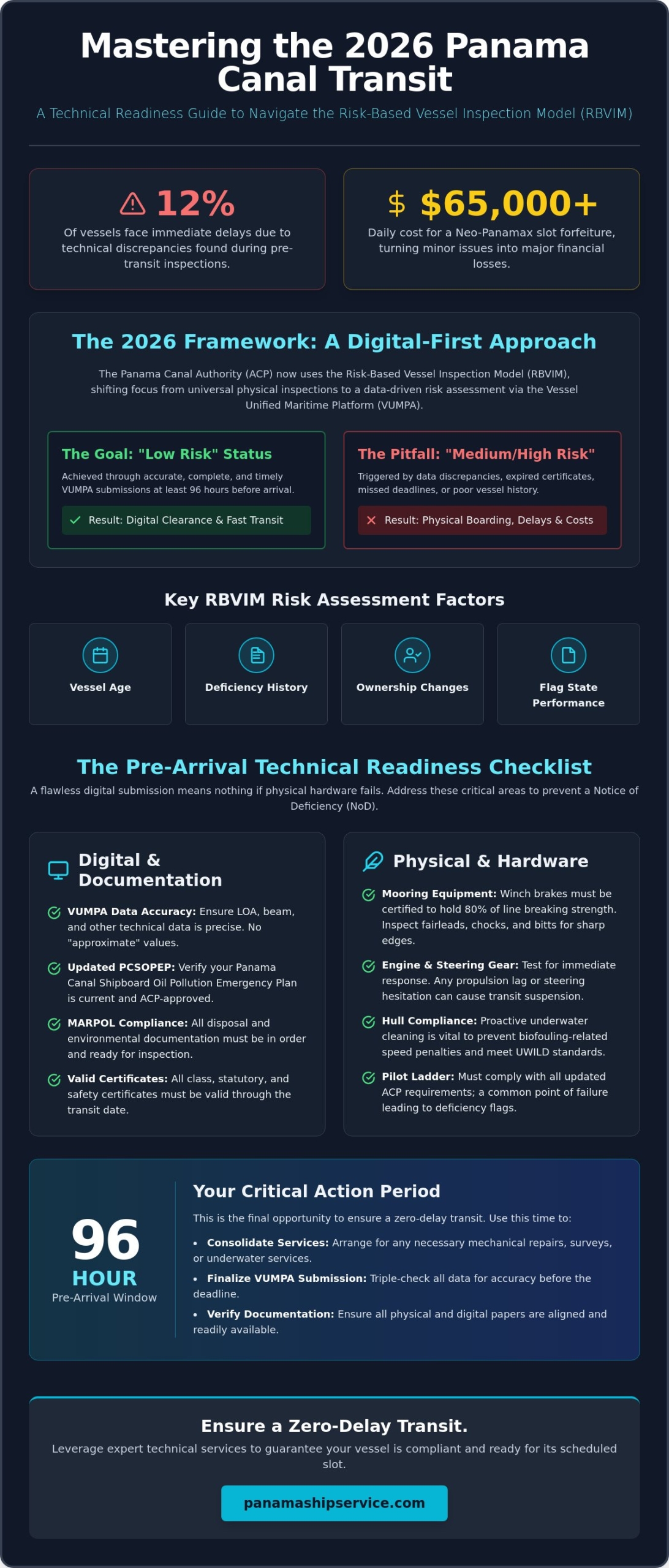
You likely understand that the complexity of the VUMPA digital submission system and updated pilot ladder requirements make the 96-hour pre-arrival window a high-pressure environment. We’re here to help you manage these technical demands with confidence. This guide provides a comprehensive technical readiness checklist to help you master the RBVIM and achieve Low Risk status for digital clearance. We’ll preview the essential hardware fixes, digital documentation standards, and consolidated services you need to ensure a zero-delay transit and avoid costly Notice of Deficiency flags before your vessel reaches the locks.
Key Takeaways
- Navigate the 2026 Risk-Based Vessel Inspection Model (RBVIM) by optimizing your digital profile within the VUMPA platform for faster clearance.
- Utilize a technical panama canal vessel inspection checklist to identify and rectify deficiencies in mooring equipment and bridge systems before they trigger a Notice of Deficiency.
- Maintain hull compliance through proactive underwater services to prevent biofouling-related transit speed penalties and meet class-approved UWILD standards.
- Verify mandatory documentation, including ACP-approved PCSOPEP updates and MARPOL disposal compliance, to eliminate administrative bottlenecks.
- Leverage the critical 96-hour pre-arrival window to consolidate ship repairs and surveys, ensuring your vessel is technically ready for its scheduled slot.
The 2026 Panama Canal Inspection Framework: Digital vs. Physical
The 2026 regulatory environment at the Panama Canal has shifted toward a data-driven, risk-based approach. The Panama Canal Authority (ACP) now utilizes the Risk-Based Vessel Inspection Model (RBVIM) to streamline traffic while maintaining strict safety standards. This model moves away from the traditional “inspect everyone” mentality, instead using digital data to categorize vessels by risk level. For operators, this means the panama canal vessel inspection checklist starts in the office, days before the ship reaches the breakwater.
The Vessel Unified Maritime Platform (VUMPA) serves as the gatekeeper for this new system. It’s the central hub where all pre-arrival information must be validated. Under the 2026 rules, your digital submission must be complete and accurate at least 96 hours before arrival. Any discrepancy between your digital filing and the physical reality of the vessel doesn’t just cause a paperwork headache; it triggers an immediate downgrade in risk status. Accuracy is paramount because the ACP’s machine-level validation doesn’t leave room for “approximate” data.
Understanding the RBVIM Risk Factors
The ACP’s algorithm evaluates several variables to determine a vessel’s risk profile. Primary drivers include the ship’s age and its history of deficiencies during previous transits. If your vessel has been flagged for pilot ladder issues or mooring winch failures in the past, expect higher scrutiny. Recent changes in ownership or poor performance by the vessel’s flag state also act as red flags. The 96-hour validation window is critical. During this time, ACP inspectors review VUMPA data against historical records. If you miss this deadline or provide incomplete data, the “Low Risk” designation becomes unattainable, and physical boarding becomes a certainty.
Digital Clearance vs. Physical Boarding
Achieving “Low Risk” status allows for digital clearance, which is the gold standard for efficient transit. It reduces boarding time and allows for faster lock entry, keeping your schedule on track. However, physical boarding remains mandatory for any vessel flagged as high or medium risk. Common triggers for a physical inspection include:
- Inconsistent technical data in VUMPA regarding beam or LOA measurements.
- Expired certificates or outdated PCSOPEP documentation.
- Reported equipment discrepancies from previous ports of call or recent PSC inspections.
The financial stakes are high. Approximately 12% of vessels face delays because of technical discrepancies found during these inspections. For a Neo-Panamax vessel, losing a transit slot can result in daily costs exceeding $65,000. A single documentation error can force a physical boarding that delays your transit by 24 hours or more. Proactive technical readiness and a verified panama canal vessel inspection checklist are the only ways to ensure your vessel stays in the digital fast lane.
Technical Readiness: The Physical Inspection Checklist
Even if your VUMPA submission is flawless, a single mechanical failure during boarding can trigger a Notice of Deficiency (NoD). The physical portion of the panama canal vessel inspection checklist focuses on the hardware that ensures safe passage through the locks. ACP inspectors prioritize equipment that impacts maneuverability, steering response, and the safety of canal personnel. Your engine room and steering gear must be tested and ready for the high-frequency commands typical of a canal transit. Any hesitation in the propulsion system or lag in rudder response during the pre-transit trial can lead to an immediate transit suspension.
Mooring and Deck Equipment Standards
Mooring requirements differ significantly between lock types, and failing to distinguish between them is a common oversight. Neo-Panamax vessels must comply with specific configurations involving higher-capacity winches and specialized fairleads. Winch brakes must be tested and certified to hold 80% of the line’s breaking strength. Inspect all fairleads, chocks, and bitts for grooving or sharp edges. Sharp surfaces can sever lines under the extreme tension experienced in the locks. Detailed specifications for these components are found in the Panama Canal Authority Vessel Requirements. If your deck equipment shows signs of fatigue, arranging mechanical ship repairs before arrival is a critical preventative step.
Bridge and Navigation Compliance
The bridge must provide an unobstructed view for the pilot at all times. ACP inspectors check that AIS and RADAR units are fully functional and properly integrated with the vessel’s conning position. Standardized rudder angle indicators and propeller pitch gauges must be calibrated and visible from all conning stations. Ensure all navigation lights meet COLREG standards and are free from electrical faults. Any discrepancy in bridge instrumentation can lead to the ACP requiring additional tugboat assistance, which adds thousands of dollars to your transit costs.
Pilot Boarding Safety
Pilot ladder deficiencies remain the most frequent cause of inspection failure and transit delays. Ladders must be clean, well-maintained, and rigged according to the latest ACP safety circulars. Common failure points include worn steps, incorrect side-rope tension, and improper securing to the deck. For night arrivals, the boarding area must be illuminated with high-intensity lighting that doesn’t blind the pilot. The 2026 pilot ladder safety standard requires that all boarding arrangements strictly comply with ACP Notice to Shipping N-1-2026, mandating certified materials and specific rigging heights for Neo-Panamax locks.
Underwater and Hull Compliance for 2026 Transits
The ACP’s 2026 Risk-Based Vessel Inspection Model doesn’t stop at the waterline. A vessel’s hull condition is a major factor in determining its safety margin during transit. Biofouling increases hydrodynamic drag, which directly impacts a ship’s maneuverability and steering responsiveness. In the confined spaces of the Panamax and Neopanamax locks, even a minor lag in steering can lead to a collision or lock wall contact. Consequently, hull cleanliness is now a vital component of the panama canal vessel inspection checklist. Ships with significant fouling are often flagged as higher risk, potentially triggering a mandatory physical boarding that could have been avoided with a clean hull.
Biofouling and Risk Profiling
Biofouling triggers both operational and environmental scrutiny. Panama maintains strict regulations regarding hull cleaning in its waters to prevent the introduction of invasive species. If an inspector identifies significant growth during a pre-transit check, the vessel may be ordered to return to sea for cleaning. This results in an immediate slot forfeiture and daily delay costs exceeding $65,000. Integrating professional underwater hull services into your pre-arrival schedule ensures your vessel maintains its “Low Risk” status. Proactive cleaning doesn’t just satisfy the inspector; it also improves fuel efficiency and ensures your vessel meets the ACP’s decarbonization goals for 2050.
Propeller and Rudder Integrity
Propeller polishing is a pragmatic solution to enhance steering precision. A clean propeller provides consistent thrust, allowing the pilot to execute tight maneuvers with confidence. During a pre-transit underwater inspection, divers check for rudder and pintle clearance while looking for structural damage that might have occurred during the voyage. Catching these issues before the ACP board ensures you don’t receive a Notice of Deficiency. Many operators now opt for a Class-approved Underwater Inspection in Lieu of Drydocking (UWILD) to confirm structural integrity. This provides the documentation needed to prove the vessel is technically sound. Key inspection points include:
- Verification of propeller blade integrity and smoothness.
- Measurement of rudder bearing clearances to ensure responsive steering.
- Inspection of sea chests and gratings for obstructions or heavy growth.
- Checking for any signs of cathodic protection depletion or hull plating corrosion.
Maintaining a clean hull and a polished propeller directly correlates to a smoother transit. It reduces the need for excessive tugboat assistance and keeps your schedule on track. Don’t let underwater neglect be the reason your vessel is downgraded to a high-risk category during the 96-hour VUMPA validation window.
Critical Documentation: PCSOPEP and MARPOL Readiness
Administrative precision is the foundation of a “Low Risk” digital clearance. While mechanical readiness is visible on deck, your documentation must be equally robust within the VUMPA system. The ACP mandates that all pre-arrival information, including security declarations and pollution plans, be validated 96 hours before your vessel enters canal waters. Any discrepancy in your digital filing acts as an immediate trigger for physical boarding. Within the panama canal vessel inspection checklist, documentation compliance is often where well-prepared crews face unexpected delays due to expired certificates or minor clerical errors.
PCSOPEP and Security Requirements
The Panama Canal Shipboard Oil Pollution Emergency Plan (PCSOPEP) is a mandatory requirement for any vessel carrying 400 metric tons or more of persistent oil. This plan must be ACP-approved and updated annually to reflect current regulations. A critical component of this plan is the designation of a local Authorized Person (AP) who can act on behalf of the vessel in the event of an emergency. Beyond pollution prevention, your Vessel Security Plan (VSP) must align perfectly with ACP ISPS requirements. Common errors in pre-arrival security declarations often involve outdated crew lists or incorrect last-port-of-call data. Ensure your sanitary inspections and fumigation certificates are valid, as an expired health certificate can lead to quarantine delays before the inspection even begins.
MARPOL Compliance and Waste Management
MARPOL Annex compliance is under heavy scrutiny in 2026 as the ACP pushes for higher environmental standards. Inspectors verify that oily water separators are functioning correctly and that all logbook entries for sludge, bilge water, and garbage are accurate and up to date. Discrepancies between actual tank levels and logbook records are a major red flag. To avoid issues, many operators choose to schedule MARPOL disposal in Panama to clear their tanks before the transit begins. This proactive approach ensures that your vessel arrives with maximum holding capacity and zero documentation gaps regarding waste management.
Environmental penalties for non-compliance during canal passage are severe and can include heavy fines alongside transit bans. Your panama canal vessel inspection checklist must include a final verification of the Oil Record Book and the Garbage Management Plan. Ensure all entries match the physical reality of the ship’s stores and waste lockers. If you’re unsure about your documentation status or need to clear tanks before arrival, you can delegate these complexities to a partner who understands the local regulatory landscape. For comprehensive support with technical readiness and agency coordination, contact Panama Ship Service today to secure your transit schedule.
Navigating the 96-Hour Window with Panama Ship Service
The 96-hour pre-arrival window is more than a regulatory deadline for VUMPA data. It represents your final opportunity to address technical vulnerabilities before an ACP inspector steps aboard. In an industry where 12% of vessels face delays due to technical discrepancies, waiting until you reach the breakwater is a high-risk strategy. Utilizing a comprehensive panama canal vessel inspection checklist during this period allows you to identify hardware failures and documentation gaps when there’s still time to act. This window is the critical phase where proactive maintenance prevents the $65,000 daily costs of a slot forfeiture.
Immediate Mechanical and Steel Repairs
Equipment failures don’t have to result in a forfeited Neo-Panamax slot. If your pre-arrival checks reveal a malfunctioning winch or a damaged pilot boarding station, immediate intervention is required. We provide emergency welding, steel fabrication, and mechanical repairs at the anchorage to ensure your vessel meets ACP standards. By leveraging mechanical ship repairs during the 96-hour window, you can rectify rudder issues or mooring hardware defects without losing your scheduled transit time. Our technical teams operate with the urgency this industry demands, focusing on pragmatic solutions that satisfy regulatory requirements. We handle the steelwork and mechanical troubleshooting while your crew focuses on navigation.
Consolidated Technical Support
Managing multiple vendors during a high-stakes arrival creates unnecessary overhead and increases the risk of communication breakdowns. A one-stop-shop approach allows you to consolidate marine surveys, technical repairs, and ship supplies into a single, coordinated operation. This efficiency is vital when you need critical spare parts delivered or MARPOL tanks cleared before the inspection begins. We act as your proactive partner, identifying potential “Notice of Deficiency” flags before they become official citations. Our team monitors the 96-hour validation process to ensure your digital profile remains in good standing. This consolidated model reduces the administrative burden on the Master and ensures all technical services are aligned with the panama canal vessel inspection checklist.
Delegating these technical and operational complexities to a seasoned veteran ensures your vessel remains in the “Low Risk” category for digital clearance. This localized expertise reduces the burden on your crew and protects your bottom line from the heavy financial penalties associated with transit delays. We provide the technical depth required to fix issues before they are officially logged. Don’t leave your transit to chance. Contact Panama Ship Service for a technical readiness audit and ensure your vessel is fully prepared for the 2026 inspection framework.
Securing Your 2026 Transit Schedule
The 2026 regulatory shift at the canal leaves no room for technical or administrative oversight. Achieving “Low Risk” status depends on your ability to execute a flawless panama canal vessel inspection checklist during the critical 96-hour pre-arrival window. Whether it’s maintaining hull integrity for maneuverability or ensuring your documentation is VUMPA-ready, proactive preparation is the only way to avoid $65,000 daily delay costs. Success in this high-stakes environment requires a partner who understands both the mechanical and regulatory demands of the Panama Canal Authority.
Panama Ship Service stands ready as your technical partner in this complex hub. We offer class-approved underwater and mechanical repair specialists alongside consolidated MARPOL and survey solutions to reduce your operational overhead. Our 24/7 emergency response teams at both Balboa and Cristobal ensure that even unexpected equipment failures don’t jeopardize your transit slot. We handle the technical complexities so your crew can focus on a safe voyage.
Ensure a Zero-Delay Transit with Panama Ship Service. Delegate your compliance needs to us and move through the locks with total confidence.
Frequently Asked Questions
What is the most common reason for failing a Panama Canal vessel inspection?
Deficiencies with pilot ladders are the most frequent cause of inspection failure and subsequent transit delays. Inspectors also focus heavily on worn mooring winches and inadequate bridge visibility. Ensuring these items are verified against your panama canal vessel inspection checklist before arrival is essential to avoid a Notice of Deficiency.
How far in advance must the VUMPA documentation be submitted in 2026?
Complete pre-arrival information must be submitted through the VUMPA system at least 96 hours before arrival in Panama Canal waters. This deadline is strictly enforced under the 2026 Risk-Based Vessel Inspection Model. Missing this window or providing incomplete data triggers a higher risk profile and mandatory physical boarding.
Does a digital clearance guarantee that no inspector will board the vessel?
Digital clearance does not provide an absolute guarantee against physical boarding. While the Risk-Based Vessel Inspection Model prioritizes digital documentation for low-risk vessels, the ACP reserves the right to conduct random spot checks or board vessels if VUMPA data is inconsistent. Maintaining an accurate panama canal vessel inspection checklist helps ensure your digital profile remains “Low Risk” to minimize these interruptions.
What are the specific mooring requirements for Neo-Panamax vessels?
Neo-Panamax vessels must utilize specialized mooring configurations that include high-capacity winches and specific fairlead placements. The maximum beam for these vessels is 51.25 meters. Winch brakes must be certified to hold 80% of the line’s breaking strength to handle the unique stresses of the Neopanamax locks.
Can underwater hull cleaning be performed while waiting for transit at anchorage?
Underwater hull cleaning can be performed at the Balboa or Cristobal anchorages provided the service provider follows strict ACP environmental regulations. Proactive cleaning is often necessary to prevent biofouling from impacting transit speed or safety margins. Completing this work during the 96-hour pre-arrival window ensures the vessel meets the required cleanliness standards before the formal inspection.
What happens if my vessel is issued a Notice of Deficiency (NoD)?
If a vessel is issued a Notice of Deficiency, it must rectify the listed technical or administrative issues before transit is permitted. This often results in the forfeiture of the reserved transit slot and daily delay costs exceeding $65,000 for Neo-Panamax vessels. Immediate technical intervention is required to fix the discrepancy and schedule a re-inspection.
Who is responsible for appointing the Authorized Person (AP) for PCSOPEP?
The vessel operator or owner is responsible for appointing a local Authorized Person (AP) to act as a liaison for the PCSOPEP. This individual must be based in Panama and capable of coordinating emergency response efforts with the ACP. The AP must be clearly identified in the plan, which requires official ACP approval for any vessel carrying 400 metric tons or more of persistent oil.
Are there specific fuel requirements for vessels transiting the Panama Canal?
Vessels must use fuel that is fully compliant with IMO regulations regarding sulphur (SOx) emissions. If a vessel arrives with non-compliant fuel, it will be required to return to sea to conduct a changeover. This process causes significant delays and potential forfeiture of reservation fees, so fuel verification is a critical pre-arrival step.