
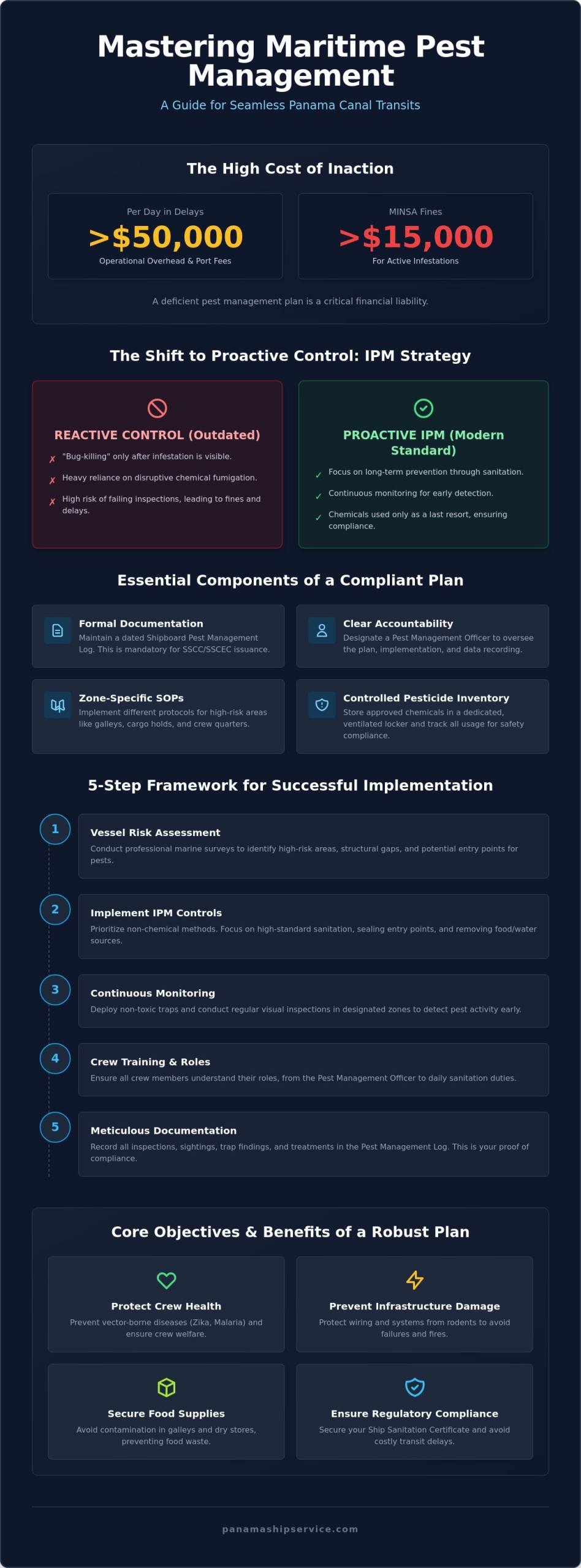
A single day of delay at the Panama Canal can cost ship owners upwards of $50,000 in operational overhead and port fees. When you factor in Panamanian Ministry of Health (MINSA) fines exceeding $15,000 for active infestations, a deficient pest management plan for ships becomes a liability your bottom line cannot afford. Maintaining a sterile environment within the confined spaces of a vessel is a constant challenge, especially when navigating the conflicting requirements of the WHO, IMO, and local port authorities.
We understand that the pressure to maintain a perfect sanitary record while meeting tight transit windows is immense. This guide provides the expertise you need to master the essential components of a maritime pest management plan, ensuring both crew health and seamless Panama Canal transits. You’ll learn how to align your operations with the 2025 International Health Regulations (IHR) amendments and implement a compliant, easy-to-follow template that eliminates the risk of pest-related detentions. We will break down specific inspection triggers and the documentation required to secure your Ship Sanitation Control Certificate without unnecessary complications.
Key Takeaways
- Transition from reactive pest control to a proactive Integrated Pest Management (IPM) strategy to safeguard your vessel’s health and operational status.
- Identify the mandatory documentation and crew roles required for a compliant pest management plan for ships under international port state control.
- Navigate the regulatory landscape of the WHO International Health Regulations and specific Panama Canal Authority requirements for sanitary certification.
- Implement a systematic five-step framework for vessel risk assessments and crew training to ensure successful sanitary inspections.
- Understand how coordinating with local experts ensures valid Deratting Certificates and prevents costly transit delays or MINSA fines.
What is a Pest Management Plan for Ships?
A pest management plan for ships is a formal, comprehensive document that outlines the strategies and protocols for controlling vectors and pests on board. It’s more than a simple checklist; it’s a critical operational asset that defines how your vessel maintains sanitary standards during international voyages. Historically, shipboard pest control was purely reactive, relying on “bug-killing” only after an infestation became visible. Modern maritime operations have moved toward a proactive model. This transition ensures that your vessel remains compliant with the World Health Organization (WHO) standards and avoids the scrutiny of port state control officers.
This plan is a mandatory requirement for the issuance of a Ship Sanitation Control Certificate (SSCC) or a Ship Sanitation Control Exemption Certificate (SSCEC). These documents are the primary evidence that a ship is free from infection and contamination. Without a documented plan, demonstrating compliance during a Panama Canal inspection becomes significantly more difficult. A well-executed plan protects the vessel’s reputation, its crew, and the local environments it visits by preventing the spread of invasive species.
The Core Objectives of Shipboard Pest Control
The primary goal of any shipboard plan is the protection of life and property. Pests aren’t just a nuisance; they’re a biological and structural threat. Key objectives include:
- Protecting Crew Health: Many pests are vectors for dangerous diseases such as Zika, Malaria, and Yellow Fever. Maintaining a pest-free environment is essential for force health protection and crew welfare, much like the medical certification standards required for commercial drivers at the Miami CDL/DOT Physical Exam Center.
- Preventing Infrastructure Damage: Rodents are notorious for gnawing through electrical insulation and wiring, which can lead to critical system failures or fires.
- Securing Food Supplies: Infestations in the galley or dry stores can result in massive food waste and health hazards for everyone on board; maintaining these areas is as critical as the hygiene standards upheld by PanYella Catering in their professional food services.
- Regulatory Compliance: Meeting the specific requirements of the Panama Canal Authority is vital to avoid fines and detention.
Integrated Pest Management (IPM) vs. Traditional Fumigation
Modern maritime standards prioritize Integrated Pest Management (IPM) over the outdated reliance on heavy chemical fumigation. IPM is a holistic approach that focuses on long-term prevention rather than short-term eradication. In a modern plan, chemical treatments are treated as a last resort. Instead, the focus is on a hierarchy of controls that prioritizes sanitation and exclusion.
By maintaining high cleanliness standards and sealing structural gaps, you remove the incentives for pests to board. Continuous monitoring using non-toxic traps allows the crew to detect pest activity early. Professional marine surveys in Panama are essential for this process. These surveys provide an expert assessment of the vessel’s condition, identifying specific risk areas that might be overlooked during routine maintenance. By integrating these surveys into your plan, you ensure your vessel remains a “hard target” for pests, reducing the need for disruptive chemical interventions.
Essential Components of a Compliant Maritime Pest Plan
A compliant pest management plan for ships is built on structured documentation and clear accountability. Port State Control (PSC) inspectors prioritize the presence of a formal Shipboard Pest Management Log. This log must contain dated entries of all inspections, sightings, and treatments. To meet the standards of the CDC Vessel Sanitation Program, your plan must clearly define the responsibilities of the designated Pest Management Officer. This officer, typically a senior crew member, oversees the implementation of the plan and ensures all data is recorded accurately and consistently.
Effective plans utilize zone-specific Standard Operating Procedures (SOPs). The galley requires different protocols than the cargo hold or crew quarters. In high-risk areas like food storage, daily visual checks are necessary. In contrast, dry cargo holds might only require inspection before loading and after discharge. Your plan should also include a strict inventory of approved pesticides. All chemicals must be stored in a dedicated, ventilated locker; usage must be tracked to ensure compliance with international safety standards. Maintaining a robust pest management plan for ships prevents minor sightings from escalating into transit-stopping infestations.
Monitoring and Inspection Protocols
Consistency is the foundation of effective monitoring. Your plan should mandate weekly visual inspections of known “hot zones” and monthly deep-dive assessments of the entire vessel. Diagnostic tools such as pheromone traps and non-toxic bait stations provide quantitative data on pest activity levels. These tools help identify the species and the extent of any presence before it becomes a full-blown infestation. Every finding, even a negative result, must be documented in the official log to demonstrate due diligence to inspectors. If you identify structural issues during these checks, addressing them promptly through professional marine surveys can help you stay ahead of regulatory requirements.
Sanitation and Exclusion Strategies
Denying pests access to food and shelter is more effective than any chemical treatment. Proper food waste disposal is critical, and all procedures must align with MARPOL Annex V requirements. Sealing physical entry points is equally vital. This includes maintaining tight door seals, installing mesh screens on ventilation ducts, and ensuring cable transits are properly packed. Often, structural vulnerabilities like corroded plating or damaged bulkheads provide perfect harborage. Investing in professional mechanical ship repairs ensures these gaps are closed permanently, making the vessel inherently more resistant to pests. By focusing on exclusion, you reduce the long-term overhead associated with repeated chemical interventions.
Regulatory Framework: WHO, IHR, and the Panama Canal Authority
The International Health Regulations (IHR 2005) represent a legally binding framework for 196 countries, designed to prevent the international spread of disease while minimizing interference with world traffic. Under these regulations, the World Health Organization (WHO) establishes the global standards for vector control and vessel hygiene. A robust pest management plan for ships isn’t just an internal policy; it’s the primary tool used to demonstrate compliance with these international mandates. When a vessel enters a port, it must prove that it isn’t a vector for public health risks, a process managed through rigorous certification and physical inspections. Recent amendments to the IHR, which entered into force on September 19, 2025, have further strengthened the requirements for national authorities to coordinate these health measures.
The Panama Canal Authority (ACP) enforces these standards with extreme precision. Because Panama’s tropical climate provides a fertile breeding ground for pests, the ACP works in close coordination with the Panamanian Ministry of Health (MINSA). They monitor all transiting vessels for compliance. A deficient plan can lead to vessel detention exceeding 48 hours, which often incurs daily detention fees of upwards of $65,000. For ship owners, a single day of delay in the Panama Canal can result in operational losses exceeding $35,000. Maintaining a compliant plan is therefore a financial necessity as much as a legal one.
Understanding the Ship Sanitation Control Certificate (SSCC)
The Ship Sanitation Control Exemption Certificate (SSCEC) is the gold standard for vessel operators. It’s issued when an inspection confirms the ship is free of infection and contamination, including vectors. If an infestation is found, the vessel is instead issued a Ship Sanitation Control Certificate (SSCC), which mandates specific control measures like fumigation. Both certificates are valid for a maximum of six months. Renewal in Panama typically occurs at the strategic hubs of Balboa or Cristobal. During these boardings, inspectors look for active signs of pests, the condition of food stores, and the accuracy of your shipboard logs. If your documentation is incomplete, you risk immediate fines and transit delays.
Local Compliance: ACP Requirements for Canal Transit
Vessels must provide pre-arrival notifications regarding their health status before entering Panamanian waters. This includes declaring any active pest issues or expired sanitation certificates. Failing a sanitary inspection before entering the locks can result in MINSA fines exceeding $15,000 per violation. To maintain the high level of hygiene required for a successful transit, operators must also manage their waste streams effectively. Coordinating MARPOL disposal in Panama is a critical step in this process. Removing food waste and galley refuse promptly eliminates the primary attractants for pests, ensuring your vessel remains compliant and ready for the locks without the threat of unexpected sanitary interventions.
How to Implement Your Pest Management Plan: 5 Steps
Execution is where many operators fail. Implementing a pest management plan for ships requires a systematic approach that integrates into the vessel’s daily routine. It isn’t enough to have a document gathering dust in the captain’s office; the plan must be a living part of the ship’s operations. Follow these five steps to ensure your plan is both effective and audit-ready before you reach the Panama Canal.
Step 1: Conduct a baseline inspection. Start with a comprehensive risk assessment of the entire vessel. This identifies existing vulnerabilities, such as damaged door seals or poor sanitation habits in the galley, that provide entry points or harborage for pests. Step 2: Train the crew. Educate every member on identification and reporting procedures. They are your eyes and ears on the ground. Step 3: Establish a sanitation schedule. Focus on high-risk zones. Removing food sources and nesting materials is more effective than any chemical intervention. Step 4: Maintain the logbook. Document every inspection, even when no pests are found. Step 5: Partner with local experts. Secure professional support from an experienced canal transit agency to handle specialized treatments and ensure all Panamanian health certifications are in order before arrival.
Crew Training and Awareness
Crew members must understand the direct link between their daily habits and the vessel’s overall compliance. Training should focus on creating a “see something, say something” culture. If a crew member spots a single cockroach or signs of rodent activity, it must be reported to the Pest Management Officer immediately. Delaying this report can turn a minor issue into a transit-stopping infestation that triggers heavy MINSA fines. Safety is also a priority; the crew must be trained on the specific safety protocols for handling shipboard traps and any approved chemicals stored on board.
Maintaining the Audit Trail
Port State Control (PSC) inspectors look for evidence of an active, consistent management strategy. Documenting “zero sightings” is a critical part of this audit trail. It proves that the scheduled inspections actually took place and the plan is being followed diligently. Keep all service reports, chemical inventories, and sanitation certificates organized in a single, accessible location. Whether you utilize digital tracking tools or traditional paper logs, the data must be clear and chronologically ordered. A well-maintained audit trail demonstrates professional due diligence and significantly reduces the time required for sanitary inspections at Balboa or Cristobal.
Professional Pest Control and Fumigation Services in Panama
Engaging a local Panama Canal service provider is the most effective way to ensure your vessel meets the stringent requirements of the Panamanian Ministry of Health (MINSA). While your pest management plan for ships provides the framework, professional execution is required to secure the necessary certifications for transit. Local experts understand the specific biological threats present in the tropics and can provide the specialized treatments required to clear a vessel for entry into the locks. Coordinating these services in Balboa or Cristobal allows you to address compliance issues without deviating from your scheduled route.
Professional intervention is often required for the issuance of a valid Deratting Certificate or to upgrade a Ship Sanitation Control Certificate (SSCC). These inspections are rigorous; they require a deep understanding of vessel architecture and pest behavior. By utilizing a certified local partner, you ensure that any required fumigation is performed safely and documented according to international standards. This level of professional oversight minimizes the risk of a failed inspection and the subsequent detention fees that can cripple a voyage’s profitability.
Our Comprehensive Sanitary Solutions
Panama Ship Service provides a full suite of sanitary solutions designed to keep your vessel in peak operational condition. We offer professional fumigation and deratting services tailored to the unique needs of bulk carriers, tankers, and container ships. Our team conducts expert sanitary inspections that mirror the criteria used by ACP and MINSA officials, identifying potential issues before they become transit-stopping violations. For total vessel maintenance, we can integrate these sanitary measures with our underwater hull services. This holistic approach ensures that both your internal environments and submerged surfaces are free from biological contaminants, protecting your hull efficiency and your regulatory standing.
The Panama Ship Service Advantage
Efficiency is the cornerstone of our operations at the Panama Canal. We maintain 24/7 availability at both Balboa and Cristobal ports to accommodate the fast-paced nature of maritime schedules. Our team bridges the gap between technical expertise and regulatory compliance, ensuring that your pest management plan for ships is executed flawlessly. We offer a one-stop-shop model that allows you to combine pest control with other critical needs, such as mechanical repairs or the delivery of essential ship supplies. This integration reduces your administrative overhead and ensures that all services are completed within your allotted port stay.
Ensure your vessel is transit-ready with Panama Ship Service.
Secure Your Vessel for Seamless Panama Canal Transit
A proactive pest management plan for ships is a strategic investment that pays dividends in operational efficiency and regulatory peace of mind. By moving beyond reactive treatments and embracing the principles of Integrated Pest Management, you protect your crew’s health and safeguard your vessel’s bottom line. The key to passing a Panamanian Ministry of Health inspection lies in meticulous documentation and a well-trained crew. Maintaining an audit-ready logbook and ensuring all sanitary certificates are valid for their six-month window will eliminate the risk of costly delays at the locks.
Delegating the complexity of maritime compliance to a seasoned partner allows you to focus on your core operations. Panama Ship Service offers comprehensive MARPOL and sanitary compliance services, ensuring your vessel meets every Panama Canal Authority standard. With our 24/7 rapid response at both Balboa and Cristobal, we provide the localized expertise necessary for successful transits. Don’t leave your schedule to chance; professional support is available to handle everything from certified inspections to specialized technical repairs.
Request a Pest Management Consultation for Your Panama Canal Transit and ensure your vessel is fully prepared for its next voyage. We’re ready to help you navigate the complexities of maritime health regulations with confidence and precision.
Frequently Asked Questions
Is a Pest Management Plan mandatory for all ships transiting the Panama Canal?
Yes, a documented pest management plan for ships is mandatory for all vessels transiting the Panama Canal. The Panama Canal Authority (ACP) and the Panamanian Ministry of Health (MINSA) require proof of active vector control to issue or renew Ship Sanitation Certificates. Without this formal document, your vessel may face immediate inspection failures and significant transit delays. It serves as your primary evidence of compliance with International Health Regulations.
How often should a ship undergo professional fumigation?
Professional fumigation isn’t always mandatory on a fixed schedule but is required if an active infestation is detected during a sanitary inspection. Most operators schedule preventative treatments every six months to coincide with the renewal of their Ship Sanitation Control Exemption Certificate (SSCEC). Regular treatments ensure that your vessel remains a “hard target” for pests, preventing the need for emergency, transit-stopping interventions at the locks.
What is the difference between a Deratting Certificate and a Ship Sanitation Certificate?
The Ship Sanitation Control Certificate (SSCC) is the modern international standard under the WHO’s IHR 2005 framework. It covers all vectors, including insects and rodents. A Deratting Certificate is a more specific, older term still frequently used in Panamanian ports to refer to rodent-specific clearance. In practice, obtaining a modern SSCC or SSCEC satisfies the requirements for deratting while providing a broader health clearance for the vessel.
Can my crew perform fumigation, or must it be a certified professional?
While your crew can manage routine tasks like setting pheromone traps or applying basic sprays, certified professional fumigation is required for official sanitary certification. Panamanian authorities only recognize treatments performed by licensed service providers. Professional companies provide the necessary legal documentation and service reports that Port State Control inspectors demand. Relying on uncertified crew applications for major issues risks failing your next sanitary audit.
What happens if a vessel fails a sanitary inspection at the Panama Canal?
Failing a sanitary inspection results in immediate vessel detention and mandatory remedial actions. The Panamanian Ministry of Health (MINSA) can impose fines exceeding $15,000 per violation. Additionally, the vessel will be prohibited from entering the locks until a certified professional performs the required treatments. This often leads to detention fees of over $65,000 per day, causing catastrophic disruptions to your operational schedule and logistics chain.
How long does a professional shipboard fumigation typically take?
The duration depends on the treatment method and the size of the vessel. Standard cockroach or ant treatments using specialized gels and fogging typically take 4 to 8 hours. However, full-vessel gas fumigation for severe infestations or specific cargo requirements can take 24 to 48 hours. Coordinating these services with your port stay at Balboa or Cristobal is essential to minimize downtime and ensure the vessel remains on schedule.
What are the most common pests found on commercial vessels?
Cockroaches, particularly the German and American varieties, are the most frequent threat in galleys and crew quarters. Rodents like the Norway rat and roof rat are also common and pose significant risks to electrical systems and food stores. Other frequent issues include bed bugs in accommodation areas and various beetles or weevils in dry stores. A robust pest management plan for ships addresses each of these specific biological threats.
Does the pest management plan need to be approved by the flag state?
While most flag states don’t require a formal “stamp of approval” for a pest plan, they do mandate that the vessel complies with WHO and IMO health standards. Your plan must meet the criteria outlined in the International Health Regulations (IHR 2005). Port State Control officers will audit your plan during regular inspections to ensure it’s active and effective. Compliance is ultimately the owner’s responsibility, enforced by both flag and port states.