
In the high-stakes world of maritime operations, a single failed health inspection can trigger a cascade of costly delays, cargo contamination, and even vessel quarantine. Proactive and professional ship pest control services are not an option-they are a critical defense against these significant threats to your schedule and your bottom line. The financial and logistical consequences of an infestation or a non-compliant vessel are simply too severe to ignore.
Navigating the complexities of International Health Regulations (IHR) and ensuring a pest-free environment requires specialized expertise. From securing a valid Ship Sanitation Certificate (SSC) to protecting crew health and safety, every detail matters for maintaining operational efficiency. This is where expert knowledge becomes your most valuable asset, turning a potential liability into a seamless component of your voyage.
This complete guide provides vessel operators with the critical solutions needed to achieve full compliance. We will break down the entire process, from identifying common maritime pest threats to outlining the key factors for choosing a qualified service partner. You will gain the actionable insights required to protect your vessel, secure your cargo, and ensure a safe, hygienic environment for your crew on every transit.
Why Proactive Pest Control is Non-Negotiable for Maritime Operations
In the high-stakes world of maritime operations, pest control is not an operational preference; it is a critical component of risk management. A single infestation of rodents, cockroaches, or stored product insects can trigger a cascade of failures, jeopardizing cargo, crew, and the vessel itself. Moving beyond simple cleanliness, professional ship pest control services are a core function for protecting a vessel’s structural integrity, operational schedule, and commercial reputation. The most cost-effective and efficient strategy is always prevention, addressing potential threats before they escalate into costly problems.
The Regulatory Risk: Compliance and Port State Control
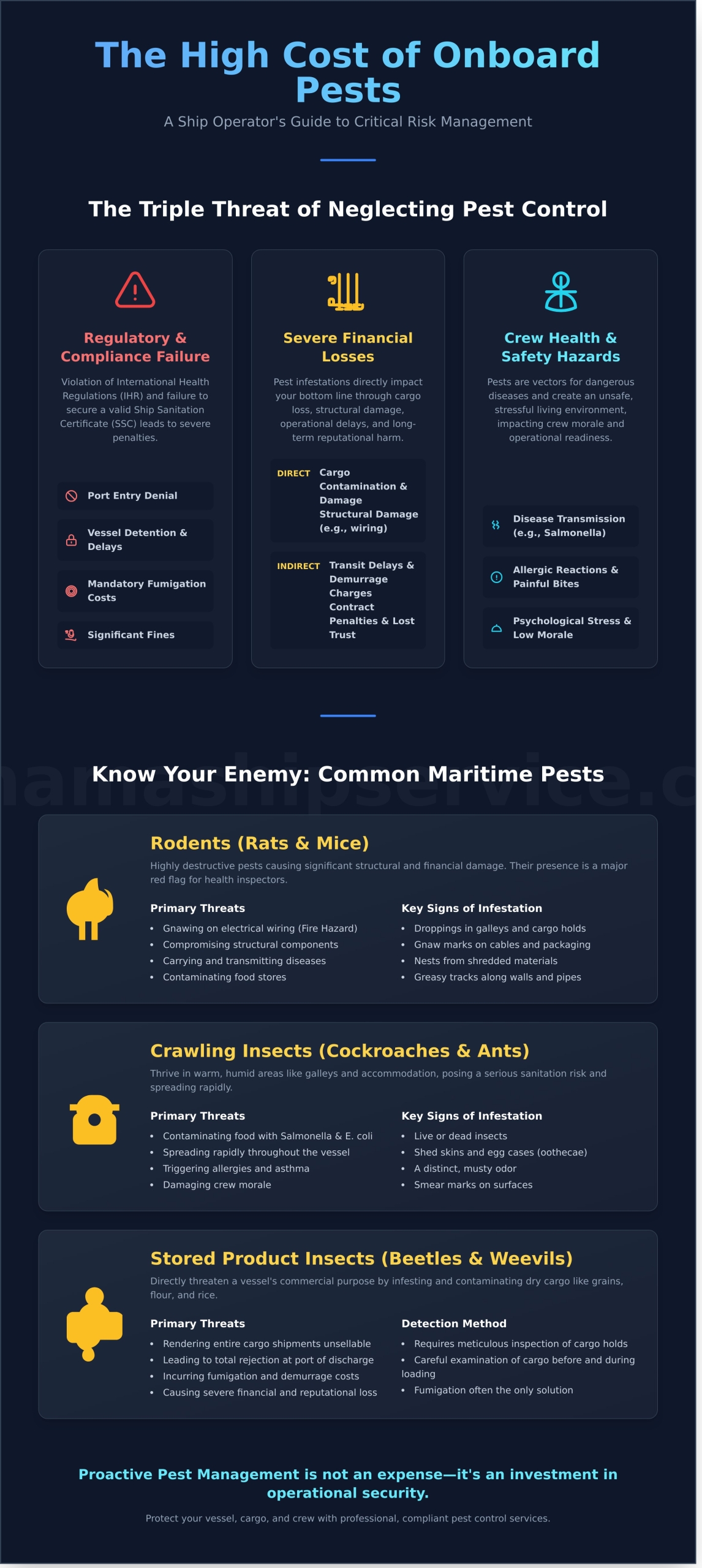
Global maritime trade is governed by stringent health and safety standards. The International Health Regulations (IHR 2005) mandate that vessels remain free of infection or contamination, including pests that pose a public health risk. Compliance is verified by Port Health Authorities through inspections, which determine the issuance of Ship Sanitation Certificates (SSCs). Failure to present a valid certificate or evidence of an active infestation can lead to severe consequences, including port entry denial, vessel detention, mandatory fumigation at the owner’s expense, and significant fines.
The Financial Risk: Protecting Cargo and Assets
Pest infestations create a direct and immediate financial threat. The costs extend far beyond the loss of contaminated products and are a major concern for ship owners and charterers. A comprehensive pest management plan is essential to mitigate these risks:
- Direct Costs: Damage to cargo from gnawing, feces, and contamination, rendering goods unsellable.
- Structural Damage: Rodents are known to chew through electrical wiring, creating critical fire hazards and causing equipment failure.
- Indirect Costs: Failed inspections lead to transit delays, demurrage charges, and severe contract penalties.
- Reputational Damage: A vessel known for pest issues will face higher insurance premiums and a loss of trust with charterers.
The Human Risk: Crew Health and Safety
A vessel owner’s duty of care extends to providing a safe and habitable environment for the crew. Pests are vectors for numerous dangerous diseases, including Salmonella, Leptospirosis, and Hantavirus. Beyond disease transmission, infestations can cause allergic reactions, painful bites, and significant psychological stress, directly impacting crew morale and operational readiness. Implementing expert ship pest control services is fundamental to protecting your most valuable asset-your crew-and ensuring the vessel remains safe and fully operational.
Common Pests on Board and the Specific Threats They Pose
A vessel’s enclosed environment, complete with food, water, and countless hiding spots, creates an ideal breeding ground for pests. An infestation is more than a nuisance; it is a direct threat to crew health, cargo integrity, and operational compliance. Identifying the key culprits is the first step in effective management, as different pests require different detection methods and targeted control plans. Understanding their behavior allows for the strategic deployment of professional ship pest control services to protect your assets efficiently.
Rodents (Rats and Mice)
Rodents are among the most destructive pests found on board, capable of causing significant operational and financial damage. Their constant gnawing can compromise electrical wiring, insulation, and structural components, creating fire hazards and costly repair needs. They are also known disease carriers, and their presence is a major red flag for health inspectors. According to guidelines in the WHO Handbook for ship sanitation, a rodent-free environment is critical for certification. Key signs of an infestation include:
- Droppings in galleys, engine rooms, and cargo holds.
- Gnaw marks on cables, pipes, and packaging.
- Nests made from shredded paper, cloth, or insulation.
- Greasy tracks or runways along walls and pipes.
Effective control requires an integrated approach of baiting, trapping, and implementing exclusion strategies to prevent future entry.
Crawling Insects (Cockroaches and Ants)
Cockroaches and ants thrive in the warm, humid conditions found in galleys, provision stores, and accommodation areas. They are a serious sanitation risk, contaminating food preparation surfaces, utensils, and stored provisions with bacteria like E. coli and Salmonella. An infestation can spread rapidly, compromising crew health and morale. Detecting their presence early involves looking for live or dead insects, shed skins, egg cases (oothecae), and a distinct musty odor. Treatment focuses on targeted gel baits, professional-grade insecticidal sprays, and rigorous sanitation improvements to eliminate their food and water sources.
Stored Product Insects (Beetles and Weevils)
Stored Product Insects (SPIs) like beetles, weevils, and moths pose a direct threat to a vessel’s commercial purpose by infesting dry cargo. They contaminate commodities such as grains, flour, rice, and processed foods, rendering them unfit for consumption. Even a minor infestation discovered at the port of discharge can lead to significant financial losses, including fumigation costs, demurrage, and the total rejection of a cargo shipment. Detection requires meticulous inspection of cargo holds and the cargo itself before and during loading. For established infestations, cargo fumigation is often the only viable solution for complete eradication.
The Ship Pest Control Process: What to Expect from a Professional Service
Effective pest management aboard a maritime vessel is not a matter of chance; it is the result of a systematic, professional process. Expert ship pest control services are designed for maximum effectiveness with minimal interference to your vessel’s operational schedule. This structured approach ensures every stage, from initial survey to final certification, is handled with precision. Clear and constant communication between our technicians and the ship’s master is paramount, guaranteeing transparency and alignment with your vessel’s specific needs and timeline. Every action is meticulously recorded, providing you with the comprehensive documentation required for port health authorities and your own records.
Step 1: Comprehensive Vessel Inspection
The foundation of any successful pest control strategy is a thorough inspection. Our qualified technicians conduct a detailed survey of all critical areas, including the galley, provision stores, accommodation blocks, bridge, and cargo holds. This assessment allows us to:
- Identify the specific pest species (e.g., rodents, cockroaches, stored product insects).
- Determine the extent of the infestation and locate nesting sites and entry points.
- Evaluate sanitary conditions and recommend structural or procedural improvements.
- Formulate a customized and targeted treatment plan tailored to your vessel.
Step 2: Targeted Treatment and Eradication
With a precise plan in place, our team executes the treatment phase. We exclusively use industry-approved, IMO-compliant rodenticides and insecticides to ensure regulatory compliance and the safety of your crew and cargo. Treatment methods are selected based on the inspection findings and may include bait stations, residual sprays, insecticidal dusts, or, where required, professional fumigation. The primary objective is not just to control the current problem but to eradicate it and establish a protective barrier against future infestations.
Step 3: Monitoring and Documentation
Our service does not end once the treatment is applied. We provide diligent follow-up and complete documentation to certify your vessel is pest-free. This final stage includes providing detailed service reports for the ship’s log, which outlines the areas treated, products used, and any recommendations. Upon successful eradication, we issue the official Ship Sanitation Certificate (SSC) or Deratting Certificate. We also offer practical guidance to the crew on preventative measures, empowering them to help maintain a pest-free environment long-term.
Ensuring Compliance: Ship Sanitation Certificates Explained
In international shipping, your vessel’s Ship Sanitation Certificate is its passport for global health compliance. This is not an optional document; it is a mandatory requirement under the World Health Organization’s (WHO) International Health Regulations (IHR 2005). The certificate validates that your vessel is free from sources of infection and contamination, including pests. Valid for a maximum of six months, the absence of a current certificate is a primary reason for Port Health Authorities to conduct an inspection, which can lead to costly delays and operational disruptions.
Navigating these requirements is critical for uninterrupted transit. The process results in one of two certificates, each signifying a different outcome of the official inspection.
Ship Sanitation Control Exemption Certificate (SSCEC)
This is the ideal outcome for any vessel operator. An SSCEC is issued when a thorough inspection reveals no evidence of pests, infection, or contamination that constitute a public health risk. It serves as official proof of a well-maintained, hygienic vessel and exempts the ship from further control measures for its six-month validity period. Achieving this standard requires a proactive approach; consistent, professional ship pest control services are the key to ensuring your vessel is always inspection-ready and qualifies for an exemption certificate.
Ship Sanitation Control Certificate (SSCC)
If an inspection uncovers evidence of infestation or other public health risks, a SSCC will be issued. This certificate details the evidence found by the health authority and documents the required control measures that have been successfully applied to eradicate the threat. It confirms that the vessel has been treated, rendered safe, and is now compliant with IHR standards. While it allows the vessel to proceed, receiving an SSCC indicates a reactive situation that could have been avoided. This certificate is also valid for six months from the date the control measures were completed.
The Deratting Certificate: An Outdated Term
The SSCEC and SSCC system replaced the older ‘Deratting Certificate’ and ‘Deratting Exemption Certificate’ in 2007. However, some port officials or older documentation may still refer to this outdated terminology. It is important to understand that the modern certificates cover a much broader scope of public health risks-including insects, rodents, contaminated food, and potable water-not just the presence of rats. This comprehensive approach reflects a modern understanding of disease transmission. Don’t let confusing terminology put your vessel at risk. Ensure your vessel is certified. Contact our compliance experts.
Choosing Your Pest Control Partner at the Panama Canal
Selecting a provider for ship pest control services at the Panama Canal is a critical operational decision. In this high-stakes environment, not all companies possess the specialized expertise required for the maritime industry. Your choice directly impacts your vessel’s compliance, budget, and transit schedule. An ineffective partner can lead to costly delays and regulatory fines, while the right one acts as a seamless extension of your team, protecting your assets and ensuring a smooth passage.
Verify Maritime Expertise and Licensing
Generic pest control is not sufficient for a commercial vessel. Your partner must demonstrate a deep understanding of maritime regulations and the unique challenges of pest management at sea. Before engaging any service, confirm their qualifications:
- Are their technicians certified with specific marine environment training?
- Do they have proven familiarity with IMO regulations and SOLAS requirements?
- Can they provide references from other vessel operators or ship management companies?
- Are they fully authorized by Panamanian authorities to issue official Ship Sanitation Certificates?
Prioritize Local Knowledge and Rapid Response
Timing is everything at the Canal. A provider based locally offers an indispensable advantage. They understand the specific requirements of the Panama Canal Authority and port logistics, from anchorage points to pilot schedules. This local expertise allows for rapid mobilization, ensuring technicians can board your vessel within tight operational windows. Choosing a local partner eliminates the communication gaps and logistical delays associated with coordinating out-of-port vendors, saving you critical time and preventing disruptions to your transit.
Seek an Integrated Service Provider
To maximize efficiency, partner with a company that offers a comprehensive suite of services. A one-stop-shop approach simplifies procurement, communication, and invoicing. By bundling pest control with other essential needs-such as MARPOL services, ship supplies, or minor repairs-you streamline your entire port call. With a single, expert point of contact managing your requirements, your team can focus on the core mission of a safe and timely transit. This integrated solution is the most cost-conscious and effective way to manage vessel needs in Panama.
Request a quote for integrated pest control services in Panama.
Secure Your Transit with Expert Pest Control at the Panama Canal
In the high-stakes world of maritime operations, proactive pest management is a fundamental requirement for protecting your crew, cargo, and operational integrity. Engaging professional ship pest control services is the most effective strategy to mitigate risks from common pests and ensure full compliance with international regulations, including the vital Ship Sanitation Certificate.
At the Panama Canal, where timing is everything, you need a trusted partner on the ground. Panama Ship Service delivers expert solutions with the urgency your schedule demands. Our fully licensed and certified technicians are specialists in IHR 2005 and all local Panama port regulations, providing a 24/7 rapid response to keep your transit seamless and on schedule.
Don’t let preventable pest issues jeopardize your voyage or your bottom line. Protect your vessel and ensure a smooth transit. Request a professional pest control quote today. Put your vessel in expert hands and sail with confidence.
Frequently Asked Questions About Ship Pest Control
How long does a ship pest control treatment typically take?
The duration of a pest control treatment depends on the vessel’s size, layout, and the extent of the infestation. A standard service for common areas and accommodation can typically be completed within 3 to 6 hours. Larger vessels or more severe issues may require additional time. Our expert technicians work efficiently to minimize downtime and align with your vessel’s port schedule, ensuring a swift and effective solution without disrupting critical operations.
Are the chemicals and methods used safe for crew and different cargo types?
Yes. All treatments are conducted by qualified technicians using internationally approved, low-toxicity insecticides and rodenticides. We adhere strictly to International Maritime Organization (IMO) guidelines to ensure the safety of your crew, cargo, and the marine environment. Our methods are targeted to eliminate pests with minimal impact, and we provide detailed safety data sheets and post-treatment instructions to the vessel’s master, guaranteeing a safe and compliant environment onboard.
What is the difference between pest control and cargo fumigation?
Pest control targets the vessel’s structure, accommodations, galley, and engine room to eliminate pests like cockroaches, rodents, and stored product insects. It is a sanitation and hygiene measure. In contrast, cargo fumigation is a specific treatment to eradicate pests within the cargo itself, such as insects in grain or timber. While we provide both services, they address different risks and are governed by separate international regulations and client requirements.
How often should my vessel undergo a professional pest control service?
For optimal hygiene and regulatory compliance, we recommend professional ship pest control services on a quarterly or semi-annual basis. The ideal frequency depends on your vessel’s trading routes, the types of cargo carried, and specific flag state requirements. A consistent, proactive pest management program is the most cost-effective solution to prevent major infestations, ensure crew welfare, and avoid costly delays or port state control issues. We can design a schedule tailored to your operational needs.
Can you issue a Ship Sanitation Certificate at any port in Panama?
Yes, our company is fully authorized by the Panama Maritime Authority to conduct inspections and issue Ship Sanitation Certificates (SSC), including Ship Sanitation Control Certificates (SSCC) and Ship Sanitation Control Exemption Certificates (SSCEC). Our qualified inspectors can provide this essential service at all major ports in Panama, including Balboa on the Pacific side and Cristobal on the Atlantic side, ensuring your vessel remains compliant with International Health Regulations (IHR 2005).
What information do you need from us to provide an accurate quote?
To provide a precise and competitive quote, our team requires key vessel information. Please provide the vessel’s name, IMO number, gross tonnage (GT), and current location or ETA at a Panamanian port. It is also essential to specify the exact service needed, such as general pest control, rodent eradication, or issuance of a Ship Sanitation Certificate. This data allows us to allocate the correct resources and provide a timely, cost-conscious proposal.