
Would you risk a $3.78 million priority auction bid on a vessel that’s burning excess fuel and losing knots due to a fouled or damaged propeller? In 2026, the operational stakes at the Panama Canal are at an all-time high. With daily transits restricted and draft limits tightening to 14.78 meters, any mechanical inefficiency becomes a massive liability. You understand that even minor propeller roughness or a bent blade tip can jeopardize your schedule and inflate your operating costs during current wait times. This is why securing expert ship propeller repair panama services while at anchorage is a strategic necessity rather than a last resort.
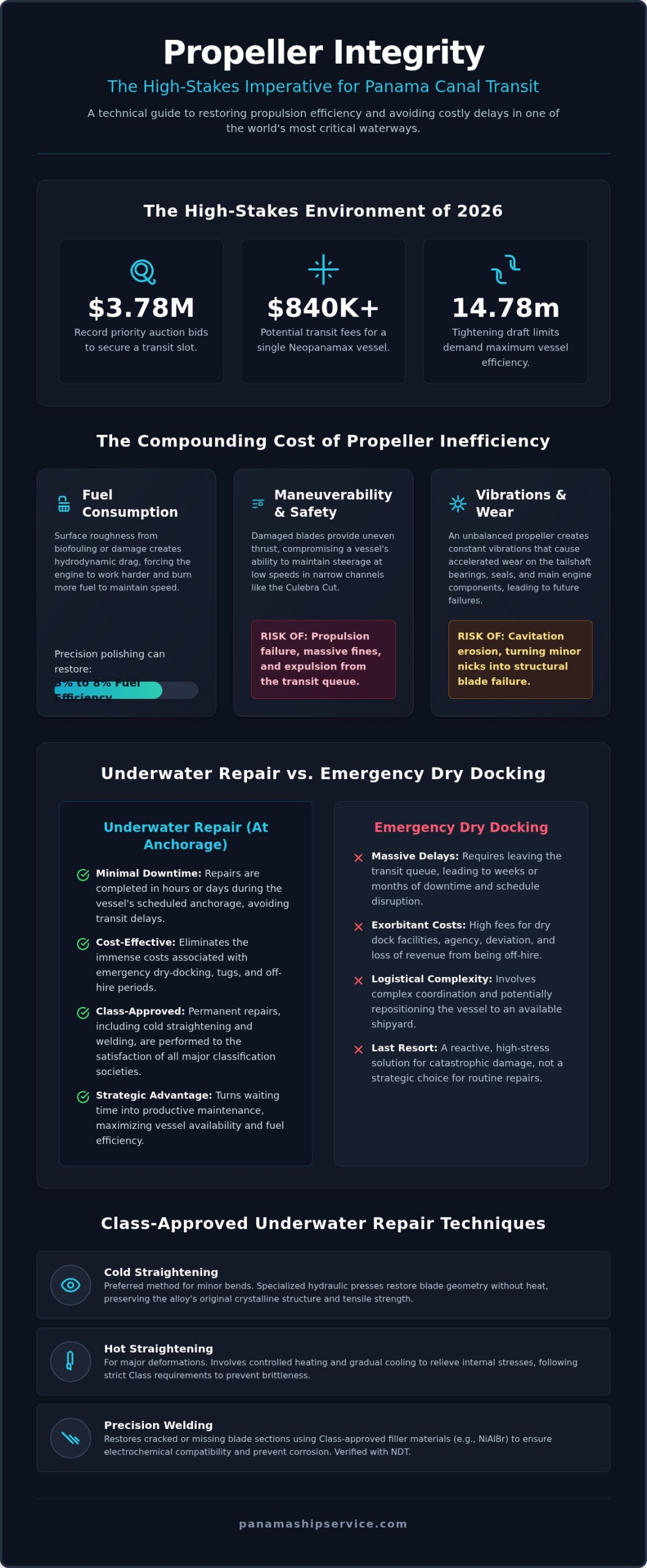
This guide provides a comprehensive technical roadmap for ship owners to restore propulsion efficiency and obtain Class-approved documentation without the high cost of emergency dry docking. We’ll examine the latest in-situ repair technologies, such as underwater cold straightening and precision polishing, that keep your fleet moving through the canal efficiently. By addressing damage during your transit window, you can minimize downtime and ensure your vessel meets strict regulatory requirements while optimizing your fuel consumption for the journey ahead.
Key Takeaways
- Learn how maintaining precise blade geometry and surface smoothness is critical for the maneuverability required during high-stakes Panama Canal transits.
- Discover specialized technical methods for ship propeller repair panama, including Class-approved cold straightening and edge welding performed while at anchorage.
- Understand the strategic economic advantages of in-situ underwater repairs compared to the high costs and scheduling delays of emergency dry docking.
- Navigate the complex logistics of obtaining Panama Canal Authority permits and securing essential Class approval for permanent underwater repairs.
- Identify how consolidating propeller maintenance with other underwater hull services can maximize your vessel’s fuel efficiency and minimize transit downtime.
The Critical Impact of Propeller Integrity on Panama Canal Operations
Propeller integrity is the baseline for operational safety and fiscal responsibility. It refers to the preservation of the original blade geometry and surface smoothness required to generate optimal thrust. Any deviation from the intended propeller design and function leads to immediate performance degradation. In the high-stakes environment of the Panama Canal, where transit fees for a Neopanamax vessel can exceed $840,000, even a 1% loss in efficiency represents a significant financial drain. Propeller-induced vibrations are a primary concern; they don’t just reduce speed but cause accelerated wear on tailshaft bearings and engine components. Neglecting ship propeller repair panama before entering the locks can turn minor edge nicks into structural failures through the relentless force of cavitation.
Fuel Efficiency and the “Roughness” Factor
Surface condition is technically measured using the Rupert scale. As a propeller ages or accumulates biofouling, its surface roughness increases. Calcium deposits and marine growth create hydrodynamic drag that forces the main engine to consume more fuel to maintain steerage. Professional underwater hull services include precision polishing that typically restores fuel efficiency by 3% to 8%. In 2026, with major carriers implementing canal adjustment factors of $500 per TEU, these savings are essential for maintaining competitive operating margins. Regular polishing at anchorage ensures your vessel operates at its designed fuel-to-knot ratio throughout the transit.
Maneuverability in the Locks and Channels
Navigating the narrow channels of the Culebra Cut requires absolute propulsion precision. Vessels must maintain “steerage way” while moving at low speeds, often under 5 knots. If a damaged or fouled propeller cannot provide responsive, symmetrical thrust, the ship’s maneuverability is compromised. The Panama Canal Authority maintains strict standards for vessel performance during transit. A propulsion failure within the locks or near the gates leads to massive fines, emergency tugboat surcharges, and potential expulsion from the transit queue. You can’t afford a mechanical delay when auction bids for priority passage have reached record highs. Ensuring your propeller is in peak condition is the only way to guarantee a safe, predictable transit through the waterway’s complex lock systems.
Technical Methods for Ship Propeller Repair in Panama
Technical precision is non-negotiable when addressing propulsion defects in a high-traffic hub. When a vessel strikes a submerged object or experiences cavitation erosion, the solution must be permanent and Class-approved. Modern repair facilities in Panama utilize specialized hydraulic equipment to restore blade geometry while adhering to Panama Canal Authority regulations. These methods prioritize the structural integrity of the metal, ensuring the propeller can withstand the intense torque of canal transits without risk of fracture. Relying on proven engineering standards prevents the need for costly, repetitive interventions during your journey.
Cold vs. Hot Straightening Techniques
Cold straightening is the preferred method for minor bends near the blade tips. It’s efficient and avoids the risk of altering the alloy’s crystalline structure with heat. However, major deformations often require hot straightening. This technical process involves controlled heating to specific temperatures followed by gradual cooling to relieve internal stresses. Every hot repair must follow Class-specific requirements for heat treatment to prevent brittleness. Technicians monitor these temperatures meticulously to ensure the blade retains its original tensile strength and fatigue resistance.
Precision Welding and Material Matching
Restoring blades with deep cracks or missing sections requires expert welding. When performing ship propeller repair panama, technicians use only Class-approved filler materials that match the original copper-based alloys, such as Nickel-Aluminum Bronze (NiAlBr). This ensures electrochemical compatibility and prevents galvanic corrosion. After welding, non-destructive testing (NDT) is mandatory. We employ dye penetrant inspection to verify the absence of surface porosity or micro-cracks. These steps are critical to meet ABS or DNV technical standards before the vessel is cleared for transit.
Properly addressing cavitation is just as vital for long-term performance. Restoring the blade profile to its original hydrodynamic form prevents future erosion and noise. Once repairs are complete, static or dynamic balancing is performed to eliminate vibrations that could damage the propulsion train. If you’re facing mechanical issues before your transit window, consulting with a specialist in mechanical ship repairs can prevent a minor defect from becoming a total propulsion failure.
Underwater Propeller Repair vs. Dry Docking: A Strategic Comparison
Deciding between in-situ repair and dry docking is a high-stakes operational choice for vessel managers. In Panama, the anchorage provides a unique opportunity to address propulsion defects without deviating from a rigid transit schedule. In-situ ship propeller repair panama offers a decisive economic advantage by eliminating the heavy daily fees of a dry dock facility and the associated loss of charter revenue. While a standard dry docking stay typically spans 1 to 2 weeks, most underwater repairs are executed within a 24 to 48-hour window. This speed is critical in 2026, as vessel backlogs at the canal have increased and every hour of downtime compounds financial losses.
The In-Situ Repair Process
Technical teams utilize specialized hydraulic tools and portable underwater habitats to perform ship propeller repair panama directly at the anchorage. This process includes underwater propeller polishing to Rubert Grade A standards, ensuring the blade surface is as smooth as possible to maximize thrust. Ship owners and operators maintain full control through real-time video monitoring, allowing for immediate inspection of the repair quality. This transparency builds trust and ensures that the technical specifications are met without the ship ever leaving the water. It is the most efficient method for addressing edge damage or biofouling during a scheduled stop.
When to Opt for Dry Docking in Balboa
Underwater interventions cannot solve every mechanical crisis. Major structural cracks penetrating the blade root or requiring complete blade replacement usually demand a dry dock environment. If the damage is so severe that Class surveyors cannot issue a permanent certification for an in-water fix, moving to a shipyard in Balboa or Cristobal is unavoidable. Dry docking is also the strategic choice when you need to combine propeller work with comprehensive mechanical ship repairs that involve the rudder, tailshaft, or hull coating. Regulatory mandates from the Panama Canal Authority often require these out-of-water repairs for vessels with compromised structural integrity to ensure safe passage through the lock systems.
Operators must weigh the immediate savings of an underwater repair against the long-term necessity of a full yard stay. For most transit-related issues, the in-situ approach provides the highest return on investment by keeping the vessel in the water and on schedule. This proactive strategy ensures your propulsion system is optimized before you face the demanding conditions of the canal’s lock operations.
Logistics and Class Approval for Repairs in Panama
Managing a technical repair in a high-traffic zone like the Panama Canal requires more than just engineering skill. It demands a sophisticated understanding of local logistics and international certification standards. Whether your vessel is stationed in Balboa on the Pacific side or Cristobal on the Atlantic side, the coordination between your repair team and port authorities is what prevents a minor mechanical issue from becoming a week-long transit delay. Documentation is the backbone of this process. Every step of the ship propeller repair panama must be meticulously recorded in the vessel’s technical file to maintain Class standing and satisfy the Panama Canal Authority (ACP).
Navigating ACP Regulations
The ACP enforces strict protocols for any mechanical work conducted at anchorage. To avoid losing your reserved transit slot, you’ve got to obtain specific repair permits well in advance. These permits aren’t just formalities; they ensure that repair activities don’t interfere with the complex scheduling of canal traffic. Safety remains the absolute priority. All operations must adhere to established protocols to prevent accidents in the busy anchorage zones. Environmental compliance is equally critical. In 2026, the ACP has increased oversight on underwater activities to prevent local water contamination. Our teams ensure that all polishing and cleaning residues are managed according to MARPOL standards and local environmental laws, protecting both the waterway and your vessel’s reputation.
Securing Class Approval
Technical repairs are only valid if they carry the weight of official certification. Before any physical work begins, a pre-repair inspection is conducted to document the exact extent of the damage. This report is shared with Class surveyors from organizations like ABS, DNV, or Lloyd’s to verify and approve the proposed repair procedure. Once the work is completed, the surveyor issues a “Statement of Compliance.” This document is essential for your vessel’s insurance and regulatory records. This process often integrates with broader marine surveys in Panama to ensure the entire propulsion system is fit for service before you enter the locks. Don’t leave your transit to chance; you can contact us today to coordinate your ship propeller repair and ensure full compliance with all maritime authorities.
Logistical differences between Balboa and Cristobal can also impact your repair timeline. Balboa often handles larger Neopanamax vessels, while Cristobal serves as a critical hub for Atlantic-bound traffic. Choosing the right anchorage for your specific needs depends on your next port of call and the current vessel backlog. Having a partner who understands the nuances of both ports ensures that your repair is completed efficiently, regardless of which side of the canal you’re on. This proactive logistical planning is the only way to navigate the high-pressure environment of the Panama Canal without suffering unnecessary downtime.
Panama Ship Service: Your Partner for Efficient Propeller Solutions
Panama Ship Service operates as a consolidated solution provider at the heart of the world’s most critical maritime hub. We specialize in high-stakes ship propeller repair panama, ensuring that vessel operators don’t have to manage multiple contractors during a time-sensitive transit window. Our teams deliver expert mechanical and underwater services at both Balboa and Cristobal anchorages. By centralizing your technical requirements, you reduce administrative overhead and eliminate the risk of miscommunication between different service providers. We focus on restoring your vessel’s propulsion efficiency while your ship remains at anchorage, preventing the need for costly deviations. Our veterans understand the nuances of canal operations, providing a calm, expert presence in a high-pressure environment.
Consolidated Technical Services
Managing a vessel’s schedule requires precision. Our “one-stop-shop” approach allows you to combine ship propeller repair panama with comprehensive underwater hull services. For example, while our divers perform precision propeller polishing, we can simultaneously coordinate MARPOL disposal services. This consolidated strategy reduces the number of vendors on your administrative list. It also streamlines the permitting process with the Panama Canal Authority. We have a proven track record with major international shipping lines, providing the reliability needed to handle complex technical tasks under tight deadlines. This systematic approach ensures that all Class documentation is handled through a single, accountable partner.
Emergency Response and Rapid Mobilization
Timing is the most valuable currency at the Panama Canal. In 2026, where priority passage auctions reach record levels, a single day of delay is unacceptable. We maintain 24/7 availability to meet the demanding schedules of canal transits. Our dive teams and technical specialists can mobilize within hours of a vessel’s arrival at the anchorage. We strategically locate our specialized equipment near all major ports to ensure rapid deployment. Whether you’ve discovered a bent blade tip or require an urgent NDT inspection, our response is immediate and systematic. Our goal is to minimize your operational overhead by delivering right-first-time solutions. You can contact Panama Ship Service for an immediate propeller repair quote to secure your transit schedule and protect your vessel’s performance.
Securing Your Vessel’s Performance for the Next Transit
Maintaining peak propulsion is a strategic necessity in the high-stakes environment of the 2026 Panama Canal. You’ve seen how minor blade damage leads to increased fuel consumption and risks costly canal fines. By prioritizing ship propeller repair panama while at anchorage, you can avoid the excessive downtime and overhead of emergency dry docking. Our Class-approved underwater and mechanical repair teams provide the technical expertise needed to restore your vessel’s efficiency quickly. We offer 24/7 technical support for Panama Canal transits across both Balboa and Cristobal ports. This specialized coverage ensures your ship meets all regulatory requirements without sacrificing your transit schedule. You can delegate the technical complexity to a partner that understands the urgency of global shipping. Request an Emergency Propeller Repair Quote in Panama to ensure your fleet remains operational and efficient. We are ready to support your transit with reliable, professional service.
Frequently Asked Questions
Can propeller repairs be performed while the ship is at anchorage in Panama?
Yes, the majority of ship propeller repair panama operations are conducted while the vessel is at anchorage in either Balboa or Cristobal. This approach allows ship owners to address mechanical defects without the need for a dry dock stay. Our dive teams use specialized hydraulic tools to perform blade straightening and edge repairs directly in the water. This ensures your vessel remains on schedule for its assigned Panama Canal transit slot while restoring propulsion integrity.
How long does a typical underwater propeller polishing take in Panama?
A standard underwater propeller polishing typically requires between 24 and 48 hours to complete. The exact duration depends on the propeller’s diameter and the severity of biofouling or calcium deposits. Performing this service at anchorage is an efficient way to restore the blade surface to a Rubert Grade A finish. This timeline is designed to fit within the typical waiting window for canal transits, ensuring no additional downtime for the operator.
Is it possible to weld a cracked propeller blade underwater?
It is technically possible to weld cracked blades underwater using specialized wet welding techniques or portable habitats. However, the viability of an underwater weld depends on the depth and location of the crack. Class surveyors must approve the specific welding procedure and filler materials, such as Nickel-Aluminum Bronze, to ensure structural integrity. If the damage is too severe for an in-water fix, the vessel may need to move to a shipyard for permanent restoration.
What Class approvals are required for propeller repairs at the Panama Canal?
Propeller repairs at the Panama Canal must be approved by major classification societies such as ABS, DNV, or Lloyd’s Register. These organizations verify that the repair methods and materials meet international maritime safety standards. Our team coordinates directly with Class surveyors to perform pre-repair inspections and post-repair assessments. Obtaining a Statement of Compliance is mandatory for the vessel’s technical file and ensures the Panama Canal Authority permits the ship to proceed through the locks.
How much fuel can I save by polishing my propeller before a canal transit?
Polishing a fouled propeller typically results in fuel savings of 3% to 8%. The exact reduction in consumption depends on the initial roughness of the blades and the vessel’s operating speed. By restoring the surface to a smooth finish, you reduce hydrodynamic drag and engine load. In 2026, with rising transit surcharges and fuel costs, these savings provide a high return on investment for any operator preparing for a long-haul journey after their canal transit.
What happens if propeller damage is discovered during a Panama Canal inspection?
If the Panama Canal Authority discovers propeller damage during a routine inspection, the vessel may face transit delays or mandatory repair requirements. The authority prioritizes safety and maneuverability within the locks, so compromised propulsion is a major liability. You’ll need to conduct an immediate underwater inspection to assess the damage. Repairs must be completed and certified by a Class surveyor before the vessel is cleared to resume its position in the transit queue.
Does Panama Ship Service provide Class-approved reports for propeller inspections?
Yes, Panama Ship Service provides comprehensive Class-approved reports for all propeller inspections and repairs. We utilize high-resolution video monitoring and photography to document the condition of the blades before and after the service. These technical surveys are essential for meeting the requirements of international classification societies and the canal authority. Our documentation provides a clear audit trail for your vessel’s technical file, ensuring full compliance with maritime regulations and insurance mandates.
Can you repair propellers for both container ships and tankers?
We provide ship propeller repair panama services for a wide range of vessel types, including Neopanamax container ships, bulkers, and tankers. Each vessel type has unique propulsion dynamics, and our technicians are experienced in handling the specific alloys and blade geometries of diverse fleets. Whether your ship is a large laden bulker or a loaded container vessel, we have the hydraulic equipment and dive teams necessary to perform precise repairs at anchorage.