
Can a steering fault be assessed and repaired in Panama without unnecessary disruption to a Canal call? Start with a clear account of the symptoms, the system’s condition, and the vessel’s schedule. For ship steering gear repair panama, timing matters: the Panama Canal Authority requires steering systems to be operational, and deficiencies that could affect maneuverability must be reported in advance.
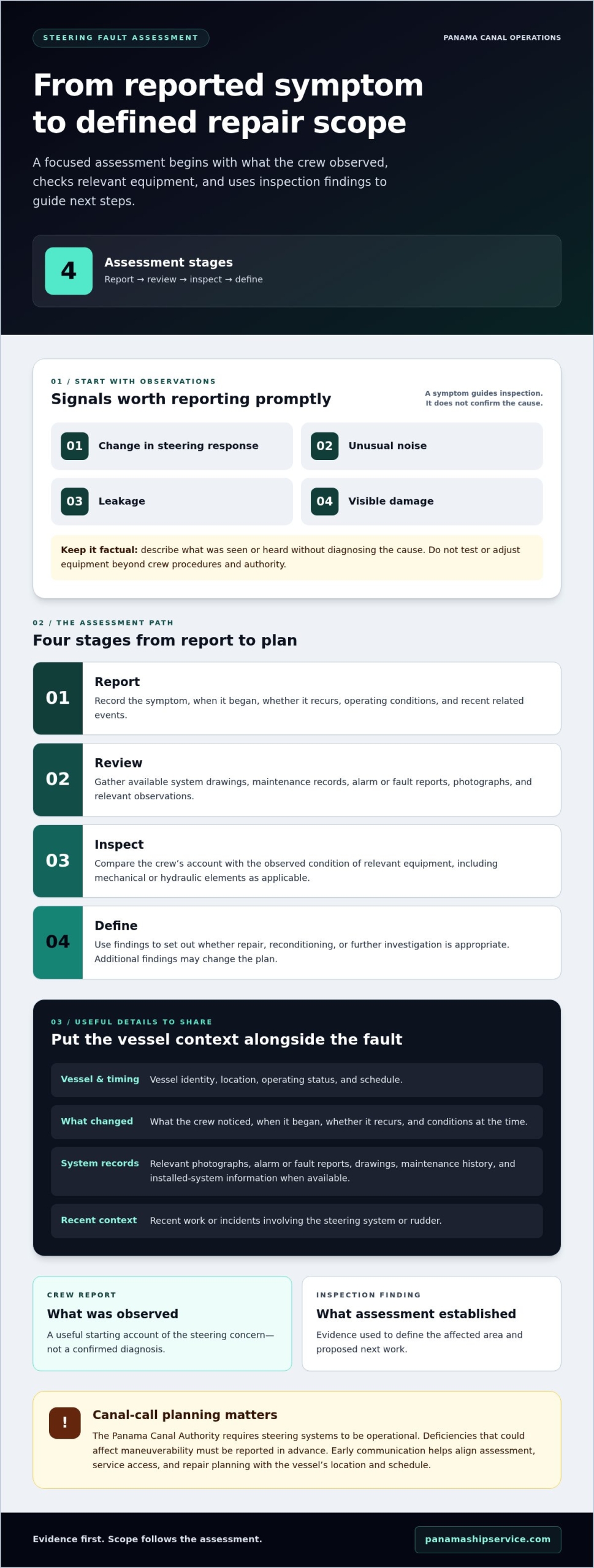
Early coordination helps the vessel team and repair personnel plan around what is known. Symptoms alone rarely define the full repair scope, so the next steps depend on the assessment and the vessel’s call. This guide covers warning signs that warrant prompt attention, how findings inform repair decisions, and what details help align the work with onboard operations. Panama Ship Service provides mechanical ship repairs at the Canal, including rudder repairs, and can coordinate related vessel services when they fit the job. A clear report helps move the process from a suspected fault to a focused assessment and repair plan.
Key Takeaways
- Record symptoms and relevant system information so the assessment can start with the vessel’s observations, not guesswork.
- Distinguish rudder concerns from steering gear concerns, while leaving the repair scope to inspection findings.
- For ship steering gear repair panama, align planning with the vessel’s schedule, location, access, and reported condition.
- Use inspection findings to define next steps and coordinate agreed work around vessel operations.
- Panama Ship Service provides mechanical ship repairs at the Canal, including rudder repairs relevant to steering-related needs.
Ship Steering Gear Repair in Panama: Why Early Assessment Matters
Steering gear is the equipment that enables a vessel to change and maintain its direction under control. It works with the rudder, but a change in steering response does not identify which part of the system is responsible. Reliable steering supports routine course adjustments and safe maneuvering, particularly in confined or busy waters.
Steering gear repair addresses faults in the equipment used to control a vessel’s direction and support its maneuvering. The right work depends on an assessment, not a diagnosis based on one symptom. Report concerns promptly so the vessel’s team and repair personnel can establish what happened before deciding what needs attention.
Which steering or rudder symptoms should prompt assessment?
Report a change in response, unusual noise, leakage, or visible damage promptly. A steering response that feels different from normal is useful information, but it does not prove that the steering gear itself has failed. Connected equipment and operating conditions may also matter, so use symptoms to guide inspection rather than treating them as a diagnosis.
Make the report more useful by recording:
- What changed and when the symptom first appeared.
- Whether it occurs continuously or under particular operating conditions.
- Any visible leakage or damage, described without attempting to diagnose the cause.
- Recent related incidents and relevant onboard records or alarm indications, if available.
Clear observations help focus the assessment on what the vessel has experienced. Do not test or adjust equipment beyond the crew’s procedures and authority. Preserve the information needed for a proper inspection.
Why can a steering issue affect a Panama Canal call?
Maneuverability affects a vessel’s ability to carry out planned operations. If steering performance is uncertain, the operator may need to understand the condition and repair scope before coordinating vessel movements, service access, and the Panama Canal call. The operational impact depends on the reported condition and the vessel’s circumstances. Early communication helps identify what needs assessment and which planning decisions remain open.
Share the symptom description, vessel location and schedule, and relevant records with the team coordinating repair support. This gives the assessment a practical starting point and helps align technical planning with vessel operations. Panama Ship Service provides mechanical ship repairs at the Canal, including rudder repairs when findings point to rudder work. For ship steering gear repair panama, early reporting supports a focused assessment without assuming the cause or scope.
How Steering Gear Faults Are Assessed Before Repair
A useful repair plan follows the evidence: report the symptoms, review vessel and system information, inspect the relevant equipment, then define the scope. This keeps a brief description such as “slow response” from being mistaken for a confirmed diagnosis. A reported symptom describes what the crew observed; an inspection finding identifies what the assessment established.
For ship steering gear repair panama, clear information at the outset helps focus the technical discussion and coordinate an assessment with vessel operations. It does not replace inspection. Repair decisions should reflect the equipment’s observed condition and the vessel’s applicable technical documentation.
What information helps the repair team assess the issue?
Start with the vessel’s identity, location, operating status, and schedule. Describe what the crew noticed, when it began, whether it recurs, and the conditions at the time. Include relevant photographs, alarm or fault reports, and recent observations when available. Concise, accurate details help the team understand the concern and plan a focused inspection without treating initial observations as a diagnosis.
Gather system drawings, maintenance records, and documents identifying the installed arrangement, if available. Note recent work or incidents involving the steering system or rudder. Keep observations factual: separate what was seen or heard from what someone suspects may be wrong. This makes it easier to compare the reported behavior with the equipment examined.
How inspection findings shape the repair scope
Inspection compares the reported concern with the condition of relevant equipment, which may include mechanical or hydraulic elements depending on the system. Findings help determine whether repair, reconditioning, or further investigation is appropriate. The scope should identify the affected area and proposed next work, while allowing for additional findings to change the plan.
Technical procedures and acceptance criteria vary by vessel and installed system. Drawings, maintenance history, and applicable vessel documentation can shape the assessment and work planning. Any class, approval, or testing requirements should be verified for the specific case rather than assumed. A clear summary of findings gives operators a practical basis for reviewing the proposed scope and coordinating next steps.
- Report: Record the symptom, timing, operating conditions, and recent related events.
- Review: Gather available drawings, maintenance records, and relevant reports.
- Inspect: Compare the account with the condition of the relevant equipment.
- Define: Use findings to set out repair, reconditioning, or further investigation options.
Assessment also takes place within the vessel’s local operating context. The U.S. Department of State’s Panama country profile provides broader background on Panama, while repair planning must be based on the vessel’s technical findings and schedule. Panama Ship Service provides mechanical ship repairs at the Canal, including rudder repairs. For a coordinated discussion of a steering-related repair need, Panama ship repair support can be part of the planning process.
Rudder Repair or Steering Gear Repair: How the Scope Differs
Steering gear and rudder work are closely related, but they address different parts of directional control. The steering gear is the machinery and associated equipment that moves the rudder or otherwise actuates steering. The rudder is the external surface that redirects water flow to help turn the vessel. A steering complaint can involve either area or both, so the reported symptom alone does not establish the repair scope.
Use this distinction as a starting point, not a diagnosis. For ship steering gear repair panama, inspection findings help identify which area needs attention and whether work should address one component or connected parts of the system.
| Area | Function | Reported concern | Assessment focus |
|---|---|---|---|
| Steering gear | Actuates directional control. | Changed response, unusual noise, or leakage near relevant equipment. | Condition of the machinery and associated components, guided by the vessel’s system arrangement. |
| Rudder assembly | Directs water flow to help change the vessel’s course. | Visible damage or a concern noted during operation or inspection. | Condition of the rudder and the reported area of concern. |
| Connected system | Transfers steering action to directional movement. | Symptoms that could relate to more than one area. | Inspection to distinguish the affected scope and any related work. |
What falls within steering gear repair?
Steering gear repair addresses machinery and associated components involved in actuating directional control. Equipment arrangements vary by vessel, so a concern such as leakage or irregular response should prompt assessment rather than an assumption about a specific part. Inspection findings, considered alongside system information, determine which components need attention and whether related areas also need review.
When does the repair involve the rudder assembly?
The rudder acts in the water to help direct the vessel; the steering gear provides the movement that controls it. Visible or reported rudder damage needs appropriate technical assessment, even when steering symptoms are also present. Panama Ship Service includes rudder repairs within its mechanical ship repairs at the Canal. Its mechanical ship repairs guide provides broader context for repair work.
Overlapping symptoms make the distinction important. A change in steering response does not prove that the gear has failed, and visible rudder damage does not show by itself whether connected equipment is affected. Inspection helps establish the relevant work area and whether the proposed scope should include one or both.
Repair decisions can also differ. A finding may support repair of an affected area, reconditioning where appropriate, or further investigation before the work is defined. Replacement is not automatic, nor can it be ruled out before the condition is understood. The practical decision depends on inspection results, vessel-specific equipment, and applicable technical requirements.
Operators can help focus the assessment by sharing the location of visible damage and describing the steering behavior that prompted concern. Keep the reported observation separate from a suspected cause. Distinguishing rudder and gear concerns makes planning more precise and helps align work with vessel operations.
Planning Steering Gear Repair Around Panama Canal Operations
Repair planning involves more than the suspected fault. The vessel’s schedule, location, access to the affected area, reported condition, and available technical information all shape how an assessment can be coordinated. For ship steering gear repair panama, early updates help the people managing the vessel and repair work make decisions from the same information.
Scope and timing depend on inspection findings and the vessel’s operating circumstances. An initial discussion can identify information or access that may be needed, but the full work plan depends on assessing the equipment. Keep the schedule visible as it changes, and share updates when the vessel’s position, call details, or condition changes.
What should operators prepare before coordinating the work?
Prepare a concise handover with the vessel’s identity, current position or call details, operating status, reported symptoms, and relevant technical documents. Summarize access conditions and operational constraints that could affect the assessment. Identify one vessel contact responsible for technical decisions and updates so information and questions have a clear route.
- Vessel and call: Share particulars, location, schedule, and relevant operational milestones.
- Condition: Describe symptoms and when or under what conditions they occur.
- Technical information: Gather available system drawings, maintenance records, photographs, and reports.
- Access and communication: Note practical access constraints and provide the responsible vessel contact’s details.
How does coordinated planning help limit disruption?
Clear communication reduces avoidable information gaps. A shared summary helps vessel personnel, technical teams, and relevant operational contacts understand what has been reported, what assessment is planned, and which decisions remain open. It can also reduce duplicate requests for the same information. Keep observations, inspection findings, and agreed actions distinct in updates so preliminary reports are not mistaken for a confirmed scope.
Use inspection findings to update the plan rather than treating an initial schedule as a commitment. If other repair or service needs emerge, consider them as separate planning items and discuss whether they are relevant to the vessel’s requirements. They do not automatically belong in the steering repair scope. Panama Ship Service provides mechanical ship repairs at the Canal, including rudder and propeller repairs, supporting coordinated planning when those needs are relevant.
For a broader view of scheduling considerations, the guide to minimizing vessel downtime explains how repair planning fits into vessel operations. Keep the assessment status, required access, open technical questions, and next decision point visible to the team. This gives operators a practical basis for aligning plans with changing call details without assuming the work will fit a particular transit window.
Share the vessel’s situation with Panama Ship Service to coordinate steering repair support around the relevant operational details.
Arrange Ship Steering Gear Repair Support in Panama
Once a steering concern has been reported, follow a clear sequence: share the vessel situation, arrange an assessment, review the findings, and coordinate the agreed work. This gives the repair team a practical starting point while keeping the vessel’s operating schedule in view. It also separates confirmed findings from the initial description of the fault.
What to include when requesting steering repair support
Start with the vessel name, current location or Panama call context, and a concise description of what the crew observed. Include when the concern began and any conditions associated with it. Share available photographs, system records, and technical documents, along with the schedule relevant to assessment. Note known safety or access constraints, and identify the vessel contact responsible for technical decisions and updates.
- Vessel and location: Provide the vessel name, position, and call details.
- Reported concern: Describe the observed change without treating a suspected cause as a confirmed diagnosis.
- Supporting information: Attach relevant available photographs, records, and reports.
- Coordination details: Share the schedule, access considerations, and appropriate vessel contact.
A concise, factual request helps focus the initial discussion. If some information is not immediately available, state what is known and what assessment still needs to establish. Share updates as inspection findings and next steps become available.
How Panama Ship Service supports vessel repair coordination
Panama Ship Service provides mechanical ship repairs at the Panama Canal, including rudder repairs. These services are relevant when assessment identifies mechanical or rudder work within the agreed scope. Repair planning can be coordinated around the vessel’s situation, access requirements, and operating schedule, with the work defined by findings rather than assumptions about the fault.
Keep related services tied to actual vessel needs. If the situation also calls for a marine survey or underwater inspection, those requirements can be included in broader coordination; they are not automatic additions to steering repair. A single operational contact for relevant vessel services can help keep information and planning aligned, while technical assessment determines the repair scope.
For ship steering gear repair panama, provide the vessel details, symptom summary, available records, and schedule context. Assessment establishes what needs attention; operators can then review findings and coordinate the agreed work with the people responsible for vessel operations.
Prepare the details above and discuss steering gear repair support with Panama Ship Service.
Make the Next Repair Decision Clear
A steering concern can create uncertainty before the full scope is known. Turn that uncertainty into a clear decision process: identify who will review the findings, who will approve the proposed work, and how updates will reach the vessel’s operations team. This keeps technical decisions connected to the vessel’s changing schedule instead of relying on an early assumption.
For ship steering gear repair panama, treat the assessment as the point where vessel observations become a basis for planning. Keep relevant records together and make sure the people coordinating the call can see the latest status. If new findings change the proposed work or access needs, update the plan before the next operational decision.
Panama Ship Service can support repair coordination with vessel-specific planning. Discuss repair planning for your vessel and take the next step with a clear account of the concern and its operating context.
Frequently Asked Questions
What are the common signs of a ship steering gear problem?
Common warning signs include a change in steering response, unusual noise, leakage, or visible damage. Note whether the issue is intermittent or persistent and whether it occurs alongside an alarm or another change in system behavior. Do not deliberately recreate a concerning symptom to gather more information. Record what the crew observed and report it for assessment.
Can a vessel continue operating with a steering gear fault?
Whether a vessel can continue operating depends on the nature and severity of the fault, so a general answer is not safe. Treat any suspected steering problem as a matter for prompt review by the master and the vessel’s responsible technical personnel. Follow onboard safety procedures and relevant operational instructions. Do not assume continued operation is acceptable simply because the system still responds.
What is the difference between rudder repair and steering gear repair?
Steering gear repair concerns equipment that actuates directional control; rudder repair concerns the assembly that acts in the water to help turn the vessel. A reported steering issue may involve one area or connected parts of both. Visible rudder damage warrants assessment of that assembly, while a change in response alone does not establish where the fault lies. Findings define the work scope.
How is a ship steering gear fault assessed before repair?
Assessment begins with the crew’s account and available vessel records, then proceeds to inspection of the relevant equipment. The team compares observed conditions with the reported behavior and system information before recommending a scope. If the evidence does not explain the symptom, further investigation may be needed. Keep the initial report factual, separating what was observed from any suspected cause.
Can steering gear repairs be coordinated during a Panama Canal call?
Repair coordination can be discussed around a Panama Canal call, but whether work can proceed during that call depends on the vessel’s location, access, operating circumstances, and assessment findings. Share updates if the schedule or vessel condition changes, and keep relevant operational contacts informed. Coordination supports planning, but it is not a promise that work will finish within a transit window.
What information should I provide when requesting ship steering gear repair in Panama?
For ship steering gear repair panama, provide the vessel name, current location or call context, a concise description of the concern, and when it was observed. Add the operating conditions, relevant records or photographs, schedule details, and any known access or safety constraints. Identify the vessel contact responsible for technical decisions. A short, factual report makes the initial discussion more focused.
Does steering gear repair always require replacing components?
No. Replacement is not automatic. Depending on the equipment’s condition and inspection findings, the appropriate next step may be repair, reconditioning, or further investigation. The vessel’s system information and applicable technical requirements also inform the decision. Ask for a proposed scope that distinguishes confirmed defects from items still under review, so the vessel team can make decisions based on findings rather than assumptions.