
A vessel’s location shapes the repair plan as much as the equipment fault does. Shipboard equipment repair in Panama can be arranged for vessels afloat or at anchorage on either coast, with the work planned around the equipment, access and operating situation. Ship repair contractors in Panama may handle maintenance, alterations, conversions, installations, cleaning, painting and related work.
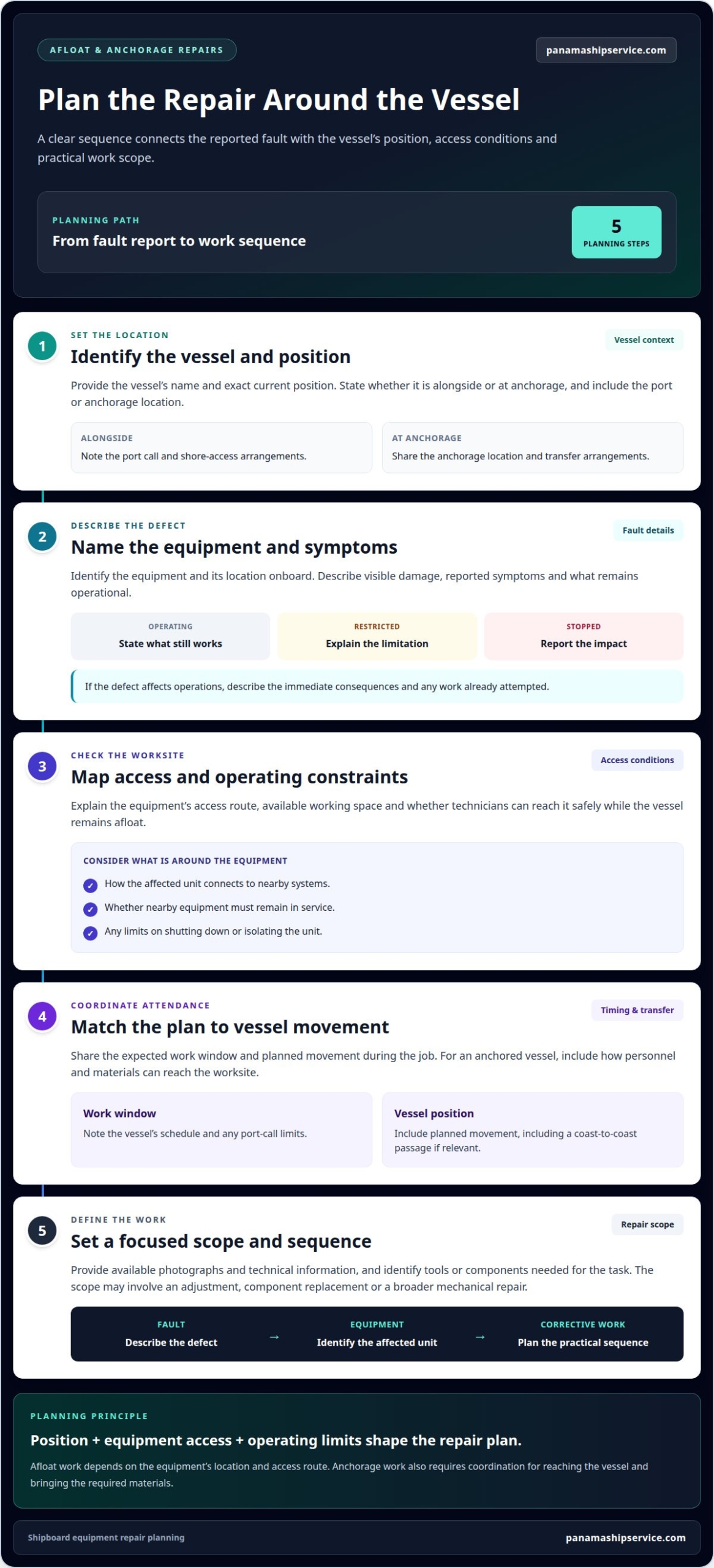
When a defect affects operations, timing and access matter. The right repair approach depends on what has failed and whether technicians can safely reach the equipment while the vessel remains afloat. This article explains how to plan repairs in different situations, what can affect the work and how to turn a reported fault into a practical repair request. It also covers how mechanical ship repairs and related marine services support vessels in Panama.
Key Takeaways
- Match the repair approach to the vessel’s condition, equipment fault and operating situation.
- For damage or an urgent fault, clear information about the symptoms and affected equipment helps define the repair scope.
- At anchor or alongside, access to the work area and the vessel’s operating constraints shape how repairs are planned.
- Mechanical ship repairs address onboard equipment, while underwater hull services are relevant to work below the waterline.
Repairs for vessels in different operating situations
For onboard equipment repairs in Panama, identify the vessel, its location, the affected equipment and the proposed work. Requirements depend on the vessel and task, so consider them alongside the repair scope and port location before work begins.
Equipment Service Scope
Panama Ship Service handles equipment work including maintenance, alterations, conversions and installations. The repair scope depends on the fault, the work required and access to the affected system. Name the equipment, describe its symptoms and share any available technical details. This helps define whether the job calls for an adjustment, component replacement or a wider alteration.
A fault in an onboard mechanical system, for example, needs a different scope from an installation required during a conversion. Planning should also account for the vessel’s operating condition and whether the equipment can be reached while the vessel remains afloat. A clear scope helps keep the work focused on the repair required.
Port Repair Arrangements
To arrange a repair while a vessel is in port, send the vessel’s name and current position, identify the equipment and describe the fault. Include relevant photographs or technical information when available. This lets the team consider the vessel’s schedule, access conditions and required work, rather than relying on a general request for assistance.
State whether the vessel is alongside or at anchorage, and note any access limits or restrictions on equipment operation. These details help determine the practical work sequence and whether the task fits the port call. If the defect affects operations, describe its symptoms and consequences clearly so the repair plan addresses the immediate problem.
Conversion projects need a broader view than an isolated equipment fault. Alterations and installations can affect the sequence of work across the vessel, so define the intended change and identify the equipment involved. The repair scope can then fit within the conversion instead of treating each item as a separate fault.
Vessel type also shapes access and repair planning. A cargo vessel preparing for transit, for example, may have different equipment priorities and work windows from a vessel undergoing conversion in port. Shipboard equipment repair in Panama should therefore be planned around the vessel’s actual situation, not a standard checklist.
Damage and emergency repairs
After equipment damage, establish what failed, what remains operational and whether the vessel can continue its planned activity. A damaged pump, for example, may affect a different onboard operation from a fault in a deck mechanism. Describe visible damage and symptoms clearly to help define the repair scope in a Panama port.
Repair time in Panama ports depends on the fault, access to the equipment, repair scope and parts required. A straightforward adjustment differs from work requiring component replacement or a broader mechanical repair. These factors determine the work sequence and duration, so the fault description alone cannot establish a reliable completion time.
For an urgent repair request, include:
- Vessel name and current port or anchorage position.
- Equipment name, location onboard and reported symptoms.
- Whether the equipment is operating, restricted or stopped.
- Photographs or available technical details showing the damage.
These details help distinguish an isolated equipment fault from damage affecting connected systems. If a motor stops after water exposure, for example, the inspection scope may differ from that for a motor that has simply stopped working. Clear symptom reporting supports a targeted assessment rather than an assumption about the cause.
For damage affecting vessel operations, state the immediate impact and any work already attempted. Include whether the equipment can be isolated and whether technicians can reach it safely. This gives the repair team practical context to define the work and plan access while the vessel is in port.
Keep the repair sequence focused: describe the defect, identify the affected equipment, then define the required corrective work. For mechanical damage, repair coordination in Panama can help connect the reported fault with a practical scope for the vessel’s situation.
Afloat and anchorage repairs
Repairing equipment while a vessel remains afloat means dry-docking does not have to be the default for every fault. The work plan depends on the equipment’s location, access route and operating state. A technician reaching a machinery space, for example, faces different constraints from one working near an exposed deck fitting. At anchorage, the vessel’s position also affects how personnel, tools and replacement components reach it.
Before attendance, define the work area and explain how the affected equipment connects to surrounding systems. A pump in a confined machinery space may require a different access sequence from a winch on deck. Identify whether nearby equipment must remain in service, and explain any restrictions on shutting down or isolating the unit. These details help shape a practical work sequence.
For an afloat or anchorage job, the repair plan should account for:
- The vessel’s exact position and planned movement during the work.
- The equipment location, access route and available working space.
- Connections to nearby systems and the effect of isolating the unit.
- Tools, components and technical information needed for the task.
At anchorage, coordination matters because the repair team and required materials must reach the vessel. Share the anchorage location, transfer arrangements and expected work window. If a vessel is moving between the Pacific and Caribbean coasts, include its schedule so attendance can be planned around its position.
Work alongside involves different access arrangements. A vessel alongside may have a defined port call and access from shore, while an anchored vessel needs a plan for reaching the worksite by water. In both cases, equipment position and the vessel’s schedule shape the work sequence. For a mechanical repair, a clear description of the unit, symptoms and access conditions helps define the scope before attendance.
Keep the repair focused on the affected system. If a steering-related component is involved, for example, distinguish its symptoms from those of nearby machinery. This helps the team assess the equipment and organize the work around the vessel’s operating conditions.
Shipboard equipment repair services in Panama City and Colón
Panama City and Colón place vessel work on opposite sides of the Panama Canal region. Panama City serves the Pacific side, while Colón is on the Caribbean side. For a vessel calling at either location, the repair plan starts with its berth or anchorage, equipment fault and available work window. A precise location helps organize attendance around the vessel’s position.
The same reported fault can require different arrangements in each port. A vessel alongside may have shore access near the work area, while an anchored vessel needs a plan for reaching it. In either case, identify the affected equipment, symptoms, access route and operating limits. A machinery-space component, for example, requires different access planning from a deck-mounted mechanism.
Keep the repair request specific to the port call. Include:
- Whether the vessel is in Panama City or Colón, and its position.
- The equipment name, location onboard and observed fault.
- Photographs or available technical details for the affected system.
- The vessel’s schedule and any limits on equipment operation.
These details help organize mechanical work without confusing equipment repairs with hull work. A fault in onboard machinery calls for a mechanical repair scope. Damage or an inspection need below the waterline involves a different work area and planning considerations. Describing these needs separately makes the request clearer.
Panama Ship Service handles maintenance, alterations, conversions, installations, cleaning and painting as part of its ship repair services. The task, equipment access and vessel schedule shape the scope. An installation during a port call, for example, needs coordination with the equipment location and other planned work. A conversion may require a broader sequence than an isolated repair.
For a mechanical fault at either port, coordinate mechanical ship repairs around the vessel’s location, equipment and schedule. For underwater work, identify the hull area and inspection or service need separately. These distinctions help direct the request toward the right type of work.
Panama Ship Service: Mechanical Ship Repairs
Panama Ship Service provides Mechanical Ship Repairs for onboard equipment faults, damage and maintenance needs. Use this service when the scope involves shipboard mechanical equipment, whether the vessel is afloat or at anchorage. For a problem below the waterline, Underwater Hull Services address a different work area. Marine Surveys support vessel assessment, while MARPOL Disposal covers disposal needs.
When describing a repair request, include the vessel’s location, affected equipment, reported symptoms and any access constraints. This gives the repair scope useful operational context and distinguishes mechanical work from hull services. Contact Panama Ship Service to discuss your vessel’s repair requirements.
Set the repair scope for the next port call
Use the vessel’s next operational window to turn a reported fault into a defined work request. A concise scope identifies the affected equipment, required outcome, location and constraints on access. This gives the technical discussion a practical starting point, whether the priority is restoring machinery or addressing a separate hull or disposal requirement. It also keeps the intended work clear as plans develop.
Panama Ship Service offers Mechanical Ship Repairs, Underwater Hull Services and MARPOL Disposal. Matching the request to the service keeps the discussion focused on the vessel’s needs. For shipboard equipment repair in Panama, include the vessel’s current position, describe the equipment symptoms and state the required operational outcome. Note any schedule considerations that could affect the work.
When you’re ready to discuss the work scope, contact Panama Ship Service. A clear request is a practical first step toward planning the work and keeping your vessel’s needs in view.
Frequently Asked Questions
Is 24/7 shipboard repair and emergency response available in Panama?
Panama Ship Service lists 24/7 contact availability for vessel enquiries. This means you can contact the company at any time; it doesn’t establish a repair attendance time or completion deadline. For an urgent message, clearly identify the vessel, describe the affected equipment and explain the operational impact. That helps direct the enquiry without implying a guaranteed response or repair outcome.
Which ship repair companies can I contact in Panama, and where can I find their details?
Panama Ship Service handles Mechanical Ship Repairs for vessel equipment needs in Panama. Use the contact options on this site to send an enquiry; no phone number or email address is included here. In your message, identify the vessel and the repair service required, such as mechanical work or a separate underwater hull service, so the request reaches the relevant team.