
A leaking stern tube seal at the entrance of the Panama Canal is more than a mechanical failure; it’s a direct threat to your operational budget. Between the risk of heavy Panama Canal Authority (ACP) fines and the potential for vessel arrest, the pressure to find an immediate solution is immense. You shouldn’t have to face the crippling delays of an unscheduled drydocking just to stop a leak. Expert stern tube seal bonding panama services offer a strategic alternative, providing high-quality repairs while your vessel stays afloat at anchorage.
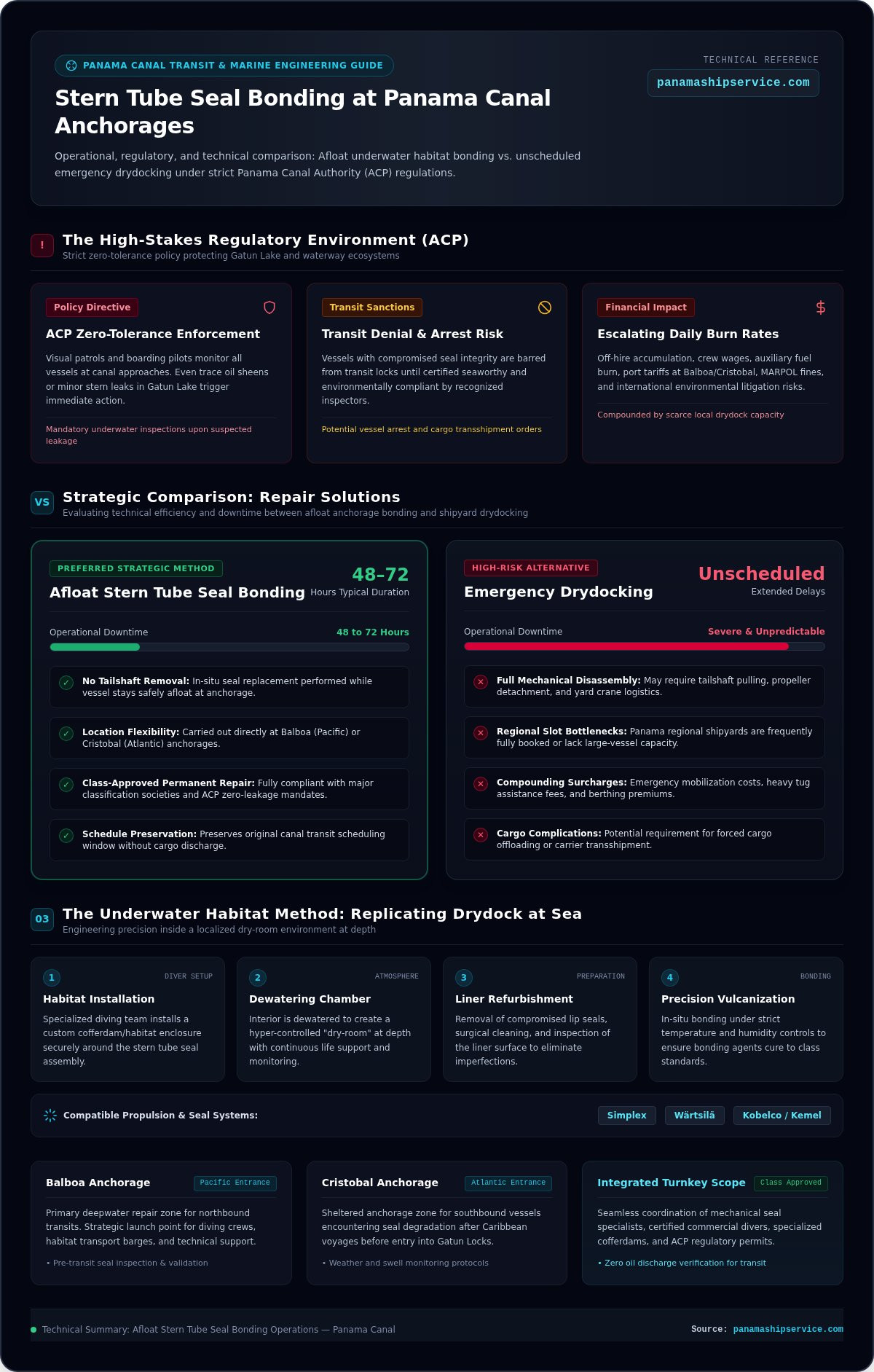
You know that every hour spent off-hire represents a significant loss, especially when navigating the strict environmental regulations of the Canal. This guide explains how specialized underwater bonding techniques deliver a class-approved, permanent repair without the need for a shipyard. We’ll outline the process of restoring seal integrity, ensuring zero oil leakage for your transit, and keeping your original schedule intact. Discover how to delegate this technical complexity to seasoned professionals and bypass the catastrophe of an emergency drydock through efficient, localized expertise.
Key Takeaways
- Understand the ACP’s zero-tolerance policy regarding oil leaks to avoid heavy fines and vessel arrests during your Panama Canal transit.
- Learn how expert stern tube seal bonding panama services utilize underwater habitats to perform permanent, class-approved repairs without removing the tailshaft.
- Compare the strategic advantages of afloat repairs, which typically take 48-72 hours, against the high costs and logistical delays of emergency drydocking.
- Identify the specific operational requirements and weather considerations for performing seal repairs at the Balboa and Cristobal anchorages.
- Discover why a consolidated service provider is essential for managing the mechanical, diving, and regulatory permits required for a seamless repair.
The Critical Risks of Stern Tube Seal Leaks at the Panama Canal
A leaking stern tube seal at the Panama Canal is a high-stakes liability that can halt your operations instantly. The Panama Canal Authority (ACP) maintains a strict “Zero Tolerance” policy regarding oil sheens and leaks during transit. If a vessel is found to be discharging even trace amounts of oil, the consequences are severe. Executing stern tube seal bonding panama allows operators to replace damaged lip seals while the vessel remains in the water, avoiding the logistical nightmare of an emergency drydock. Beyond heavy local fines, these leaks often trigger MARPOL violations, potentially leading to international environmental litigation and long-term damage to a company’s reputation.
Shipowners must recognize that a minor leak at sea becomes a major crisis at the Canal entrance. The ACP monitors all vessels through visual patrols and pilot reports. If a leak is suspected, the vessel is denied transit until a certified inspection proves it’s seaworthy and environmentally compliant. This proactive stance by the authority means that any sign of seal failure must be addressed before the vessel attempts to enter the locks.
ACP Environmental Regulations and Transit Denials
The ACP uses a rigorous monitoring system to protect the freshwater environment of Gatun Lake. Pilots and boarding officers are trained to identify any iridescent sheen trailing a vessel. Once a leak is detected, the authority mandates an immediate underwater inspection. If the seal integrity is compromised, the vessel will be barred from transit. This often results in the vessel being forced to discharge cargo or transship to another carrier, a process that is both logistically complex and expensive. Compliance isn’t optional; it’s the only way to keep your vessel moving through the waterway.
The Escalating Costs of Operational Downtime
Calculating the daily burn rate of a vessel delayed at the Pacific or Atlantic entrance reveals the true cost of a seal failure. You’re not just losing time; you’re paying for crew wages, fuel consumption, and mounting port fees at Balboa or Cristobal. Emergency drydocking in the Panama region is rarely a viable option because local shipyards are often fully booked or lack the immediate capacity for large vessels. Even if a slot is found, the mobilization fees and tug assistance costs can be prohibitive. By choosing stern tube seal bonding panama, you can resolve the issue at anchorage in a fraction of the time. Stern tube seal bonding is the primary alternative to drydocking for seal replacement, allowing for a permanent repair without the need to remove the tailshaft.
Advanced Underwater Seal Bonding: How Afloat Repairs Work
Afloat stern tube seal repair is a sophisticated engineering operation that replicates drydock conditions at anchorage. This method is highly effective for major propulsion systems such as Simplex, Wärtsilä, and Kobelco/Kemel. By utilizing stern tube seal bonding panama, operators can execute a permanent repair while the vessel remains in the water. The success of this process depends on creating a controlled environment where technical precision meets surgical standards. Failure to manage environmental variables can lead to seal degradation, making expert oversight essential for long-term reliability.
The Habitat Method: Creating a Dry Dock Underwater
The core of the afloat repair is the underwater habitat, also known as a cofferdam. Divers install this specialized enclosure around the stern tube and seal assembly. Once the habitat is securely in place, technicians dewater the interior to create a dry workspace at depth. This “dry-room” environment is critical because the bonding agents used for modern lip seals cannot tolerate moisture during the application phase. Safety protocols for these operations are rigorous. Technicians and divers must manage life support, communication, and environmental monitoring within these confined underwater spaces to ensure a safe and efficient repair cycle.
Precision Bonding and Vulcanization
Bonding new seal rings in situ requires meticulous surface preparation and strict climate control. Technicians must precisely manage temperature and humidity within the habitat to ensure the bonding agent cures correctly. The process begins with the removal of the old, damaged seals and a thorough cleaning of the liner surface. Any imperfection on the liner can compromise the new seal’s longevity. If you need immediate technical support, our team specializes in mechanical ship repairs designed to handle these complexities.
The new lip seal is cut, placed around the shaft, and then bonded using a specialized vulcanization process. This step fuses the ends of the seal together, creating a seamless ring that possesses the same strength and flexibility as an OEM factory part. Quality control is the final, non-negotiable step. Technicians perform a series of pressure tests on the entire seal assembly to verify its integrity. Only after these tests confirm zero leakage is the habitat removed and the vessel cleared for operation. This systematic approach ensures that the repair meets class-approved standards and prevents future environmental non-compliance during your Canal transit.
Afloat Bonding vs. Drydocking: A Strategic Comparison
Choosing between afloat repair and drydocking is a calculation of both direct expenses and opportunity costs. For vessels transiting the Canal, the mobilization of a specialized dive team is a controlled, predictable expense. In contrast, drydocking involves high daily fees, significant tug assistance costs, and pilotage. Executing stern tube seal bonding panama eliminates the need to deviate to a shipyard, which may not even have immediate availability. This localized solution keeps your vessel in the water and ready for its scheduled transit.
Time is the most critical variable in modern shipping. An afloat repair typically concludes within 48 to 72 hours at anchorage. Drydocking often requires weeks for scheduling, transit to the facility, and the actual execution of the work. This efficiency allows the vessel to maintain its spot in the Canal transit queue, preventing the accumulation of massive off-hire losses. By resolving the issue at the entrance of the waterway, you avoid the logistical complexity of rerouting a fully laden ship.
Operational Continuity and Cargo Logistics
Maintaining a vessel’s schedule often depends on its ability to stay loaded. Avoiding cargo discharge is the single biggest cost-saver for tankers and bulkers. Afloat repairs allow the ship to remain at its working draft, provided the stern can be trimmed sufficiently to allow habitat installation. This method ensures vessel stability remains within safe parameters while allowing for simultaneous operations. You can coordinate bunkering or secure essential ship supplies panama canal while the technical team works underwater. This consolidated approach maximizes the value of your anchorage time and reduces overall port stay duration.
Certification and Long-Term Reliability
Reliability is a primary concern for any propulsion repair. Major IACS members, including ABS, DNV, and Lloyd’s Register, recognize the bonding process as a legitimate engineering standard. After a successful stern tube seal bonding panama job, the technical team provides comprehensive documentation, including pressure test results and material certificates, to secure Class approval. This ensures the repair meets all international safety and environmental standards.
The expected lifespan of a bonded seal is comparable to a factory-molded ring when executed under the strict climate-controlled conditions of an underwater habitat. Precision vulcanization creates a seamless bond that withstands the rigors of deep-sea operation. Afloat bonding is a Class-approved permanent solution, not just a temporary fix. This certification gives owners the confidence to resume full operations immediately after habitat removal, knowing the seal integrity is restored for the long term.
Logistics of Seal Repair at Balboa and Cristobal Anchorages
Choosing the correct location for stern tube seal bonding panama depends on your vessel’s direction of travel and the prevailing conditions at the Canal entrances. Balboa on the Pacific side and Cristobal on the Atlantic side offer distinct logistical environments. Expert coordination ensures that technical teams, spare parts, and diving equipment arrive at the vessel without delaying the transit schedule. Local knowledge is the deciding factor in whether a repair stays on track or falls victim to administrative delays at the port.
Weather and swell conditions at Panama anchorages directly impact diving operations. While both anchorages are relatively protected, seasonal shifts can introduce swells that complicate the installation of a rigid or flexible habitat. Technicians must monitor these conditions in real time to ensure the vessel remains stable enough for the precision work required during the bonding phase. Navigating these variables requires a partner who understands the local maritime landscape and can adjust schedules to capitalize on optimal work windows.
Anchorages and Site Conditions
Balboa Anchorage often presents challenges with strong tidal currents and fluctuating visibility. These factors require experienced divers who understand local bathymetry to maintain safety and precision during habitat placement. Conversely, Cristobal Anchorage provides a strategic advantage for vessels arriving from the US Gulf or Europe. It’s often the first opportunity to address a leak detected during the Atlantic crossing. Managing your “Transit Slot” is critical; repairs must be synchronized with your scheduled entry into the locks to avoid losing your position in the queue. If you need a reliable partner to manage these technical timelines, contact our team for immediate support.
Permits and Regulatory Compliance in Panama
The ACP requires specific documentation before any specialized repairs can begin at anchorage. This includes permits for underwater operations that might impact the waterway’s safety or environmental integrity. Navigating these requirements demands a deep relationship with port authorities and the ACP. Local agents play a vital role in coordinating with marine surveys panama to verify the repair’s success before final transit clearance is granted.
Every technician and diver involved in the project must hold valid Panama maritime certifications. This ensures that the work complies with local labor laws and international safety standards. Using a provider with established local roots simplifies the customs process for spare parts. We ensure that OEM seal rings clear the port of Balboa or Colon without unnecessary detention, keeping the repair cycle as short as possible. This proactive management allows you to delegate the technical and administrative complexity to us while you focus on your broader fleet operations.
Why Panama Ship Service is Your Tactical Partner for Seal Bonding
Managing a technical failure at the Panama Canal requires more than just diving capability; it demands a partner who understands the high stakes of a delayed transit. Executing stern tube seal bonding panama with a single, consolidated provider eliminates the friction of managing multiple contractors. We handle the mechanical, underwater, and logistical aspects of the repair under one contract, ensuring that communication remains direct and accountability is absolute. This integrated approach allows you to delegate the entire complexity of the repair to a team that specializes in mechanical ship repairs panama that meet rigorous international engineering standards.
Our deep local presence at both Balboa and Cristobal anchorages provides a significant advantage when time is limited. We maintain established relationships with the Panama Canal Authority (ACP) and local port officials, which allows us to expedite the necessary permits for specialized underwater work. Our 24/7 emergency readiness ensures that mobilization begins the moment a leak is reported. By acting as your localized tactical partner, we prevent minor mechanical issues from escalating into heavy environmental fines or the loss of your scheduled transit slot.
One-Stop-Shop Efficiency at the Canal
Reducing operational overhead is essential when your vessel is off-hire. By consolidating your seal repair with other underwater hull services, you maximize the value of your anchorage time. We provide total transparency throughout the repair timeline, offering real-time updates from the dive site to your technical department. Our team has a proven track record working with diverse vessel types, from Neo-Panamax containerships to VLCCs, ensuring that the specific draft and stability requirements of your ship are managed with professional precision.
Contact Us for Emergency Seal Support
If your vessel is experiencing a stern tube seal leak, immediate action is required to maintain compliance with ACP regulations. You can request a technical assessment and a comprehensive quote by contacting our operations department at any hour. To provide a fast and accurate response, please have the following information ready:
- Seal manufacturer and specific model (e.g., Simplex, Wärtsilä).
- Shaft diameter and the number of seal rings requiring replacement.
- Current leak rate and the type of lubricant in use.
- Vessel’s current position and estimated arrival at Panama anchorages.
Don’t let a seal failure compromise your operational schedule. Contact Panama Ship Service for expert stern tube seal bonding and secure a class-approved, permanent repair that keeps your vessel moving.
Secure Your Panama Canal Transit with Expert Seal Repairs
A leaking stern tube seal doesn’t have to result in a canceled transit or an expensive detour to a distant shipyard. By choosing stern tube seal bonding panama, you’re opting for a class-approved, permanent solution that keeps your vessel in the water and on schedule. We’ve seen how habitat-based repairs resolve environmental risks while eliminating the need for cargo discharge or drydock fees. Our team of specialists provides 24/7 support at both Balboa and Cristobal anchorages, ensuring that technical expertise is always within reach. You can delegate the complexity of ACP compliance and mechanical precision to a partner with deep local roots. This strategic approach minimizes downtime and protects your bottom line from the escalating costs of environmental non-compliance. Don’t let a mechanical failure halt your operations when a tactical, afloat repair is readily available. Request an Emergency Stern Tube Seal Repair Quote today to restore your vessel’s integrity. We’re ready to help you navigate the Canal with confidence.
Frequently Asked Questions
Is stern tube seal bonding a permanent repair?
Stern tube seal bonding is considered a permanent, class-approved repair when performed using the habitat method. This process replaces the lip seals with a specialized vulcanization technique that restores the seal’s original integrity. Because the repair happens in a dry environment at depth, the bond achieved is as durable as a factory-molded ring. It’s not a temporary patch; it’s a long-term engineering solution designed to last until the next scheduled drydocking.
How long does an underwater seal bonding repair take in Panama?
Most afloat seal repairs in Panama are completed within a 48 to 72-hour window. This timeline includes the mobilization of the dive team, the installation of the underwater habitat, the actual bonding process, and final pressure testing. While weather conditions at the Balboa or Cristobal anchorages can influence the schedule, our team works 24/7 to minimize downtime. This speed is a primary advantage for vessels maintaining a strict Panama Canal transit slot.
Can bonding be performed while the vessel is fully loaded?
Yes, stern tube seal bonding panama services are frequently performed on fully loaded vessels. The ship’s draft is managed by trimming the vessel forward to bring the stern tube closer to the surface, facilitating easier habitat installation. This allows tankers and bulkers to avoid the massive expenses and logistical delays of cargo transshipment. Maintaining cargo on board ensures your operational schedule stays intact while the technical team resolves the leak at anchorage.
What seal brands can be bonded afloat in Panama?
Our technicians are equipped to bond seals for all major propulsion systems, including Simplex, Wärtsilä, and Kobelco/Kemel. The bonding process is compatible with various seal materials and designs used by these manufacturers. We ensure that the specific technical requirements for temperature and humidity control are met for each brand’s proprietary bonding agents. This versatility allows us to provide a reliable solution for a diverse range of vessel types transiting the waterway.
Does the Panama Canal Authority allow repairs at the anchorage?
The Panama Canal Authority (ACP) permits specialized repairs at the anchorage provided the vessel has secured the necessary permits. We coordinate directly with the ACP and local port authorities to manage the administrative requirements for underwater work. This includes ensuring all safety and environmental protocols are followed to prevent interference with canal traffic. Our local presence allows us to expedite these permits, preventing administrative delays from pushing your vessel off-hire or out of its queue.
What information do I need to provide for a bonding quote?
To provide an accurate quote for stern tube seal bonding panama, we require the seal manufacturer, model, and shaft diameter. It’s also helpful to know the current leak rate and the type of lubricant your system uses. Providing your vessel’s estimated arrival time at Balboa or Cristobal helps us coordinate mobilization. This specific data allows our technical department to prepare the correct habitat and bonding equipment for your specific propulsion setup before you arrive.
Is underwater bonding approved by major classification societies like DNV or ABS?
Major classification societies, including IACS members like DNV, ABS, and Lloyd’s Register, approve underwater bonding as a permanent repair. We provide all the necessary documentation, including pressure test logs and material certifications, to secure class approval on-site. This certification confirms that the repair meets international safety and environmental standards. Owners can resume full operations with confidence, knowing the vessel is compliant with both global regulations and strict ACP environmental policies.
What happens if the seal liner is also damaged?
If the seal liner is damaged or grooved, it may require specialized attention during the repair. Minor liner wear can often be addressed by relocating the new seals to a fresh surface on the liner. In cases of significant damage, technical assessments will determine if the liner can be repaired afloat or if more extensive mechanical work is needed. Our team evaluates the liner’s condition during the initial inspection to ensure the new seals achieve a perfect fit.