
A single mechanical oversight during a Panama Canal transit can result in a $15,000 fine before your vessel even reaches the locks. With the Panama Canal Authority (ACP) now using fully digitized machine validation for pre-arrival packages, any discrepancy in your technical readiness can lead to an immediate forfeiture of your transit slot. For Neopanamax operators, these delays often exceed $65,000 per day in operational losses. Utilizing a rigorous ship maintenance checklist for canal transit is no longer just a recommendation; it’s a financial necessity to protect your schedule and your bottom line.
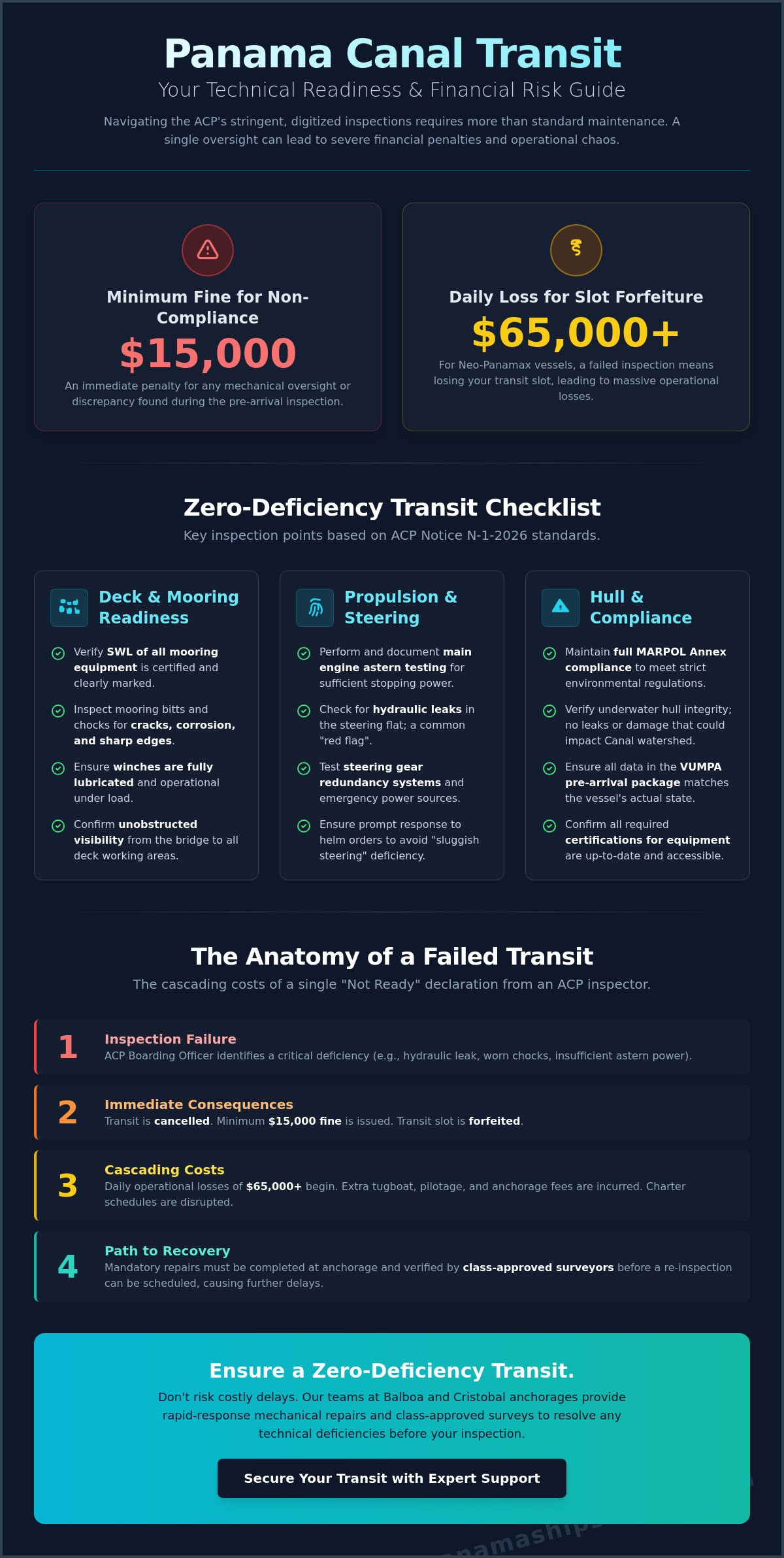
We understand the anxiety that comes with coordinating complex repairs and meeting specific mooring or steering requirements on a tight schedule. It’s difficult to manage local technical mandates when the standards are stricter than general IMO regulations. This article provides an expert-led technical and mechanical maintenance checklist designed specifically to meet the N-1-2026 Notice to Shipping standards. You’ll learn how to verify your steering gear redundancies, propulsion systems, and deck machinery to ensure a zero-deficiency ACP inspection and optimal fuel efficiency throughout the passage.
Key Takeaways
- Identify the specific Panama Canal Authority (ACP) inspection criteria to prevent costly slot forfeitures and operational delays.
- Utilize a detailed ship maintenance checklist for canal transit to verify the Safe Working Load (SWL) of all mooring equipment and deck machinery.
- Perform critical main engine astern testing and steering gear redundancy checks to ensure reliable performance during lock transits.
- Maintain full MARPOL Annex compliance and underwater hull integrity to meet strict environmental regulations within the canal watershed.
- Access rapid-response mechanical repairs and class-approved surveys at Balboa and Cristobal anchorages to resolve technical deficiencies before transit.
The High Stakes of Panama Canal Technical Inspections
Technical precision is the only currency that matters when preparing for a Panama Canal transit. The Panama Canal Authority (ACP) operates under a zero-tolerance policy for mechanical failure. Any vessel entering the locks must demonstrate total reliability in its propulsion, steering, and mooring systems. Unlike open-sea voyages where a minor equipment glitch might be managed en route, the confined spaces of the locks leave no room for error. A single failure can stall the entire transit system, leading to massive logistical bottlenecks for the global supply chain.
Most operators rely on standard SOLAS maintenance protocols, but these often fall short of specific Canal mandates. The ACP requirements are significantly more stringent because the infrastructure of the locks and the use of canal tugs place unique stresses on vessel hardware. Integrating a specialized ship maintenance checklist for canal transit into your pre-arrival routine is the only way to bridge the gap between general maritime safety and local regulatory compliance. In 2026, the most common deficiencies found during inspections include sluggish steering gear response, inadequate lubrication of mooring winches, and outdated certification for deck fittings.
Understanding the ACP Boarding Officer Role
The ACP boarding officer acts as the final gatekeeper at the Balboa or Cristobal anchorages. This inspection typically occurs within hours of your scheduled transit time. The officer verifies the data submitted in your Vessel Universal Maritime Pre-Arrival (VUMPA) package against the actual mechanical state of the ship. They look for immediate red flags like hydraulic leaks in the steering flat, visible wear on mooring chocks, or insufficient astern power. If the inspector deems the vessel “Not Ready,” your transit is canceled immediately. This triggers a mandatory re-inspection after repairs are verified by class-approved surveyors.
The Cost of Non-Compliance
The financial penalties for technical negligence are severe. Fines for non-compliance with ACP regulations start at $15,000, but the direct fine is often the smallest part of the total bill. If your vessel is declared unfit, you face automatic forfeiture of your transit slot. For Neo-Panamax operators, the cost of a lost slot can exceed $65,000 per day in operational losses and missed charter opportunities. You’ll also incur additional charges for mandatory tugboat assistance to move the vessel back to anchorage. Beyond the immediate costs, repeated deficiencies can damage your company’s reputation with the ACP, potentially leading to increased scrutiny and longer wait times for future transits.
- Direct Fines: Minimum $15,000 for regulatory violations.
- Slot Forfeiture: Up to $65,000+ per day for Neo-Panamax vessels.
- Operational Overheads: Extra tugboat fees, pilotage, and fuel burn at anchorage.
- Legal Risks: Potential insurance complications if a mechanical failure causes damage to lock infrastructure.
Essential Deck Equipment and Mooring Readiness
Mooring operations within the Panama Canal are uniquely aggressive. Unlike standard port berthing, the locks require vessels to maintain precise positions while subject to turbulent water flow and the mechanical pull of canal locomotives or tugs. Your ship maintenance checklist for canal transit must prioritize the physical condition of every deck fitting to withstand these dynamic loads. If a chock or bitt fails under tension, the resulting delay and safety risk will lead to an immediate transit suspension.
The ACP Notice to Shipping N-1-2026 mandates specific Safe Working Load (SWL) ratings for all towing and mooring components. Inspectors verify that these fittings are not only present but also free from structural fatigue. Clear visibility from the bridge to all deck working areas is a non-negotiable requirement. Pilots must see the mooring teams and the lock walls to coordinate the transit safely. Any obstruction of these sightlines can result in the vessel being ordered to take additional tugboats at the owner’s expense.
Mooring Bitts and Chocks Maintenance
Structural integrity is the primary focus of inspectors during the boarding process. You should check for hairline cracks in the welds and excessive corrosion around the base of the bitts. For Neo-Panamax vessels, verify that bitt dimensions meet the latest ACP requirements to accommodate the larger lines used in the new locks. Smooth surfaces are critical. Any burrs or sharp edges on the inner surfaces of Panama chocks will cause line chafing, which is a frequent cause of line breakage. If your deck hardware requires refurbishment or reinforcement, securing expert mechanical ship repairs at the anchorage is the most efficient way to maintain your schedule.
Deck Machinery and Winch Reliability
Perform comprehensive hydraulic system pressure tests on all mooring winches to ensure they can handle sustained tension. Winch failure during a lockage is a critical emergency that the ACP works hard to avoid. Brake holding capacity must be verified and adjusted according to the manufacturer’s specifications. It’s also essential to test every emergency stop button on the deck machinery. The boarding officer may ask the crew to demonstrate equipment operation; therefore, crew familiarity with these systems is just as important as the mechanical state of the hardware. Ensure all pilot ladders and boarding facilities are in pristine condition for the officer’s arrival at Balboa or Cristobal.
Propulsion and Steering Gear: Avoiding Critical Failures
While deck hardware ensures the vessel remains secure within the locks, the propulsion and steering systems are what guarantee a safe, controlled passage through the narrow reaches of the Culebra Cut. The Panama Canal Authority (ACP) requires every vessel to maintain a minimum full ahead speed of 8 knots to ensure the canal’s high-traffic schedule remains on track. Any engine hesitation or steering lag can result in an immediate suspension of transit. Integrating technical engine room inspections into your ship maintenance checklist for canal transit is the only way to verify that your vessel can meet these rigorous maneuvering demands.
Propulsion reliability is not just about moving forward; it is about the ability to stop and reverse precisely when directed by the pilot. Control system calibration and seamless bridge-to-engine-room communication are vital. If a vessel cannot demonstrate immediate response to telegraph commands during the initial boarding inspection, the boarding officer will declare the ship “Not Ready.” This results in the loss of your transit slot and necessitates immediate mechanical intervention at the anchorage.
Main Engine and Auxiliary Power
The ACP boarding officer will verify that the main engine can perform multiple consecutive starts without depleting the starting air reservoirs. This test ensures the vessel can maneuver safely even if the engine stalls during lock entry. Fuel oil system integrity is equally critical. With the canal’s heightened environmental focus in 2026, your fuel systems must be optimized for low-sulfur operation to prevent filter clogging or power loss during the switchover. You should also maintain a robust inventory of critical spares, including fuel injectors and cylinder head valves. The ACP expects these items to be readily available to address minor mechanical issues without delaying the transit flow.
Steering Gear and Maneuverability
Steering gear redundancy is a primary focus for ACP inspectors. You must perform a full-stroke test of the rudder under various load conditions before arrival. The steering system must meet the mandatory 28-second hard-over to hard-over requirement using both steering pumps. Failure to meet this timing is a common reason for inspection failure. Additionally, test the emergency steering console and all local control stations in the steering gear flat. Ensure the emergency power supply is fully operational and capable of supporting the steering system during a total blackout. Bow and stern thrusters must also undergo operational checks, as their performance is essential for the precise positioning required in the Neopanamax locks.
- Minimum Speed: Must maintain at least 8 knots throughout the transit.
- Starting Air: Verify capacity for consecutive starts without reservoir depletion.
- Steering Speed: Hard-over to hard-over in 28 seconds or less.
- Redundancy: Dual-pump operation and emergency power verification.
Hull Integrity and MARPOL: Regulatory Compliance
Environmental compliance is a core component of technical readiness in the Panama Canal. Because the canal relies on the freshwater of Gatun Lake, the Panama Canal Authority (ACP) enforces some of the world’s most stringent environmental protections. Your ship maintenance checklist for canal transit must include a rigorous assessment of the vessel’s hull condition and waste management systems. Failure to meet MARPOL standards or the presence of significant biofouling can lead to immediate transit delays and heavy environmental fines.
The ACP boarding officer will verify your Panama Canal Shipboard Oil Pollution Emergency Plan (PCSOPEP). This plan is mandatory for all commercial vessels of 400 gross tons or more and must be authorized by the ACP. Beyond paperwork, the mechanical functionality of your oily water separator (OWS) and the integrity of your overboard discharge valves are critical. Any sign of a leak or a malfunctioning monitoring system will result in the vessel being held at anchorage until repairs are certified.
Underwater Maintenance and Efficiency
Heavy biofouling on the hull increases hydrodynamic drag, which directly affects maneuverability in the narrow reaches of the Culebra Cut. In these confined spaces, precise torque and immediate engine response are necessary for safe passage. Pre-transit propeller polishing is a highly effective way to ensure optimal propulsion efficiency and reduce fuel consumption during the transit. Beyond performance, the ACP is increasingly focused on preventing the transfer of invasive aquatic species into the canal watershed. Utilizing professional underwater hull services before arrival ensures your vessel meets these ecological standards while maintaining peak operational efficiency.
MARPOL and Environmental Readiness
Managing waste and sludge is a logistical challenge that can derail a transit schedule. You must verify that your sludge tanks have sufficient capacity to hold all oily waste for the duration of the canal passage, as overboard discharge is strictly prohibited. Proper documentation for MARPOL disposal in Panama is essential to prove that your waste management history aligns with ACP requirements. Technical teams should also test the seal integrity on all overboard discharge valves to prevent accidental spills. If your vessel is nearing capacity, coordinate your waste offloading before the boarding inspection to avoid “Not Ready” status. Contact us today to schedule your MARPOL disposal and hull cleaning to ensure total compliance before your arrival at the locks.
Navigating Technical Challenges with Panama Ship Service
The complexity of the 2026 ACP mandates requires more than just internal diligence. Even the most thorough ship maintenance checklist for canal transit can reveal last-minute deficiencies that require immediate professional intervention. When a boarding officer identifies a technical flaw at the Cristobal or Balboa anchorages, the window to correct it before losing a transit slot is incredibly narrow. Panama Ship Service provides the specialized technical support needed to resolve these issues without disrupting your operational schedule.
On-Site Mechanical and Steel Repairs
Urgent technical failures don’t always require a dry dock. Our teams specialize in executing mechanical ship repairs directly at the anchorage. We perform complex tasks like mobile welding and steel fabrication for deck equipment fixes without the need for de-bunkering or moving the vessel. If your inspection reveals issues with maneuverability, we provide specialized in-water rudder and propeller repairs. These on-site solutions ensure that your vessel returns to “Ready” status as quickly as possible, protecting your investment in the transit slot.
Your Strategic Partner at the Canal
Navigating the specific technical nuances of the ACP requires deep local expertise. We bridge the gap between international standards and local mandates by providing proactive marine surveys in Panama. Our class-approved surveyors conduct pre-transit technical audits to identify potential red flags before the boarding officer arrives. This proactive strategy allows you to delegate technical complexity to a seasoned partner. Efficiency at the canal is a matter of preparation and rapid response. Whether you require urgent mechanical intervention or a comprehensive technical survey, our organization is structured to respond with the speed and proficiency the industry demands.
- Rapid Response: Technical teams available at Balboa and Cristobal anchorages.
- Class-Approved: All surveys and repairs meet international and ACP standards.
- Consolidated Logistics: One partner for repairs, supplies, and MARPOL compliance.
- Slot Protection: Focus on resolving deficiencies before transit cancellation occurs.
Securing Your Transit Schedule for 2026
We provide the technical expertise and rapid-response capabilities needed to resolve deficiencies before they become liabilities. With decades of experience navigating ACP technical mandates and class-approved repair standards, our team offers 24/7 emergency support at both the Balboa and Cristobal entrances. Delegate the complexity of your technical readiness to a partner that understands the high stakes of the canal. Contact Panama Ship Service for Expert Technical Support and ensure a seamless passage through the locks. We’re ready to assist your vessel at a moment’s notice.
Frequently Asked Questions
What are the most common mechanical reasons for Panama Canal transit delays?
Steering gear failure, propulsion issues, and malfunctioning mooring winches are the most frequent mechanical causes of delays. These deficiencies prevent the vessel from maintaining the precise control required in the locks. If an inspector finds that your equipment doesn’t meet the N-1-2026 standards, they’ll cancel your transit immediately to protect canal infrastructure.
How far in advance should we perform the steering gear test before transit?
You must conduct a full steering gear test within 48 hours of your arrival at the Balboa or Cristobal anchorages. This timing ensures that your technical readiness is verified just before the mandatory boarding inspection. It’s the best window to confirm the 28-second hard-over to hard-over requirement and ensure your emergency power systems are operational.
Does the Panama Canal Authority require specific certifications for mooring bitts?
The ACP requires all deck fittings, including mooring bitts and chocks, to have a certified Safe Working Load (SWL) rating. These ratings must be clearly marked on the equipment and supported by official documentation on the bridge. For Neo-Panamax vessels, these fittings must meet specific dimensions to accommodate the larger lines used by canal locomotives.
Can hull cleaning be performed while waiting at the Panama Canal anchorage?
Yes, underwater hull cleaning can be performed at the anchorage by authorized technical teams. This is a strategic way to address biofouling that might otherwise hinder your vessel’s maneuverability in narrow reaches. Completing this work before your inspection ensures your propulsion system operates at peak efficiency during the transit.
What happens if our oily water separator (OWS) fails during the ACP inspection?
An OWS failure leads to a “Not Ready” declaration and potential fines starting at $15,000. Because overboard discharge is strictly prohibited in the canal watershed, a malfunctioning separator is a critical MARPOL violation. You’ll be forced to stay at anchorage until a class-approved surveyor verifies that the system is fully restored.
Are there specific engine power requirements for neo-panamax lock transits?
Neo-Panamax vessels must maintain a minimum speed of 8 knots and demonstrate immediate astern response. Your ship maintenance checklist for canal transit should include a verification of your engine’s ability to perform multiple consecutive starts. These power requirements ensure the vessel can safely navigate the locks and the Culebra Cut without stalling the traffic flow.
What is the role of the PCSOPEP in the technical maintenance checklist?
The PCSOPEP is a mandatory emergency plan for all vessels over 400 gross tons transiting the canal. It serves as a technical roadmap for oil pollution response and must be authorized by the ACP. Inspectors check that the plan is current and that the physical response equipment on board is in good working condition.
How can a local ship repair service help if we fail our initial boarding inspection?
Local repair services provide the mobile welding and mechanical expertise needed to fix deficiencies at the anchorage. They act as a rapid-response team to address issues with steering gear, deck machinery, or steel structures. This immediate intervention is often the only way to prevent a lengthy delay after a failed initial inspection.