
In the high-stakes world of commercial shipping, time is money. Every hour a vessel spends idle is an hour of lost revenue, disrupted schedules, and mounting operational costs. Understanding the multi-million dollar impact of vessel downtime is the first step toward implementing proven strategies that keep your fleet operational, profitable, and reliable. This guide will explore the primary causes of downtime, its true financial impact, and the proactive measures you can take to prevent it.
What is Vessel Downtime? (And Why It’s More Than Just ‘Idle Time’)
In a commercial shipping context, vessel downtime refers to any period when a ship is not available to perform its intended commercial operations. It’s a critical performance indicator that directly affects a company’s bottom line. It’s crucial to distinguish between planned downtime-such as scheduled dry-docking, major retrofits, or class surveys-and unplanned downtime. Unplanned downtime is the unexpected, costly result of equipment failure, regulatory issues, or logistical delays. Every minute of this unscheduled stoppage directly erodes profitability and damages your operational reputation.
The Financial Impact: Calculating the True Cost of Downtime
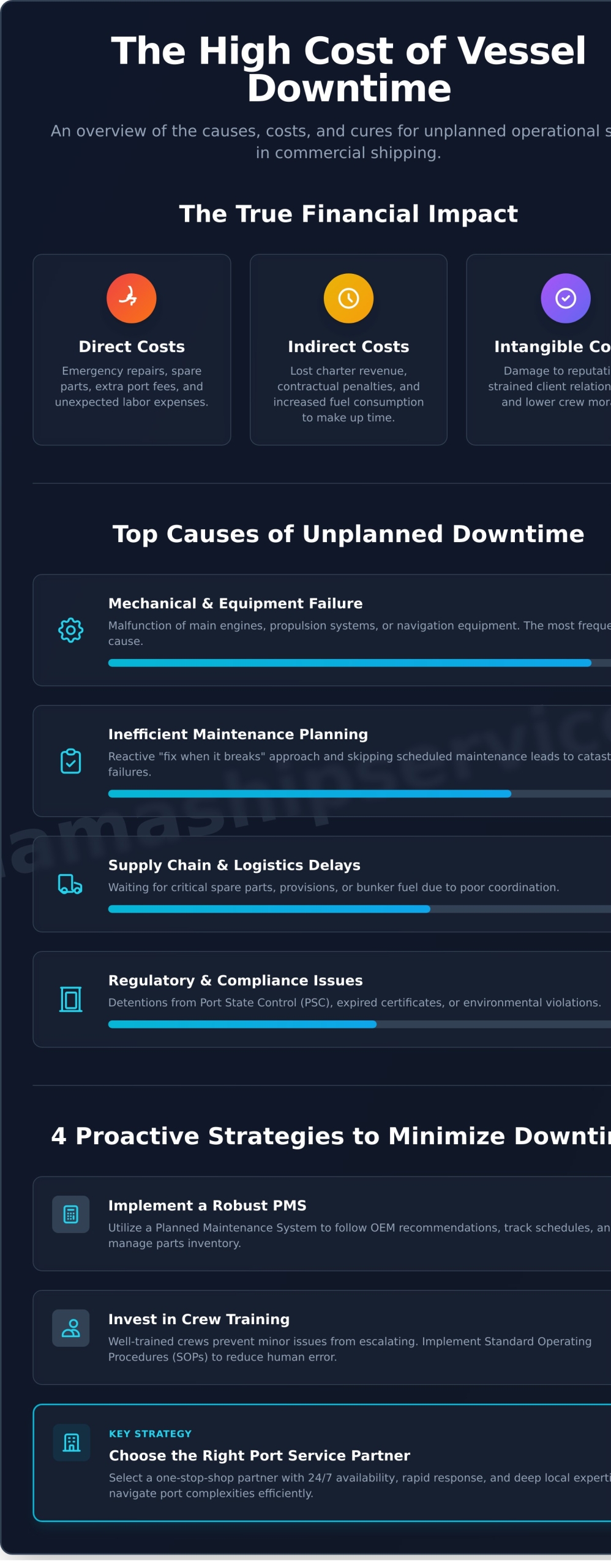
The cost of an idle vessel goes far beyond the absence of revenue. Calculating the true financial impact requires looking at a combination of direct, indirect, and intangible costs that accumulate rapidly.
- Direct Costs: These are the immediate, out-of-pocket expenses required to resolve the issue. They include emergency repair bills, the cost of flying in spare parts and technicians, unexpected labor costs, and additional port fees incurred during the delay.
- Indirect Costs: These are the revenue-related losses and penalties. This category includes lost charter revenue for every day the vessel is off-hire, severe financial penalties for failing to meet contractual obligations, and increased fuel consumption as the vessel attempts to make up for lost time.
- Intangible Costs: While harder to quantify, these costs can have long-term consequences. They include significant damage to your company’s reputation for reliability, strained relationships with charterers and cargo owners, and lower crew morale.
Depending on the vessel class and market conditions, the average daily cost of downtime can range from tens of thousands to hundreds of thousands of dollars, making its prevention a top priority for any successful operator.
Top 5 Causes of Unplanned Vessel Downtime
Unplanned downtime rarely happens without a cause. Most incidents can be traced back to a handful of common issues, many of which require immediate and expert shoreside assistance to resolve. Understanding these root causes is essential for developing effective prevention strategies.
1. Mechanical and Equipment Failure
The most frequent cause of unplanned downtime is the failure of critical machinery. This includes malfunctions of the main engine or auxiliary machinery, which can leave a vessel stranded. Propulsion system issues, such as damage to propellers, rudders, and shafts, also require immediate, often complex repairs. Furthermore, failures in essential systems like navigation, communication, or safety equipment can render a vessel non-operational until rectified.
2. Inefficient Maintenance Planning
A reactive “fix when it breaks” approach to maintenance is a recipe for disaster. Moving from this outdated model to a proactive one is critical for reliability. The consequences of skipping or delaying scheduled maintenance can be severe, leading to catastrophic failures at the worst possible times. Modern operations rely on predictive maintenance and condition monitoring to identify potential problems before they escalate into downtime-causing events.
Implementing these advanced systems often requires tailored solutions, which is where a custom software development company like API Pilot can provide significant value.
3. Supply Chain and Logistics Delays
A vessel’s operation is dependent on a complex global supply chain. Delays can occur while waiting for critical spare parts to be sourced, shipped, and delivered to the port. Likewise, inefficiencies in coordinating the delivery of provisions, bunker fuel, or fresh water can keep a vessel tied up at the dock. These challenges are often compounded by poor communication between suppliers, port agents, and the vessel’s command.
4. Regulatory and Compliance Issues
The maritime industry is heavily regulated, and failure to comply can result in costly delays. Vessels can face detentions from Port State Control (PSC) inspections due to deficiencies in safety equipment, documentation, or crew certification. Failure to meet international environmental regulations, such as MARPOL standards for waste disposal, can also lead to holds. Something as simple as an expired certificate or improper documentation can halt a vessel’s transit indefinitely.
A Proactive Approach: 4 Strategies to Minimize Downtime
The most effective way to manage downtime is to prevent it from happening in the first place. By shifting the focus from reaction to prevention, ship owners and operators can implement practical, actionable strategies to ensure maximum vessel availability and profitability.
Implement a Robust Planned Maintenance System (PMS)
A well-structured PMS is the foundation of a reliable fleet. This involves strictly following the Original Equipment Manufacturer (OEM) recommendations for all critical equipment. Modern operators utilize specialized software to track maintenance schedules, manage spare parts inventory, and ensure detailed record-keeping, which is essential for both compliance and performance analysis.
Invest in Crew Training and Standardized Procedures
The human element is a critical factor in preventing downtime. Well-trained and experienced crews can often prevent or resolve minor issues before they escalate into major problems. Implementing Standard Operating Procedures (SOPs) for all key operations helps reduce the risk of human error. Fostering a strong culture of safety and proactive reporting encourages crew members to identify potential issues early.
Choose the Right Port Service Partner
When a vessel needs shoreside support, time is of the essence. That is why a one-stop-shop partner is crucial for efficiency, eliminating the need to coordinate with multiple vendors. When selecting a partner, look for 24/7 availability and proven rapid response capabilities for emergencies. Most importantly, a partner with deep expertise in local regulations and port requirements is invaluable. An expert local agent can navigate complexities and anticipate challenges to minimize delays in Panama and other critical transit points.
Your Trusted Partner for Minimizing Downtime at the Panama Canal
The Panama Canal is a critical chokepoint in global trade, where any delay can have significant financial and logistical consequences. Panama Ship Service acts as your single, reliable point of contact for all operational and technical needs during this crucial transit. Our extensive experience and comprehensive service offerings are designed to prevent common issues before they can cause downtime. From 24/7 emergency mechanical repairs and underwater inspections to swift MARPOL-compliant disposal, we provide the integrated solutions needed to keep your vessel moving efficiently and on schedule. Put your transit in our hands. Request a quote for services and experience the peace of mind that comes with having an expert partner on your side.
Frequently Asked Questions
What is the difference between downtime and off-hire?
Downtime is a general term for any period a vessel is not operational. Off-hire is a specific contractual term in a time charter agreement, referring to a period of downtime where the charterer is not obligated to pay the hire rate due to a technical failure or issue that is the owner’s responsibility.
How is vessel downtime calculated for performance reports?
Vessel downtime is typically calculated as the total number of hours the vessel was not available for its intended commercial operation, divided by the total hours in the reporting period, then multiplied by 100 to get a percentage. This helps track operational availability.
What are the most common reasons for Port State Control detentions?
The most common deficiencies leading to PSC detentions include problems with fire safety measures (e.g., faulty fire dampers or detectors), expired or malfunctioning life-saving appliances (e.g., lifeboats, immersion suits), and incorrect or incomplete vessel documentation and certificates.
Can propeller polishing really reduce downtime and save fuel?
Yes. A smooth, clean propeller operates with maximum efficiency, reducing engine load and fuel consumption. Regular in-water propeller polishing prevents marine growth that creates drag. This proactive maintenance helps avoid performance loss that could lead to unscheduled downtime for more extensive cleaning or repairs.
How can a local agent help reduce downtime in a busy port?
A knowledgeable local agent acts as your representative on the ground, coordinating all necessary services like pilotage, provisions, repairs, and regulatory clearances. Their expertise in local procedures and relationships with port authorities allows them to anticipate bottlenecks and resolve issues swiftly, ensuring a smooth and efficient port call.
Don’t let unplanned downtime dictate your bottom line. By understanding the risks and partnering with an experienced and reliable service provider, you can protect your assets, maintain your schedules, and maximize profitability. Panama Ship Service has over 20 years of experience providing a one-stop-shop for all technical and operational needs at this critical global waterway. Minimize Your Downtime in Panama. Get a Quote Today.