
For maritime professionals, understanding key historical milestones is more than trivia; it’s about appreciating the infrastructure that defines modern global trade. A frequently asked question is about the inauguration of one of the world’s most critical waterways. This article provides a direct answer to when the Panama Canal opened and explores the context and profound impact of this engineering marvel.
The Panama Canal Opened on August 15, 1914
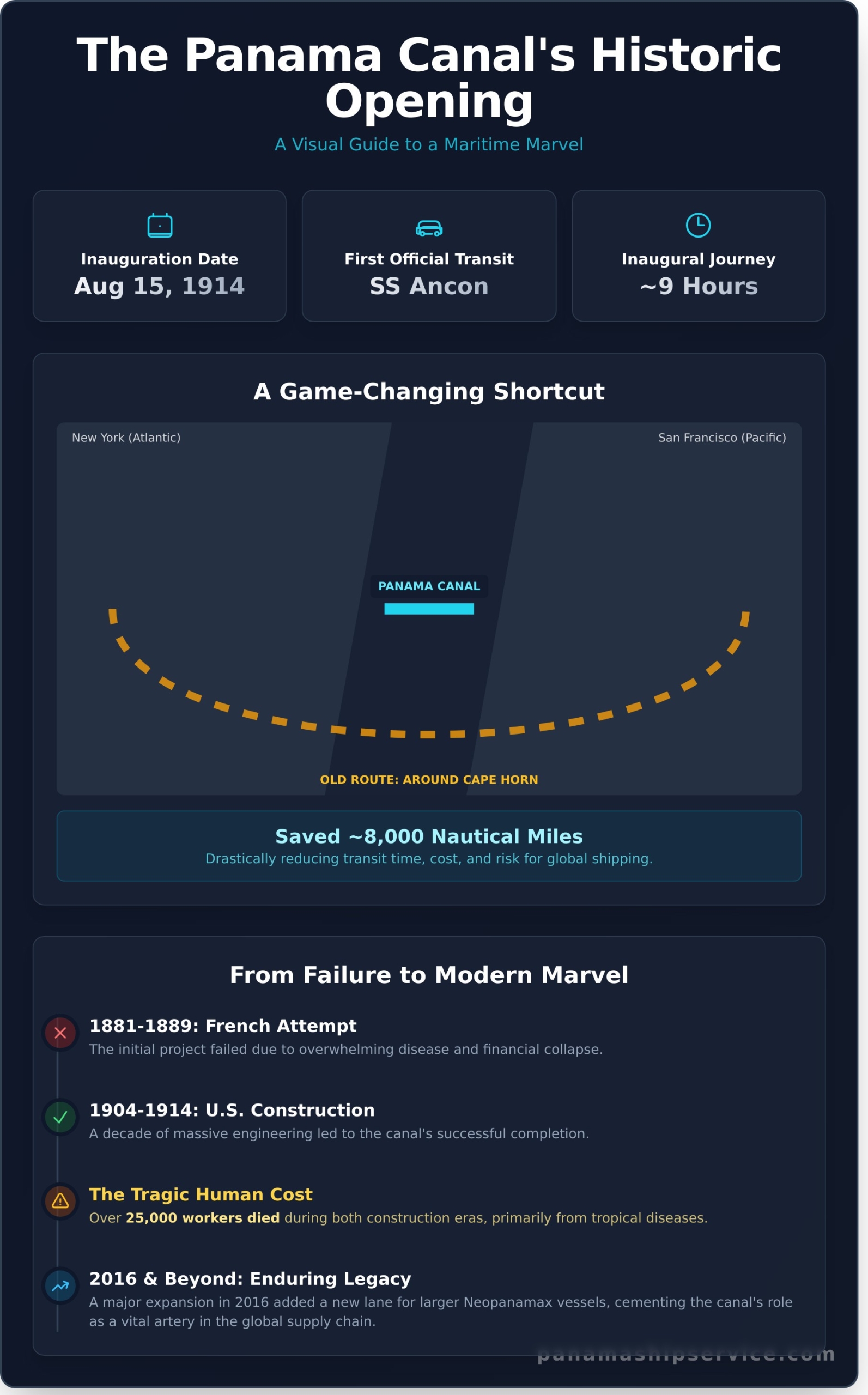
The Panama Canal officially opened for traffic on August 15, 1914, a date that permanently altered the course of international shipping. The first vessel to make the official transit was the American steamship SS Ancon. This historic event marked the successful culmination of a decade of immense U.S. construction efforts, which had overcome enormous engineering and health challenges. The opening of the canal created a vital waterway that dramatically and immediately changed global shipping routes forever.
The First Transit: A Quiet Celebration
The SS Ancon, a cargo and passenger ship, completed the inaugural journey from the Atlantic to the Pacific in approximately nine hours. While a monumental achievement, the grand opening was significantly muted. The outbreak of World War I in Europe just weeks earlier overshadowed the event, leading to the cancellation of a planned, larger international celebration. Instead of a grand fleet parade, the SS Ancon’s quiet passage marked the beginning of the canal’s operational history.
The Long Road to Opening Day: A Brief Timeline
The journey to opening day was long and fraught with difficulty. The initial French construction attempt, which began in 1881, ended in failure by 1889 due to disease and financial problems. The project gained new life when, in 1903, Panama declared its independence from Colombia and signed the Hay-Bunau-Varilla Treaty with the United States. This granted the U.S. control over the Canal Zone. In 1904, the United States formally took over the project, launching a decade of massive engineering and construction work that ultimately led to the canal’s completion.
Why the Canal’s Opening Was a Game-Changer for Shipping
The opening of the Panama Canal was one of the most significant events in maritime history. By connecting the Atlantic and Pacific Oceans, it created an essential shortcut for maritime trade, eliminating the long, costly, and often treacherous voyage around Cape Horn at the southern tip of South America.
Drastically Reduced Transit Times and Distances
The canal’s most immediate impact was the dramatic reduction in travel time and distance for vessels. For example, it shortened the shipping route from New York to San Francisco by nearly 8,000 nautical miles, saving weeks of travel time. This newfound efficiency made shipping routes far more predictable and reliable, allowing for better logistics planning and faster delivery of goods between the two oceans.
Economic Impact on Global Trade
The efficiencies gained from the canal had a profound economic impact. By significantly lowering transportation costs and transit times, it made goods more affordable and accessible on a global scale. This opened up new and expanded opportunities for international commerce, boosting the economies of the United States and trading partners worldwide. The canal quickly became an indispensable artery for world trade.
The Canal’s Enduring Legacy for Modern Mariners
More than a century later, the Panama Canal remains a critical component of the global supply chain. Its importance was further cemented with the completion of a major expansion in 2016, which added a new lane of traffic and allowed for the passage of much larger Neopanamax vessels. For owners and operators, efficient transit through this vital waterway is paramount and still depends on reliable vessel maintenance and operational readiness. Ensure your vessel is ready for a smooth Canal transit.
Frequently Asked Questions About the Panama Canal’s Opening
What was the first ship to pass through the Panama Canal?
The first ship to make the official transit through the Panama Canal on August 15, 1914, was the American cargo and passenger ship, the SS Ancon.
How long did it take to build the Panama Canal?
The U.S. construction phase of the Panama Canal took approximately ten years, from 1904 to 1914. This followed an earlier French attempt that lasted from 1881 to 1889.
Who was the U.S. president when the Panama Canal opened?
Woodrow Wilson was the President of the United States when the Panama Canal officially opened in August 1914. However, President Theodore Roosevelt is most associated with the project, as his administration was instrumental in securing the rights and initiating the U.S. construction effort.
How many people died building the Panama Canal?
It is estimated that over 25,000 workers died during both the French and American construction periods. The vast majority of deaths were due to tropical diseases like malaria and yellow fever, as well as hazardous working conditions.
Did the Panama Canal open on schedule?
The canal opened slightly ahead of its projected completion date of June 1915. The official opening in August 1914 was a testament to the efficiency and scale of the U.S. engineering effort.
The opening of the Panama Canal was a pivotal moment in history, and its strategic importance has only grown over the last century. For vessels transiting this essential waterway, operational excellence is key to avoiding costly delays. As your trusted partner at the Panama Canal for over 20 years, Panama Ship Service provides expert solutions to minimize expenses and ensure seamless operations. From critical repairs to MARPOL disposal, we offer comprehensive services to keep your transit on schedule. Contact our experts for reliable ship services at the Panama Canal.